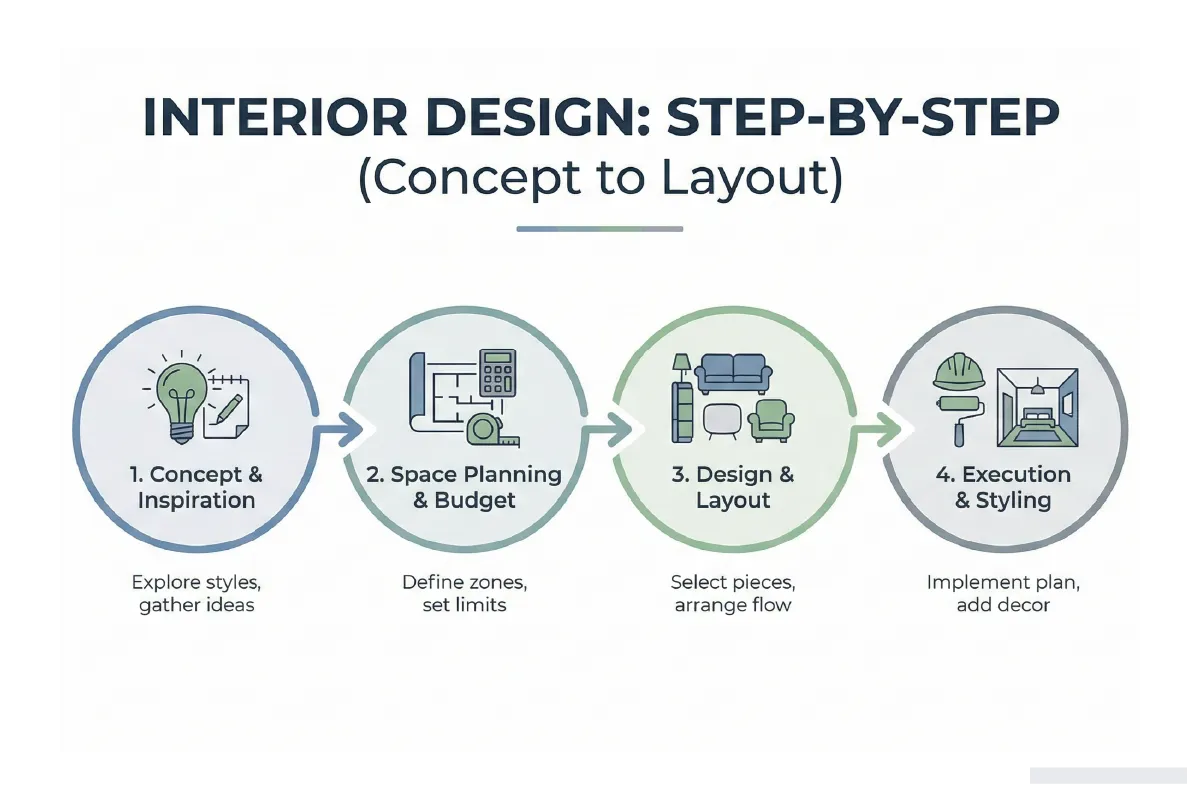
Short answer: Planning interior design step by step means translating an initial concept into a practical, buildable layout by systematically defining user needs, space functions, circulation, dimensions, and coordination requirements before any visual styling or material selection begins.
What Does It Mean To Plan Interior Design
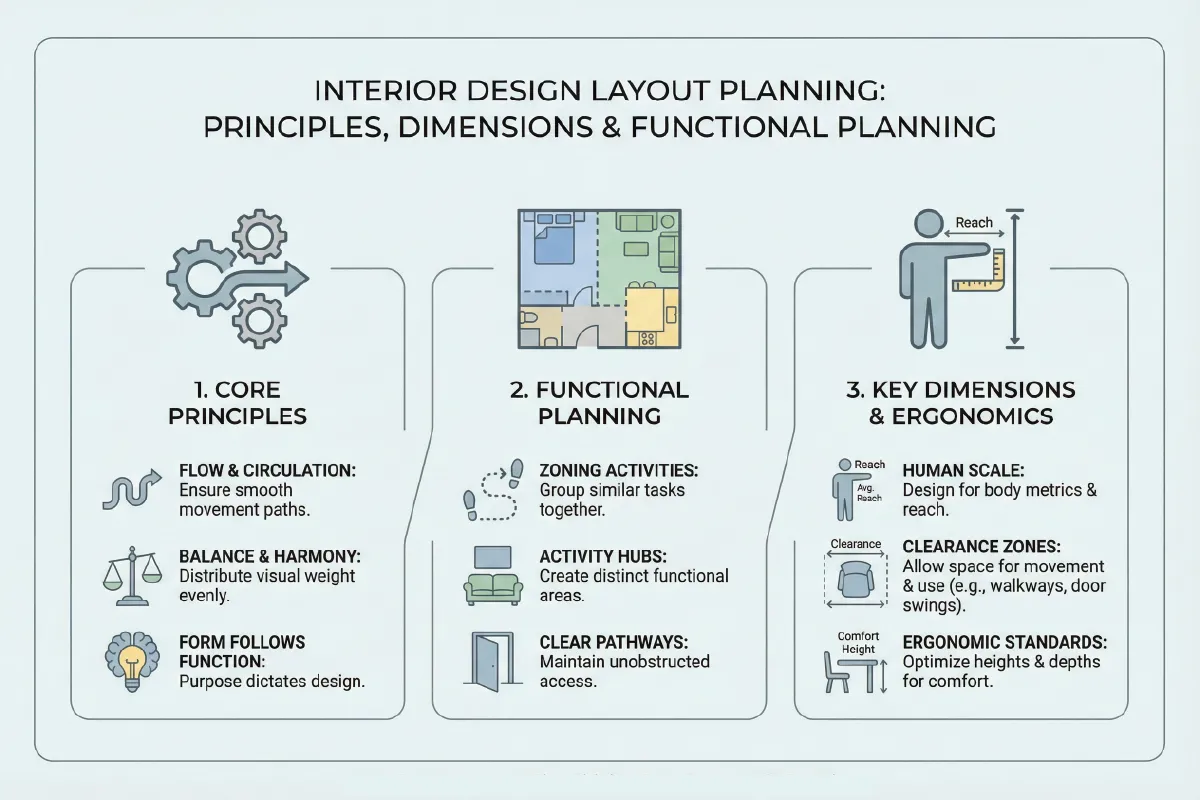
Planning interior design means organizing space, function, and movement before making aesthetic decisions. It is the professional process of deciding how a space will be used, how people will move within it, and how different activities will coexist comfortably and safely.
Many people associate interior design planning with colors and finishes. In reality, experienced designers begin with function, circulation, and layout logic. Without this foundation, even visually impressive interiors often fail in daily use.
In residential projects across Qatar and the wider Gulf region, we frequently see homes where generous square footage is wasted due to poor early planning. Rooms feel disconnected, circulation is awkward, and furniture placement becomes a compromise rather than a choice.
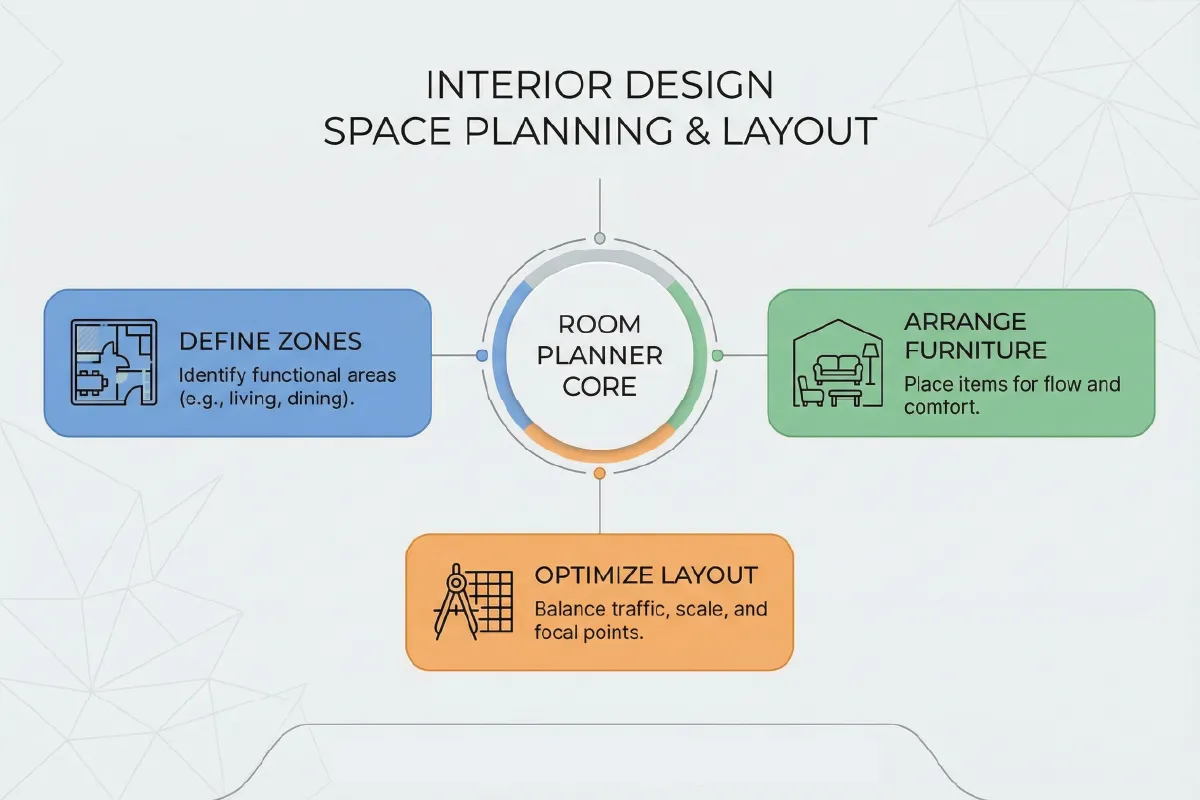
Effective planning aligns closely with space planning requirements, informs the interior design room planner, and supports later decisions related to lighting, materials, and services.
Why Step By Step Interior Design Planning Matters
Short answer: A step by step approach prevents costly mistakes by resolving functional and spatial decisions in the correct sequence.
Interior design projects fail when decisions are made out of order. Selecting finishes before confirming layout, or choosing furniture before understanding circulation, often leads to redesign and dissatisfaction.
From professional experience, most design changes requested during construction could have been avoided if planning steps were followed systematically during early design stages.
- Reduces redesign during execution
- Improves coordination with consultants
- Ensures comfort and usability
- Controls project timelines and budgets
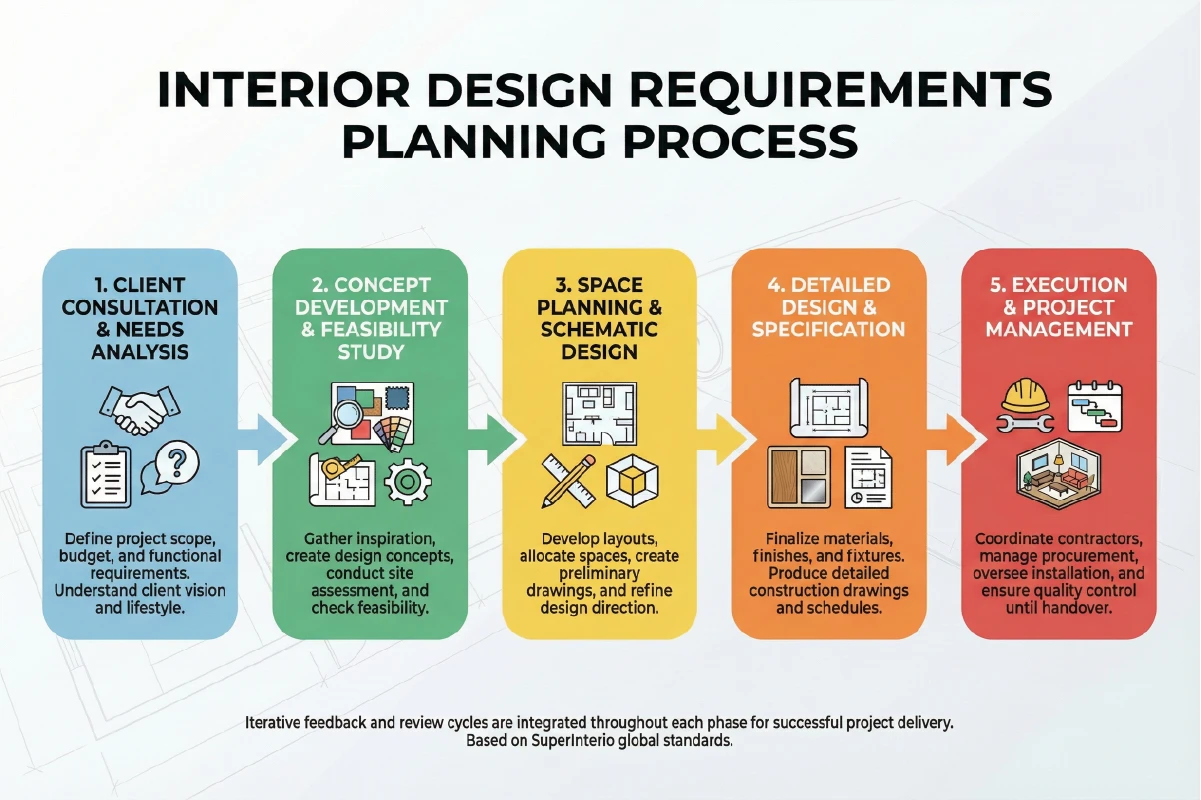
This structured approach follows the logic of the interior design requirement planning process, but focuses specifically on how planning decisions are made and applied.
Step One Understanding The Project And Users
Short answer: Interior design planning begins by understanding who will use the space, how often it will be used, and for what purpose.
Before any drawings are produced, designers gather information about lifestyle patterns, family size, work habits, cultural expectations, and future needs. This step defines the functional direction of the entire project.
In Gulf households, for example, hospitality plays a major role. Separate guest zones, family privacy, and service access must be considered from the start. Ignoring these factors often leads to layouts that feel uncomfortable or inappropriate.
For commercial interiors, user analysis includes staff numbers, operational workflows, visitor traffic, and regulatory constraints. These inputs directly influence layout planning decisions.
Step Two Analyzing The Existing Space
Short answer: Accurate space analysis ensures that planning decisions are based on real conditions rather than assumptions.
This step involves measuring the space, identifying structural elements, locating doors and windows, and understanding ceiling heights and service zones. These factors define what is possible within the layout.
In renovation projects, overlooking existing constraints is a common cause of planning failure. Columns, beams, and service shafts often dictate layout logic more than design preferences.
Accurate analysis at this stage supports later steps related to layout planning, circulation design, and coordination with lighting and HVAC systems.
Step Three Defining Functional Zones And Adjacencies
Short answer: Functional zoning organizes a space into clear activity areas and defines how closely related functions should sit next to each other.
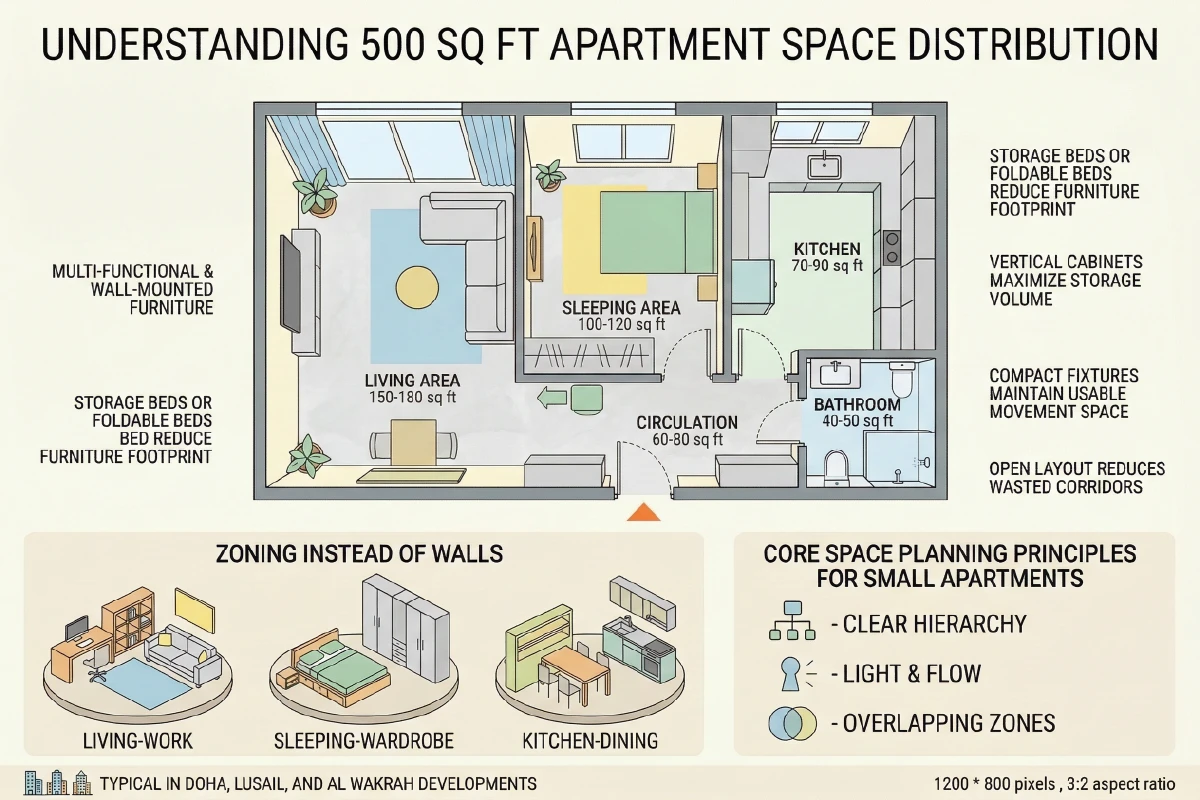
At this stage, designers translate user needs into spatial zones such as living, dining, working, resting, storage, and service areas. Each zone must support its intended activity without interfering with others.
Adjacency planning is equally important. Spaces that are frequently used together should be placed close to reduce unnecessary movement. For example, kitchens should connect logically to dining areas, while bedrooms should remain separated from noisy social zones.
This step aligns closely with space planning requirements and sets the foundation for effective room level layouts.
Step Four Planning Circulation And Movement
Short answer: Circulation planning ensures that people can move comfortably and safely through a space without disrupting primary activities.
Circulation routes should be intuitive, direct, and free of obstacles. In well planned interiors, movement paths are clear without needing signage or guidance.
A common professional guideline is to avoid routing circulation through the center of key activity zones. Instead, movement should occur around seating, sleeping, or working areas.
Proper circulation planning also supports accessibility, emergency egress, and long term usability, particularly in commercial environments.
Step Five Developing The Initial Layout Plan
Short answer: The initial layout plan translates zoning and circulation decisions into furniture placement and spatial relationships.
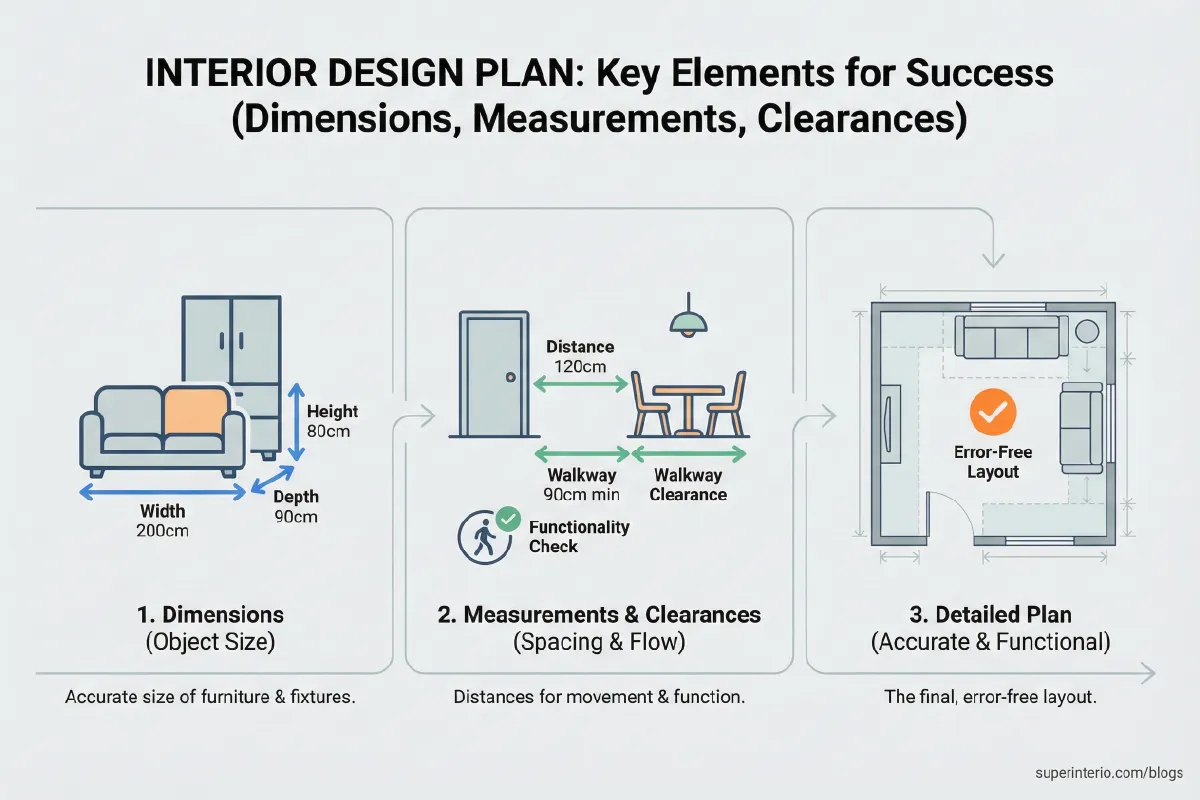
During this step, furniture is placed using realistic dimensions rather than generic symbols. Clearances are checked to ensure comfort and access.
This is where many planning assumptions are tested. A sofa may fit on paper, but once circulation and interaction distances are considered, adjustments are often required.
Developing the layout plan at this stage supports coordination with the interior design room planner and prepares the project for dimensioning and refinement.
Step Six Validating Dimensions And Clearances
Short answer: Validation ensures that the layout is usable, safe, and buildable before further design development.
Designers review all critical measurements, including circulation widths, furniture spacing, door swings, and access zones. Any conflicts are resolved before proceeding.
This step prevents late stage design changes and supports compliance with safety and accessibility expectations.
Validated layouts provide a reliable base for lighting, material selection, and service coordination.
Step Seven Coordinating Layout With Lighting Materials And Services
Short answer: Layout planning must be coordinated with lighting, material selection, and building services to ensure performance, comfort, and long term usability.
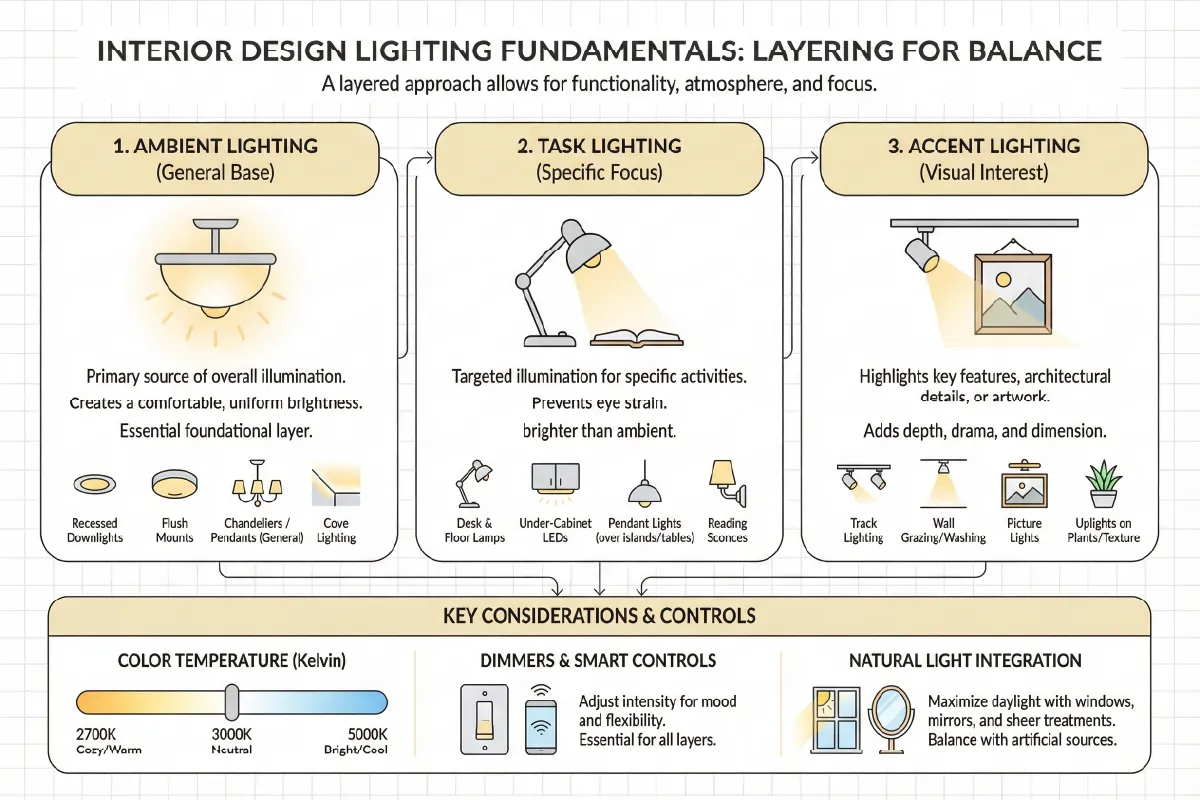
Once the layout is validated, designers review how furniture placement and circulation interact with lighting distribution, surface finishes, and mechanical systems. A well planned layout supports balanced lighting, avoids glare, and allows ventilation to perform effectively.
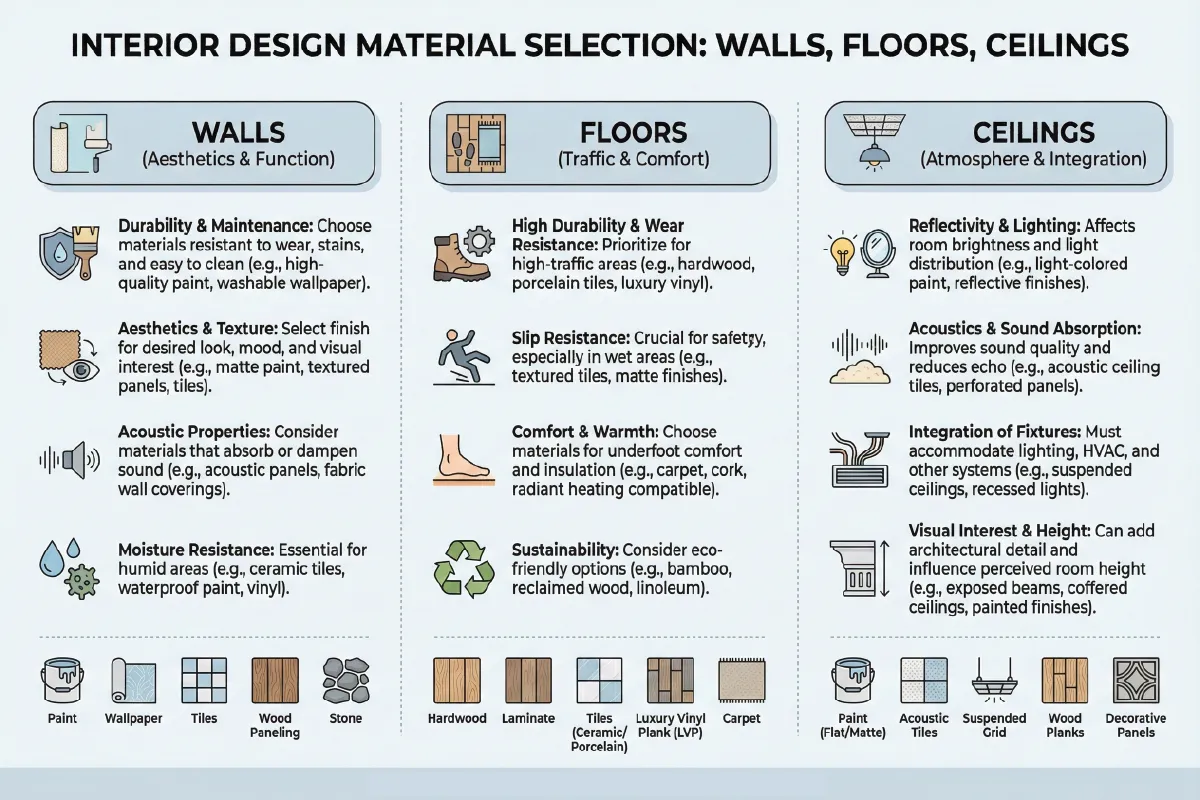
For example, seating arrangements influence lighting placement, while circulation paths affect air distribution. Material choices also respond to layout decisions, as floor finishes, wall treatments, and ceiling elements must align with how spaces are used.
This coordination stage connects directly with lighting requirements, material selection requirements, and HVAC and ventilation requirements.
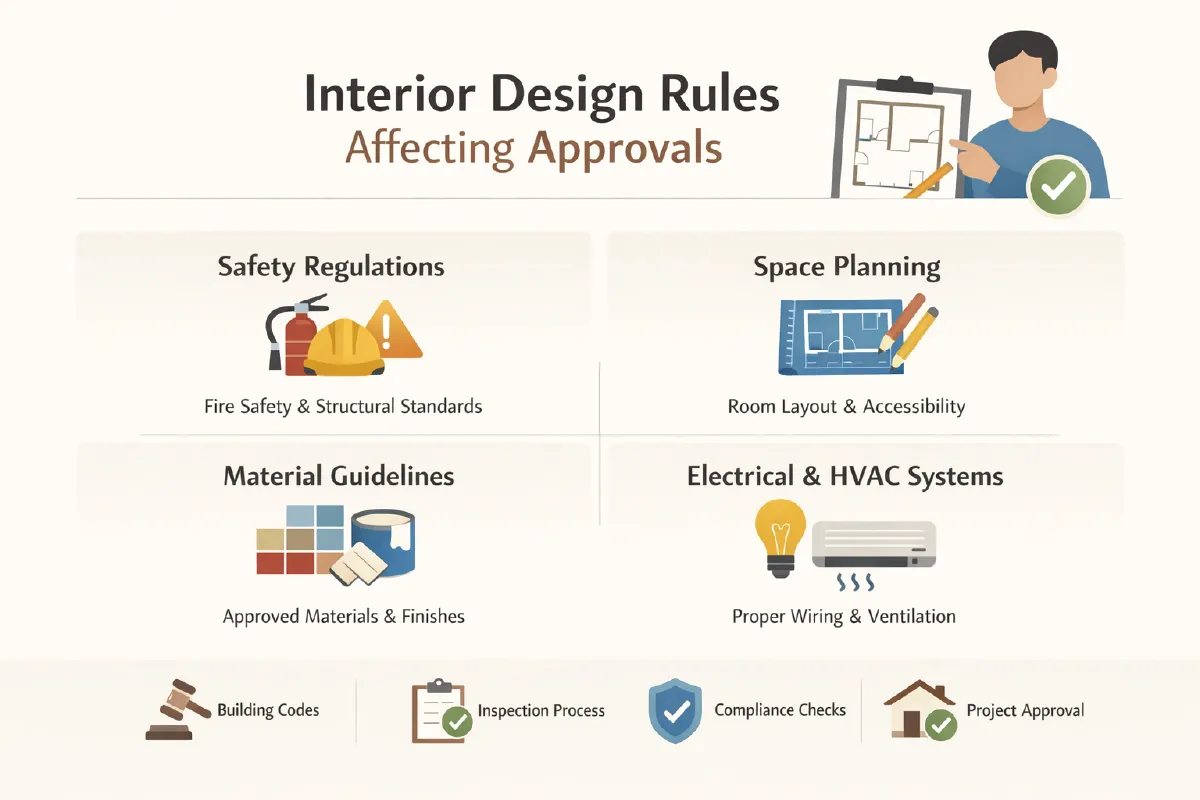
Step Eight Reviewing Compliance And Approvals
Short answer: Final layout plans must be reviewed for compliance with safety, accessibility, and authority requirements before execution.
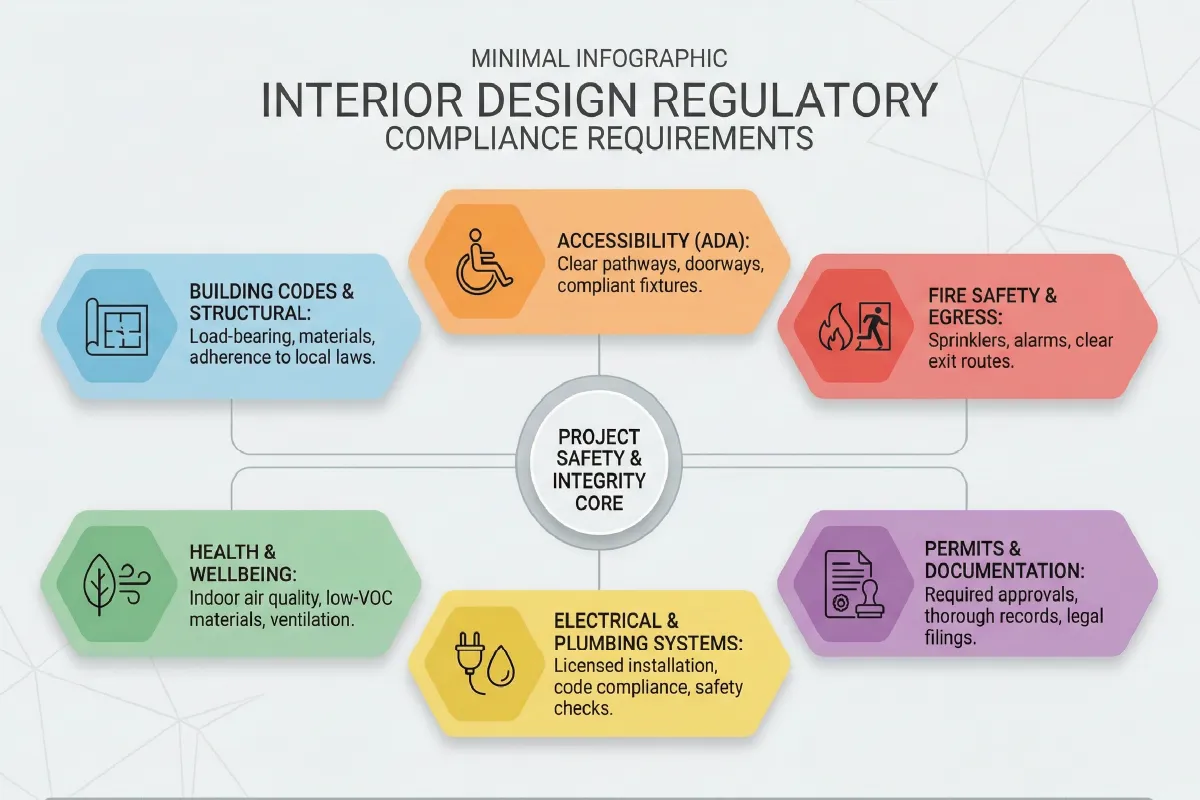
In professional practice, layouts are checked against fire egress, accessibility clearances, and operational regulations. Early review prevents approval delays and redesign during construction.
In commercial interiors across MENA, layout related non compliance is a common reason for authority comments. Addressing these checks at the planning stage saves time and cost.
This step aligns with regulatory and compliance requirements and ensures layouts are buildable and approvable.
Common Mistakes When Planning Interior Design
Short answer: Most planning mistakes occur when decisions are rushed or made out of sequence.
- Choosing finishes before confirming layout
- Ignoring circulation and access clearances
- Overfurnishing spaces without functional need
- Failing to coordinate layout with services
- Assuming larger spaces require less planning
Avoiding these mistakes requires discipline in following the planning steps and validating decisions before execution.
Planning Interior Design For Long Term Success
Short answer: Thoughtful planning creates interiors that remain functional as needs evolve.
Homes adapt to changing family structures, and businesses evolve with operational demands. Layouts that allow flexibility in furniture placement and circulation reduce the need for future renovation.
This long term view is especially important in residential investments and commercial lease spaces where adaptability supports value retention.
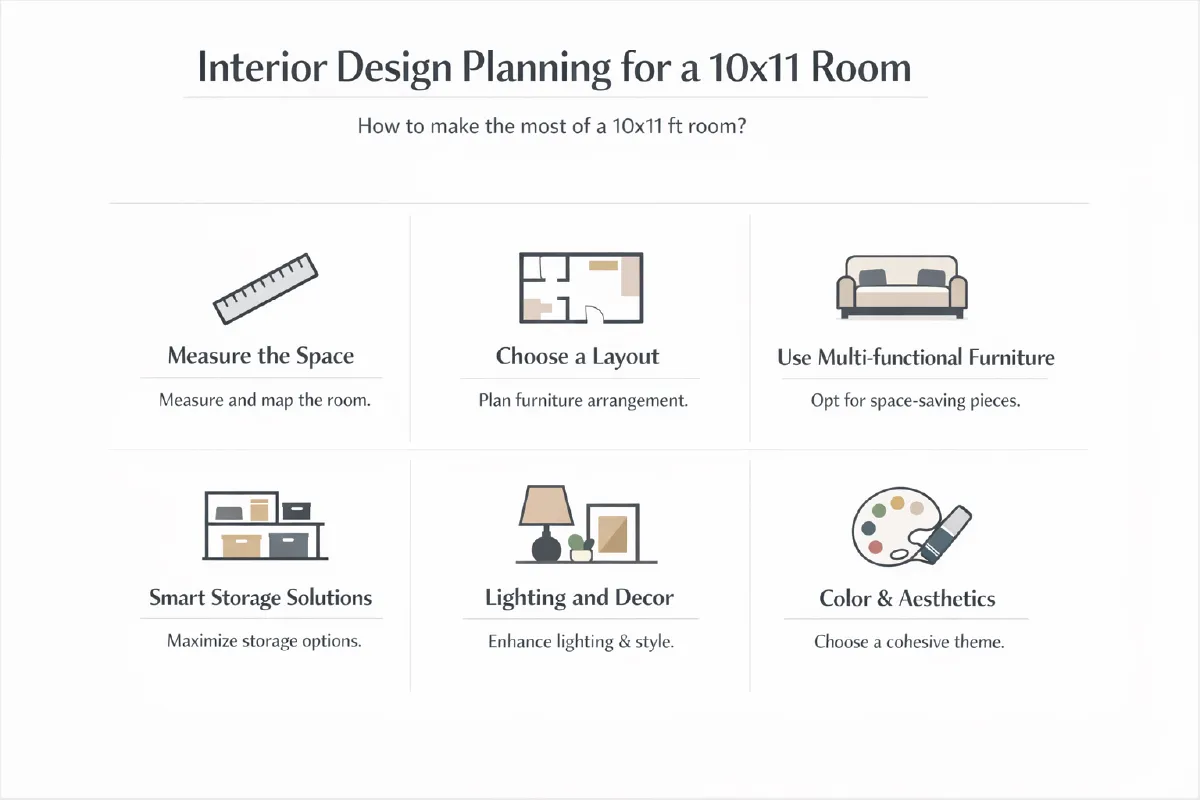
How To Plan Interior Design Step By Step
Short answer: Interior design planning follows a structured sequence that moves from understanding user needs to creating a coordinated, compliant, and buildable layout.
- Understand The Project And Users: Identify who will use the space, how it will be used, cultural expectations, lifestyle patterns, and future needs before any planning decisions are made.
- Analyze The Existing Space: Measure the space accurately and study structural elements, doors, windows, ceiling heights, and service zones to understand real constraints.
- Define Functional Zones And Adjacencies: Organize the space into clear activity zones and place related functions close together to reduce unnecessary movement.
- Plan Circulation And Movement: Establish clear and comfortable circulation paths that do not interrupt primary activity areas and support accessibility.
- Develop The Initial Layout Plan: Place furniture using real dimensions, test spacing, and translate zoning and circulation decisions into a workable layout.
- Validate Dimensions And Clearances: Review all measurements, clearances, and access zones to ensure comfort, safety, and buildability.
- Coordinate Layout With Lighting Materials And Services: Ensure the layout aligns with lighting distribution, material behavior, HVAC performance, and service coordination.
- Review Compliance And Finalize The Plan: Check the layout against safety, accessibility, and regulatory requirements before final approval and execution.
Frequently Asked Questions
What Is The First Step In Planning Interior Design
The first step is understanding user needs, lifestyle patterns, and functional requirements before making any design decisions.
When Should Layout Planning Begin
Layout planning should begin after space planning and before selecting finishes, lighting, or furniture.
Is Interior Design Planning Different For Residential And Commercial Projects
Yes. Residential planning focuses on comfort and lifestyle, while commercial planning prioritizes efficiency, safety, and operational flow.
Can Poor Planning Be Fixed Later
Poor planning can be corrected, but changes made after construction begins are often costly and disruptive.
Who Is Responsible For Interior Design Planning
Interior designers typically lead planning in coordination with architects, consultants, and clients.
Key Takeaways
- Planning Is Sequential: Interior design must follow a logical step by step process from concept to layout.
- Function Comes First: Layout decisions should always respond to real use and behavior.
- Dimensions Are Critical: Accurate measurements prevent circulation and usability issues.
- Coordination Matters: Layouts must align with lighting, materials, services, and compliance.
- Good Planning Saves Cost: Early decisions reduce redesign and execution delays.