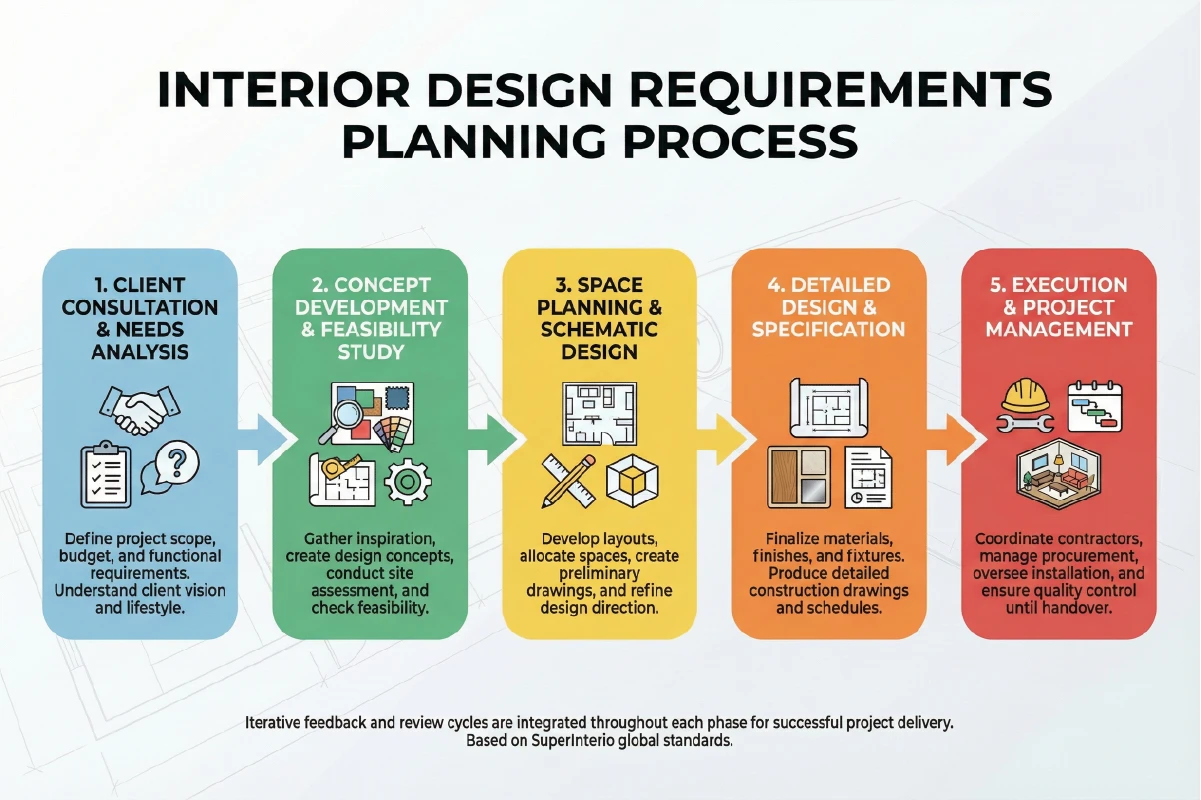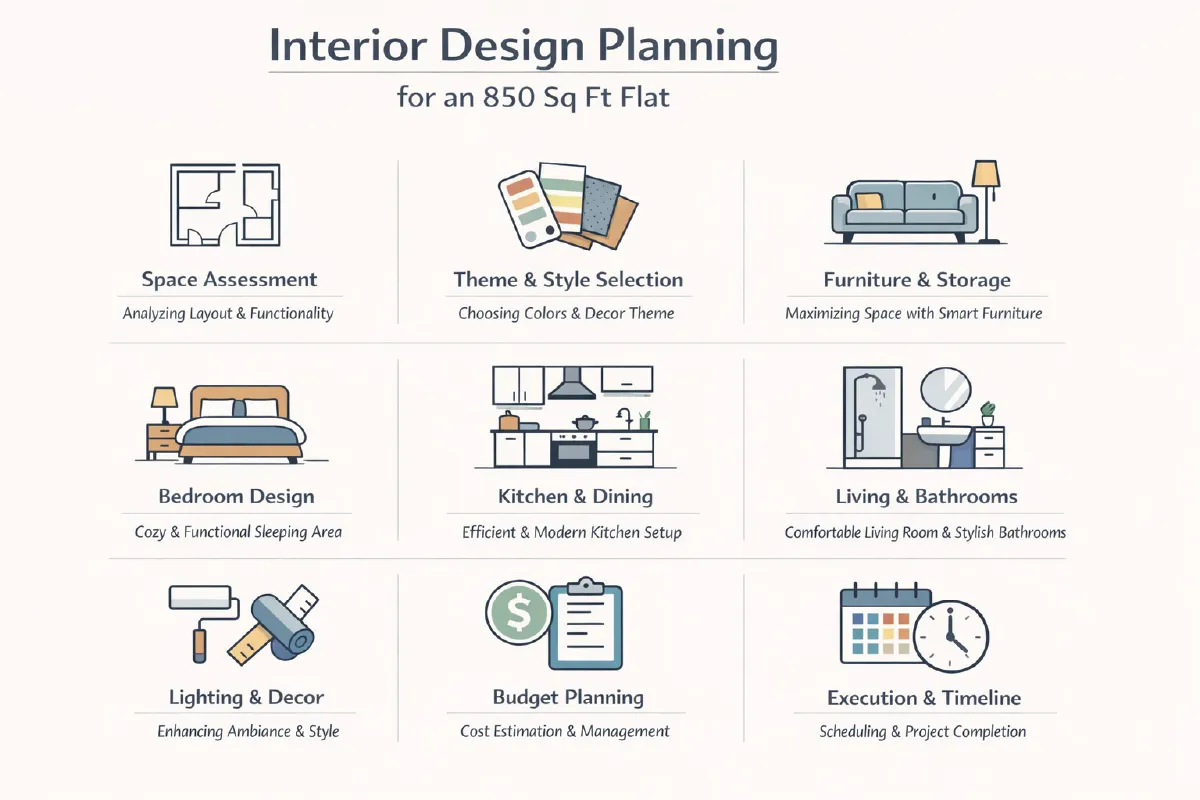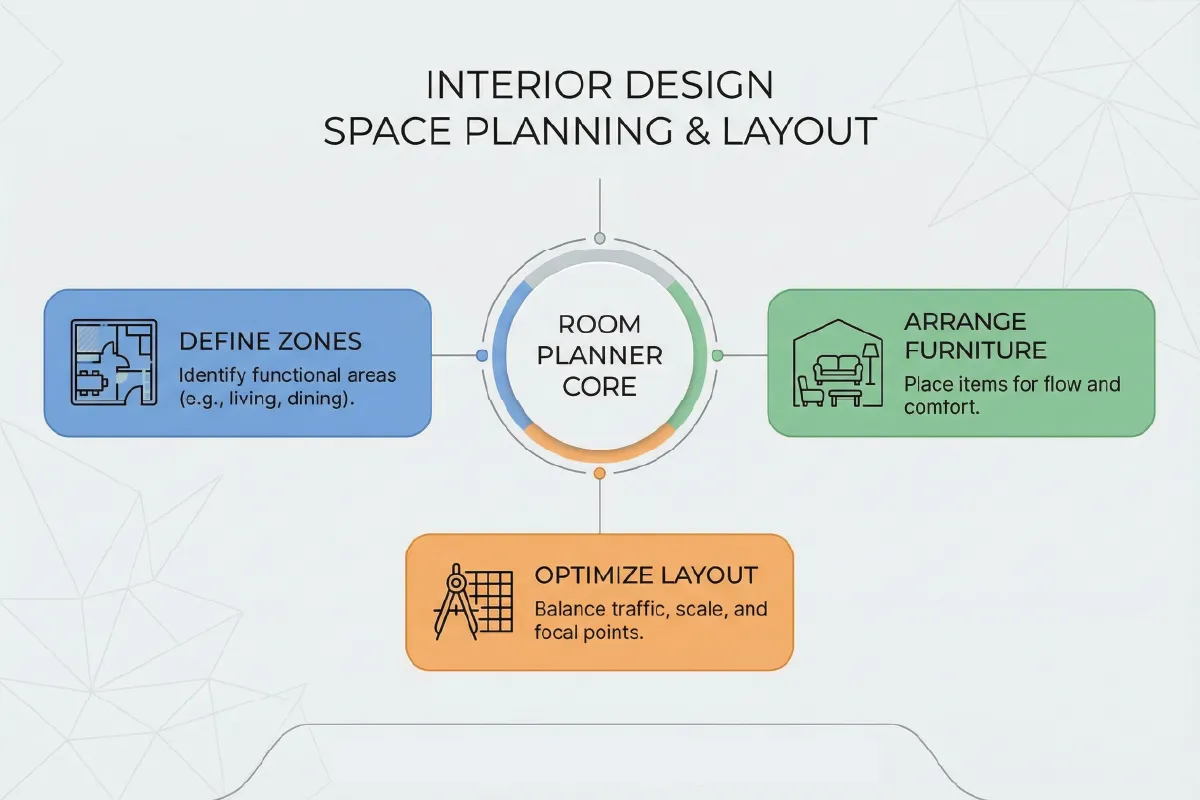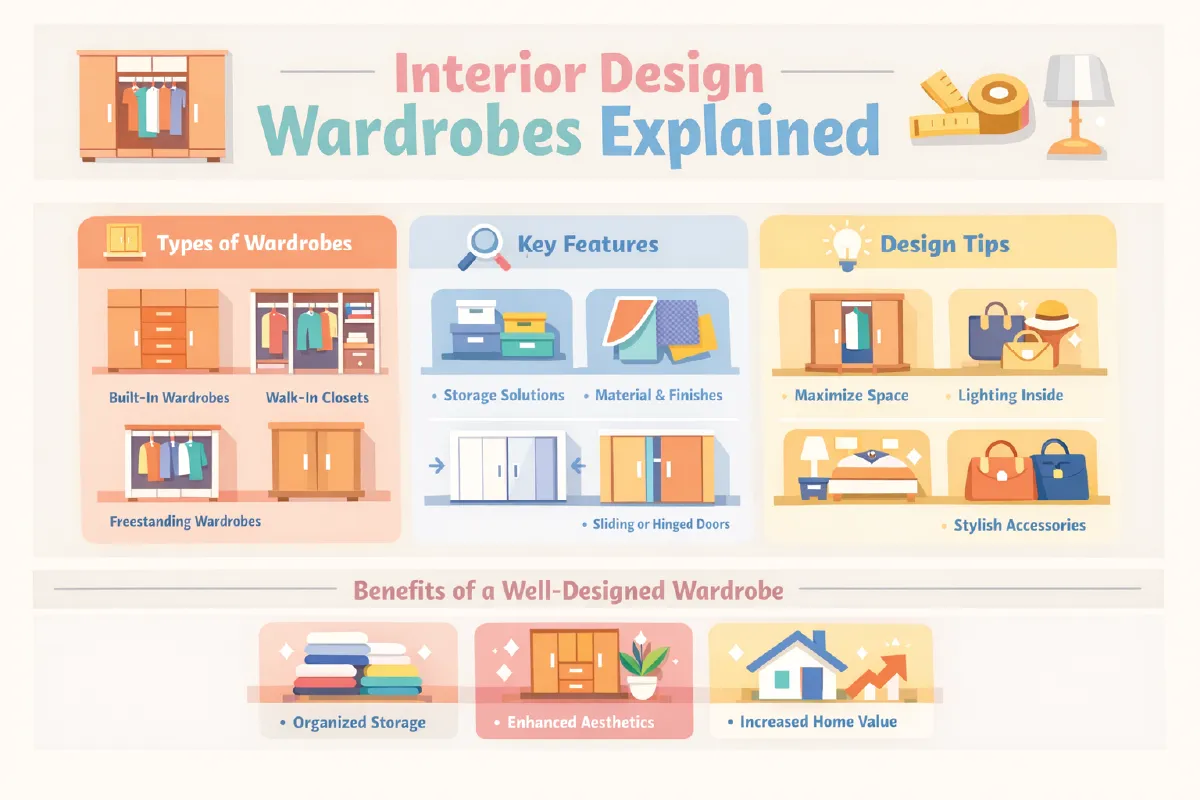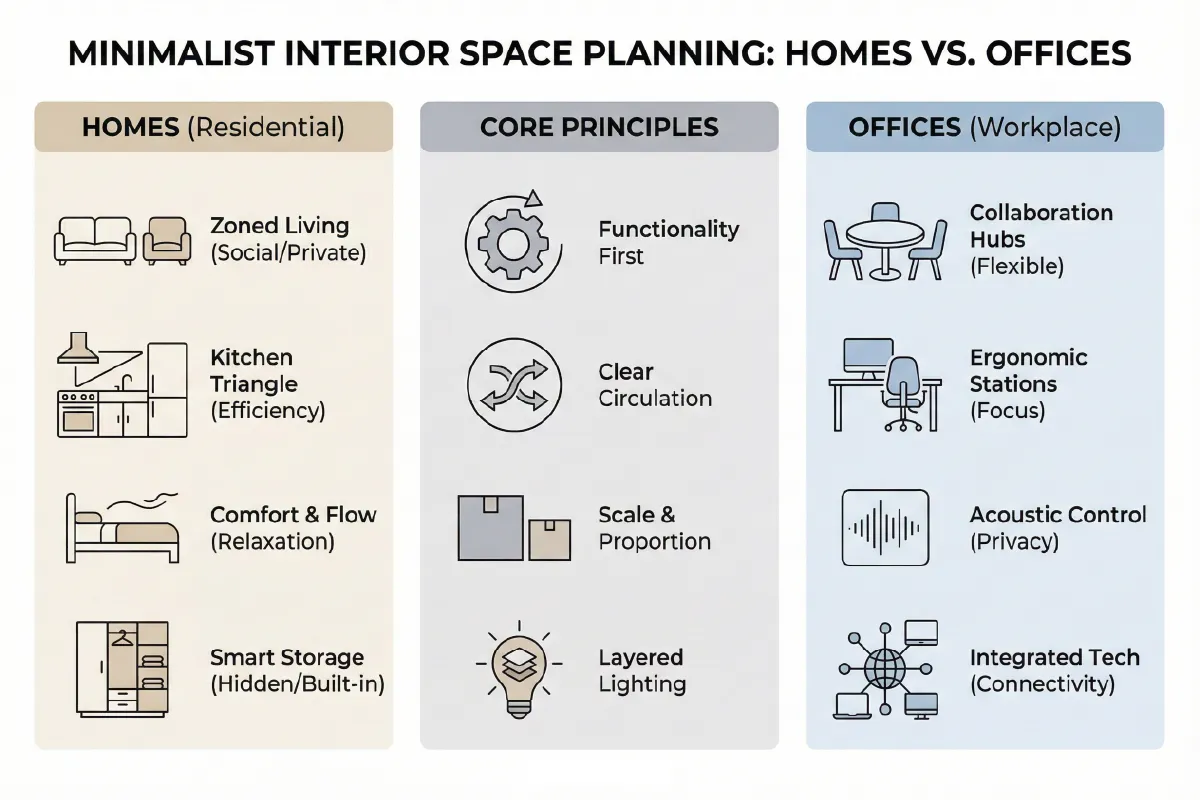
short answer: Interior space planning requirements define how rooms, zones, and circulation paths are organized to support daily activities, privacy, comfort, and efficiency in homes and offices. For residential spaces, planning focuses on family privacy, lifestyle flow, and cultural zoning, while office planning prioritizes workflow efficiency, collaboration, and operational clarity. When space planning requirements are defined correctly, interiors function smoothly, feel intuitive, and adapt well over time.
What Are Interior Space Planning Requirements
Interior space planning requirements are the rules and decisions that determine how different areas within a building are sized, positioned, connected, and separated. These requirements translate user needs into spatial logic, ensuring that every room supports its intended function without unnecessary movement, conflict, or wasted area.
In professional interior design, space planning comes before material selection, styling, or decoration as part of the interior design requirement planning process. A well planned space remains functional even if finishes change, while a poorly planned space fails regardless of how premium the materials are.
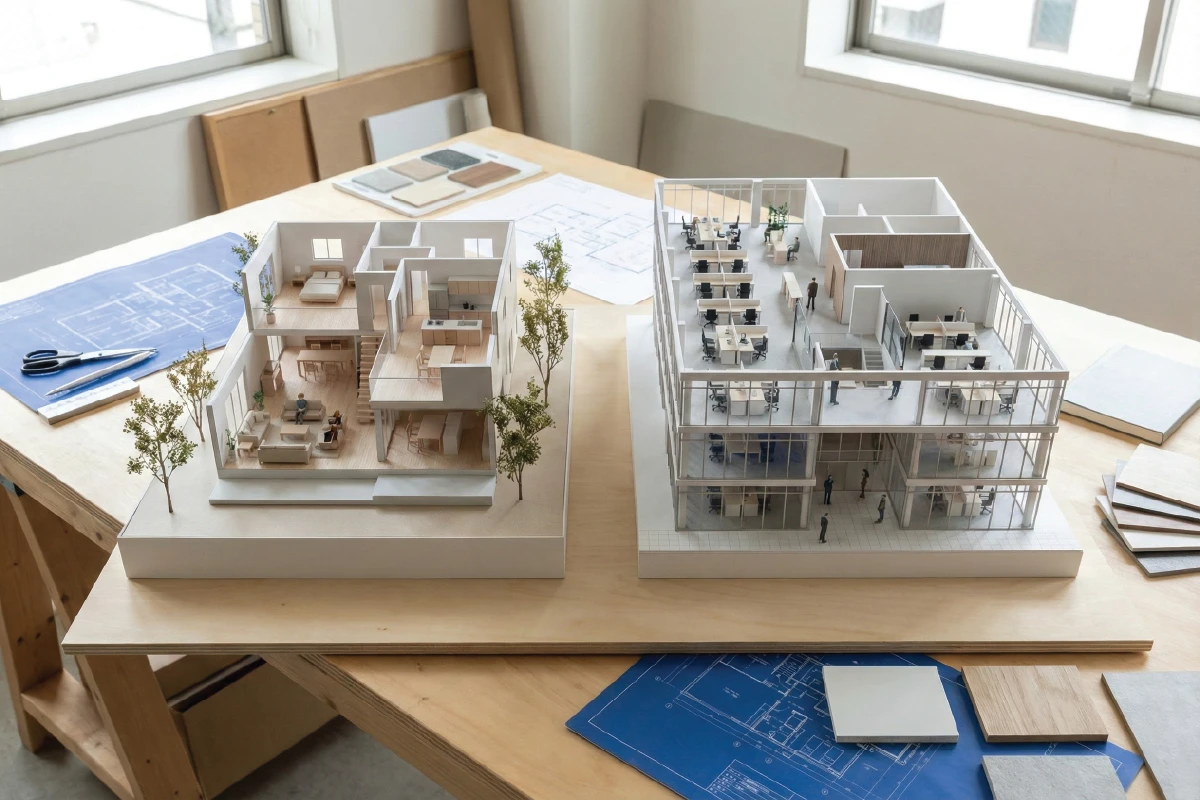
For homes, space planning requirements focus on comfort, privacy, family interaction, and daily routines. For offices, they focus on productivity, communication flow, supervision, and flexibility. Despite these differences, the underlying planning principles remain consistent.
Why Space Planning Is Critical
Space planning is critical because it directly affects how people experience an interior on a daily basis. Poor planning leads to congestion, lack of privacy, inefficient movement, and frustration, even if the design looks visually appealing.
In residential projects across MENA and Asia, space planning mistakes often appear in the form of exposed private areas, awkward guest circulation, or underutilized rooms. In office environments, poor planning results in workflow disruption, noise conflicts, and inefficient supervision.
- It improves usability and comfort
- It supports cultural and lifestyle expectations
- It reduces future renovation needs
- It aligns interiors with real behavior patterns
From experience, most post occupancy complaints are related to planning issues rather than design style. This is why professional designers treat space planning requirements as a non negotiable foundation.
Zoning Logic In Interior Space Planning
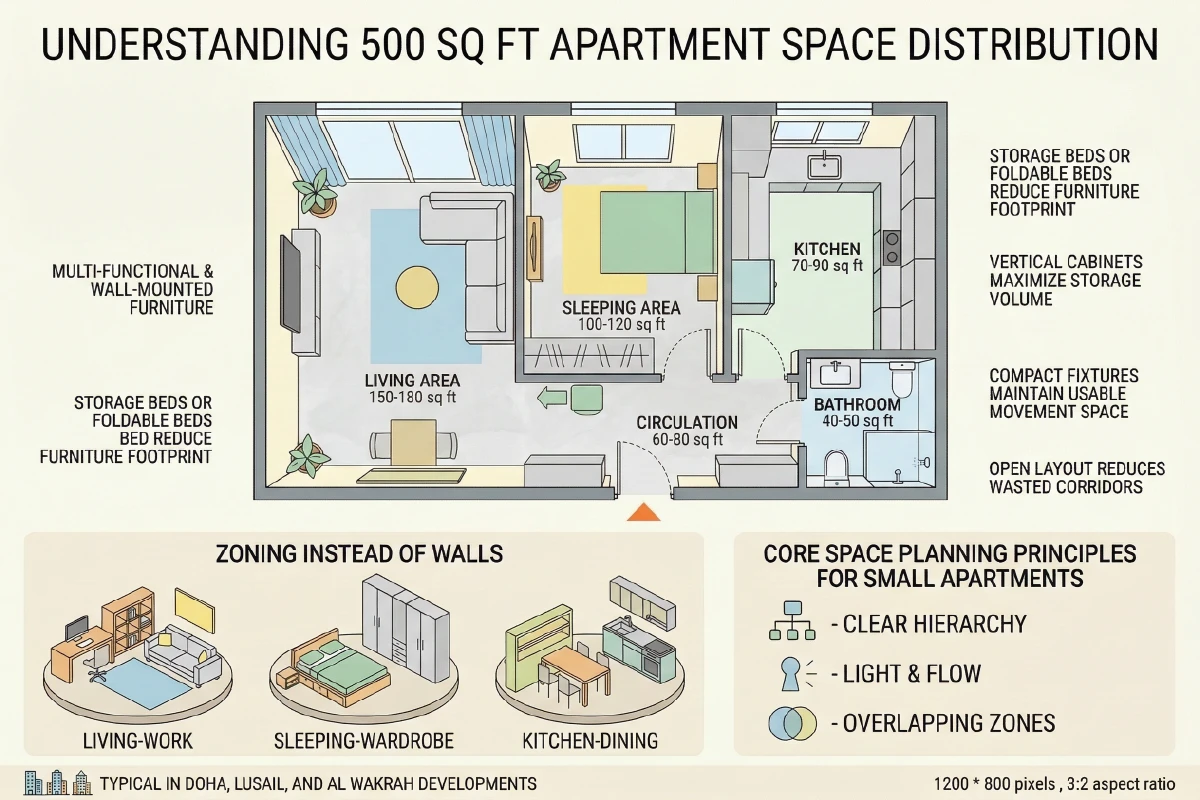
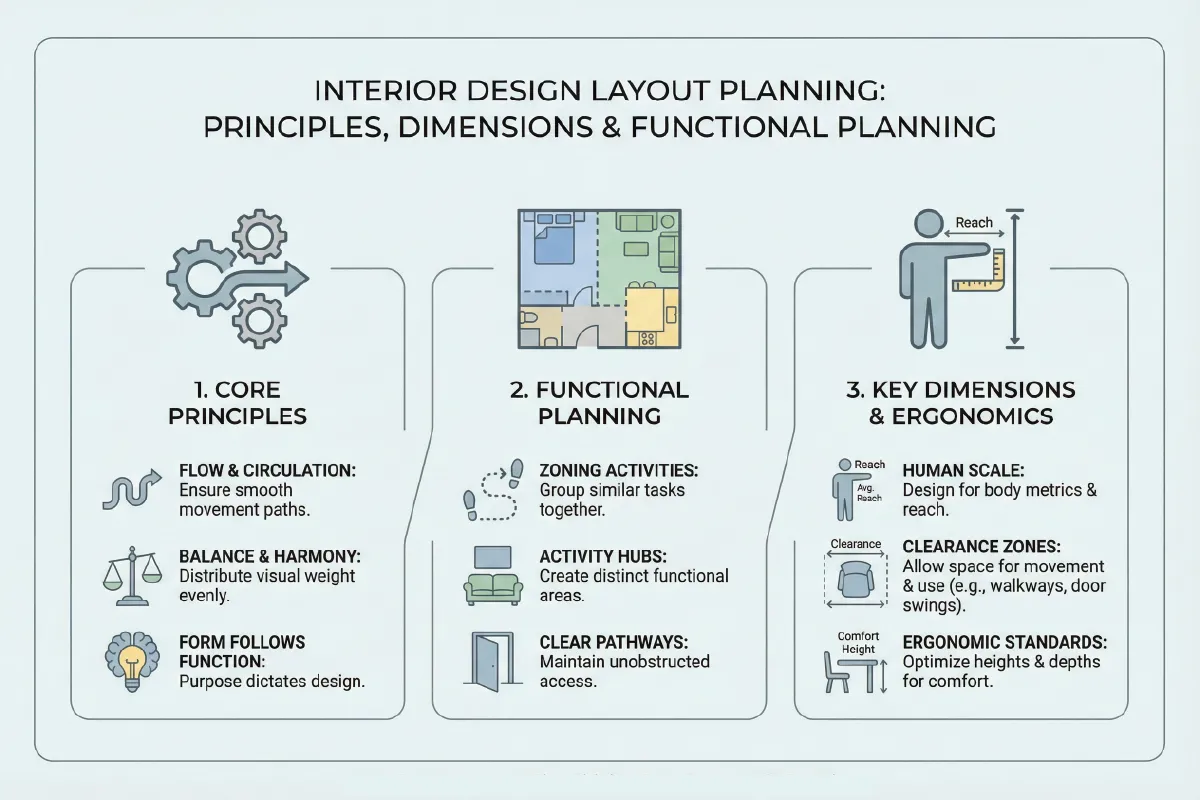
Zoning logic defines how spaces are grouped and separated based on function, privacy, and frequency of use. Clear zoning helps users instinctively understand where they can go, where activities happen, and which areas are restricted.
In residential interiors, zoning typically separates public, semi private, and private areas. For example, living rooms and guest areas are placed closer to entrances, while bedrooms and family lounges are positioned deeper within the home. This approach aligns strongly with cultural expectations in Arabian households and is often refined using an interior design room planner.
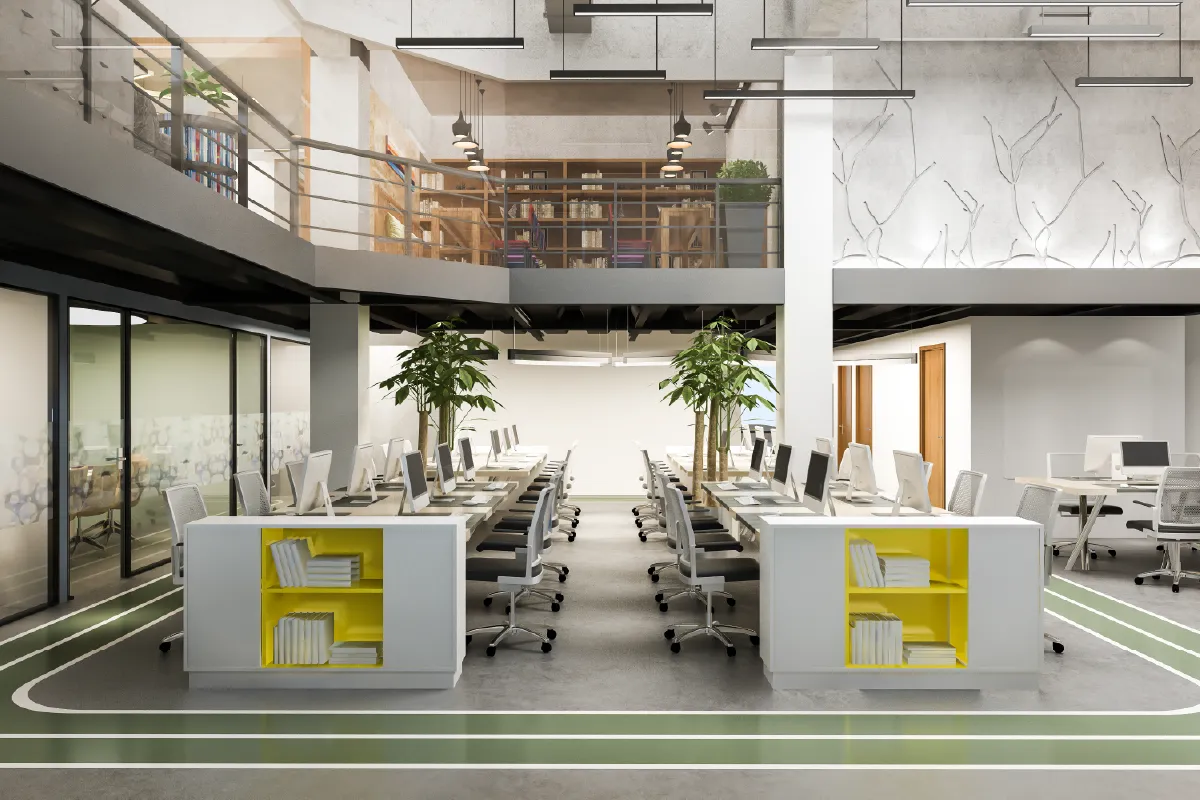
In office environments, zoning focuses on distinguishing between collaborative zones, focused work areas, meeting spaces, and support functions such as storage or utilities.
| Zone Type | Residential Application | Office Application |
|---|---|---|
| Public Zone | Living Rooms, Majlis | Reception, Waiting Areas |
| Semi Private Zone | Dining, Family Lounge | Meeting Rooms |
| Private Zone | Bedrooms | Workstations, Executive Offices |
| Service Zone | Kitchens, Utilities | Pantry, Storage, Server Rooms |
Clear zoning reduces conflict between activities and ensures spaces feel purposeful rather than chaotic.
Circulation Rules For Interior Spaces
Circulation requirements define how people move through an interior without obstruction, confusion, or unnecessary overlap. Good circulation feels natural and effortless, guiding users intuitively from one area to another.
In homes, circulation paths should avoid cutting through private spaces such as bedrooms. In offices, circulation must allow smooth movement between departments while minimizing disruption to focused work zones, which is a core consideration within an interior design layout plan.
- Clear primary and secondary movement paths
- Avoidance of dead ends and bottlenecks
- Logical connection between related spaces
- Separation of guest and private circulation where needed
Well planned circulation not only improves comfort but also enhances safety and accessibility across residential and commercial interiors.
Privacy Planning Requirements In MENA Homes
Privacy planning requirements define how visual, acoustic, and movement privacy is protected within residential interiors. In MENA homes, privacy is not optional or secondary. It is a core planning requirement shaped by cultural norms, family structures, and hospitality traditions.
In practice, privacy planning begins at the entrance. Guest access should be carefully controlled so visitors can reach reception or majlis areas without passing through private family zones. Bedrooms, family lounges, and prayer spaces are typically positioned deeper within the home to maintain separation.
Effective privacy planning also considers sightlines, door alignments, and transitional spaces such as corridors or buffer zones. These design decisions prevent accidental exposure while maintaining spatial flow.
- Clear separation between guest and family circulation
- Visual buffers between entrances and private rooms
- Acoustic separation for bedrooms and family areas
- Dedicated spaces for formal and informal gatherings
Homes that respect privacy planning requirements feel dignified, comfortable, and culturally appropriate. When these requirements are ignored, even large homes can feel intrusive or uncomfortable for daily living.
Office Workflow Planning Requirements
Office workflow planning requirements define how people, information, and tasks move through a workspace. Unlike residential interiors, office planning is driven by productivity, collaboration efficiency, and management visibility.
A well planned office minimizes unnecessary movement, reduces noise conflict, and supports different work modes. For example, collaborative teams benefit from proximity to meeting rooms, while focused roles require quieter zones away from circulation paths.
Modern office planning increasingly balances open layouts with enclosed or semi enclosed spaces, allowing flexibility without sacrificing concentration.
- Adjacency planning between related departments
- Clear separation between high traffic and focused zones
- Accessible meeting and collaboration areas
- Support spaces positioned for operational efficiency
From experience, offices that respect workflow planning requirements show measurable improvements in employee satisfaction and operational clarity.
Residential And Office Space Planning Comparison
Although residential and office interiors follow the same planning principles, their priorities differ significantly. Understanding these differences helps avoid applying inappropriate design logic across project types.
| Planning Aspect | Residential Homes | Offices |
|---|---|---|
| Primary Focus | Comfort And Privacy | Productivity And Collaboration |
| Circulation | Separated Guest And Family Flow | Efficient Interdepartment Movement |
| Zoning Logic | Public, Semi Private, Private | Operational And Functional Zones |
| Flexibility | Moderate Long Term Adaptation | High Reconfiguration Needs |
Recognizing these contrasts ensures that planning decisions are aligned with how spaces are actually used rather than how they are visually imagined.
Practical Space Planning Insight
Consider a mid sized corporate office redesigned for a growing team. The original layout placed meeting rooms deep within the workspace, forcing constant cross traffic. By reworking the space planning requirements, meeting areas were relocated closer to the entrance, while focused work zones were consolidated into quieter areas.
This adjustment reduced interruptions, improved movement clarity, and enhanced overall productivity without increasing floor area. The success of the redesign was driven entirely by planning logic rather than expensive finishes.
This example highlights how clear space planning requirements can transform how interiors function, even within existing constraints.
How Space Planning Feeds Into Overall Interior Design Requirements
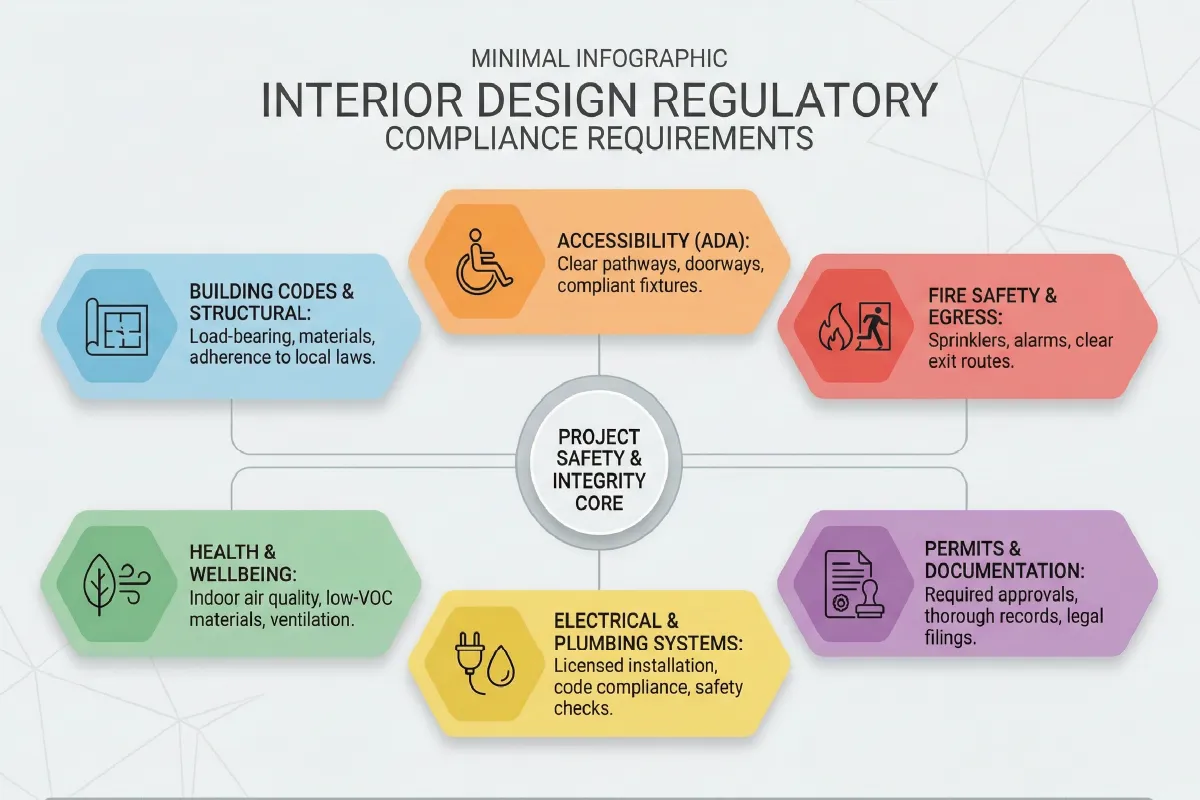
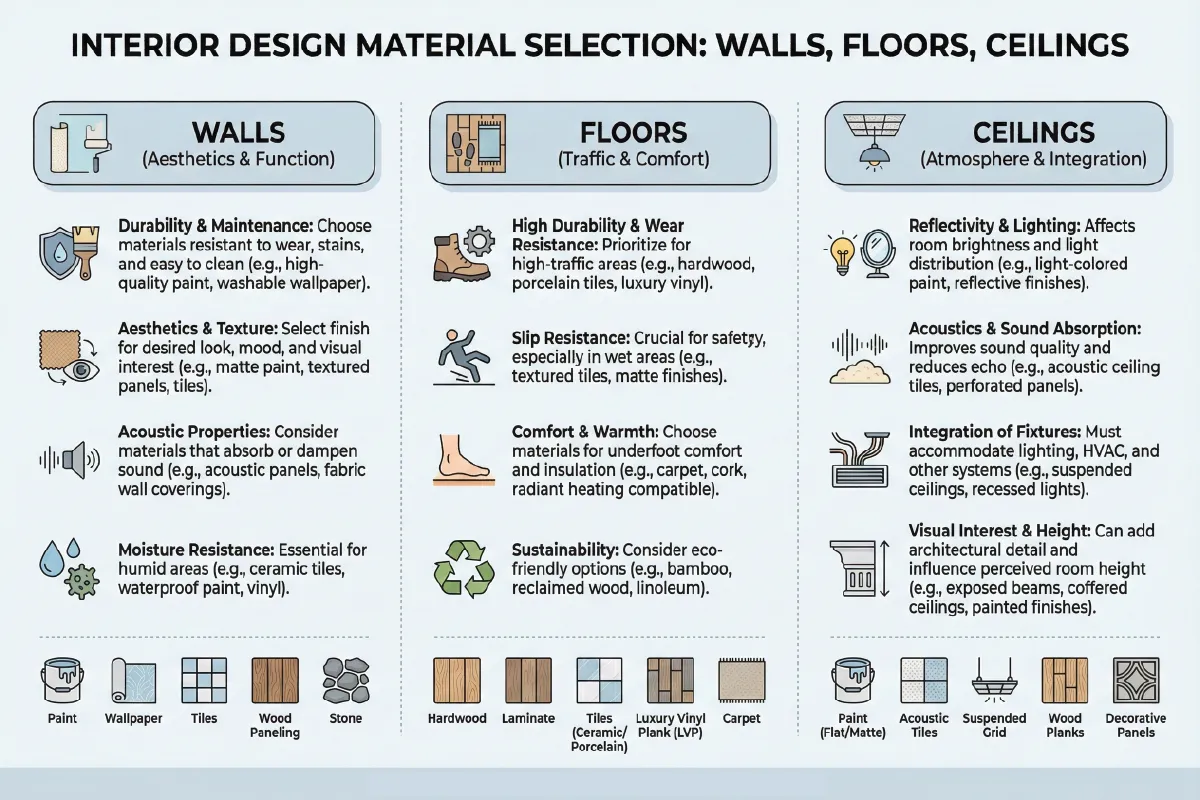
Interior space planning requirements are not standalone decisions. They directly influence and support the broader interior design requirement planning process defined at the project level. Space planning determines how technical systems are coordinated, how materials are selected, and how regulatory compliance is achieved.
For example, circulation paths affect fire exit planning, zoning decisions impact lighting requirements and HVAC and ventilation requirements, and privacy planning influences wall construction and acoustic treatment. This is why space planning must align with the complete interior design requirements framework rather than being treated as an isolated design task.
In professional workflows, space planning outcomes are validated against the overall interior design requirements before moving into detailed design and execution.
Frequently Asked Questions
What Are Interior Space Planning Requirements
Interior space planning requirements define how rooms, zones, and circulation paths are organized to support function, privacy, comfort, and efficiency in residential and office interiors.
Why Is Space Planning More Important Than Interior Styling
Space planning affects daily usability and long term comfort. Styling can be changed over time, but poor planning is difficult and costly to correct once construction is complete.
How Does Space Planning Differ Between Homes And Offices
Homes prioritize privacy, lifestyle flow, and family comfort, while offices prioritize workflow efficiency, collaboration, supervision, and operational flexibility.
When Should Space Planning Requirements Be Finalized
Space planning requirements should be finalized before technical design and material selection begin. Early clarity reduces redesign and coordination issues.
Key Takeaways
- Space Planning Is Foundational: Interior planning requirements shape how spaces function long before finishes are applied.
- Zoning Creates Order: Clear public, private, and service zones improve comfort and usability.
- Circulation Drives Experience: Efficient movement paths reduce congestion and frustration.
- Privacy Is Contextual: Cultural and lifestyle expectations strongly influence residential planning in MENA.
- Offices Require Workflow Logic: Productivity depends on adjacency, noise control, and operational clarity.
References
- Professional interior space planning manuals
- Workplace design and planning guidelines
- Residential interior planning best practices