Short answer: Lighting requirements in interior design define how light is planned, layered, and controlled to support comfort, safety, productivity, and visual clarity in residential and commercial spaces. These requirements include ambient, task, and accent lighting, appropriate brightness for different activities, glare control, energy efficiency, and coordination with material selection requirements, space planning, and regulatory standards. When lighting is planned correctly, interiors function better, feel balanced, and support real daily use rather than relying only on decorative fixtures.
What Are Lighting Requirements In Interior Design
Lighting requirements in interior design are the functional and technical rules that determine how light is distributed, controlled, and experienced within a space. These requirements ensure that interiors support visibility, comfort, safety, and usability across different activities and times of day.
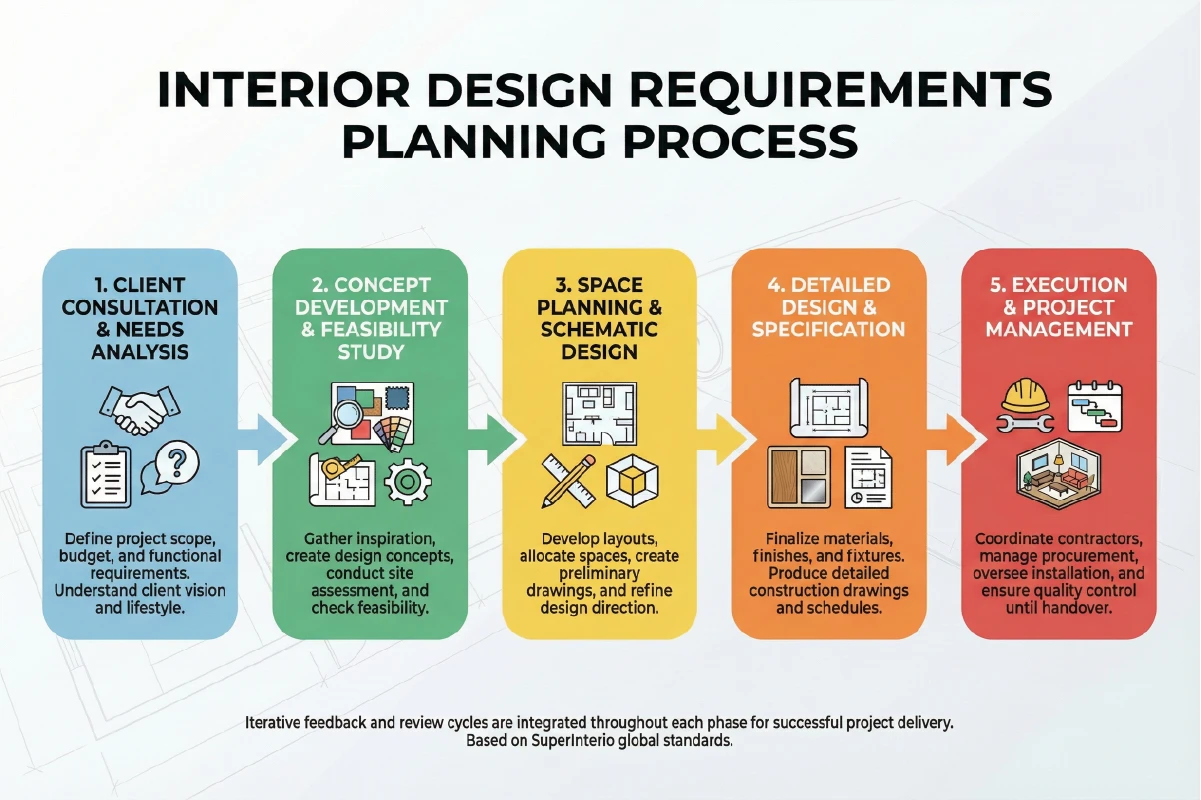
In professional practice, lighting is treated as a performance system rather than a decorative afterthought. The goal is not simply to illuminate a room, but to provide the right quality and quantity of light exactly where it is needed, without glare, discomfort, or energy waste, as defined within the interior design requirement planning process.
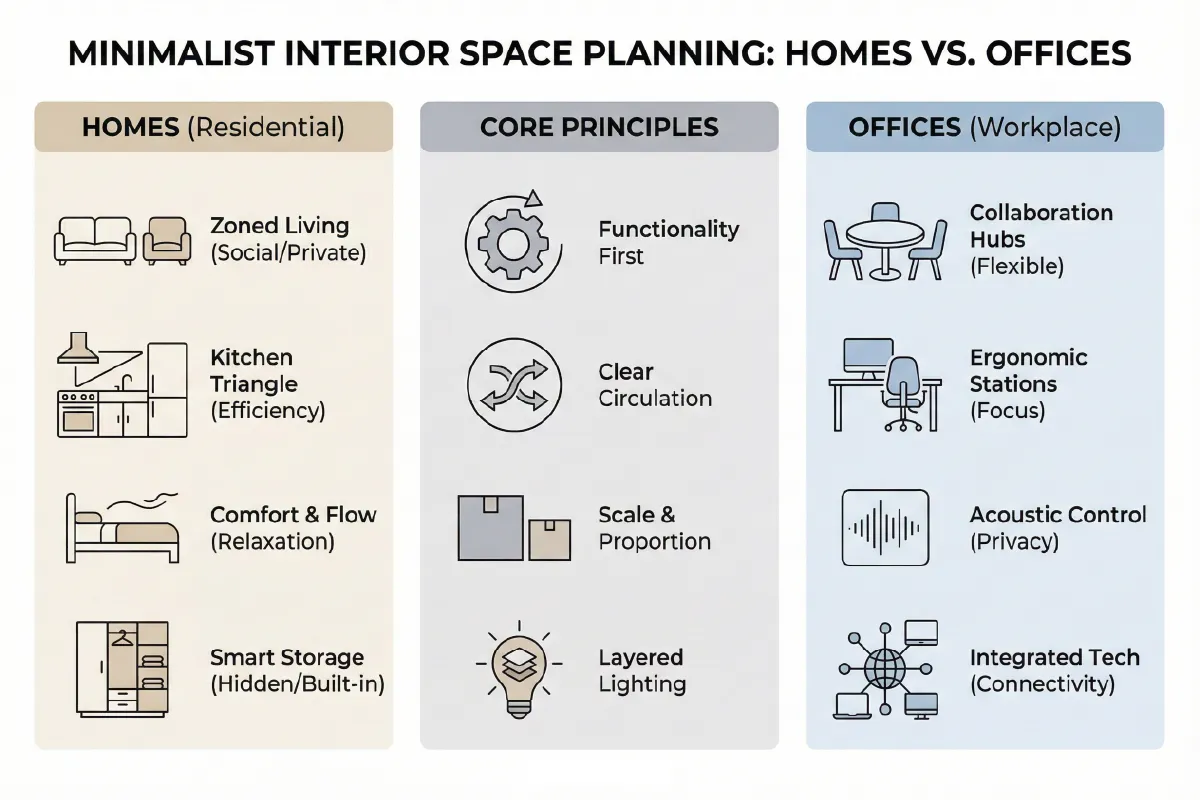
Lighting requirements are closely linked to space planning. Circulation paths, work zones, seating areas, and feature elements all require different lighting responses. When lighting is planned without reference to spatial function, interiors often feel either flat or visually uncomfortable.
Why Lighting Requirements Are Critical
Lighting requirements are critical because light directly influences how people perceive and use a space. Poor lighting can cause eye strain, fatigue, reduced productivity, and safety risks, even in well designed interiors.
In residential settings, inadequate lighting affects comfort and mood, while overly harsh lighting disrupts relaxation and privacy. In offices and commercial environments, incorrect lighting levels can reduce focus, increase errors, and create long term discomfort for occupants.
- They support safe movement and task performance
- They improve comfort and visual balance
- They influence productivity and concentration
- They reduce energy consumption when planned correctly
From experience, lighting issues are among the most common post handover complaints because they are difficult and costly to correct once ceilings and finishes are complete.
Types Of Lighting Requirements
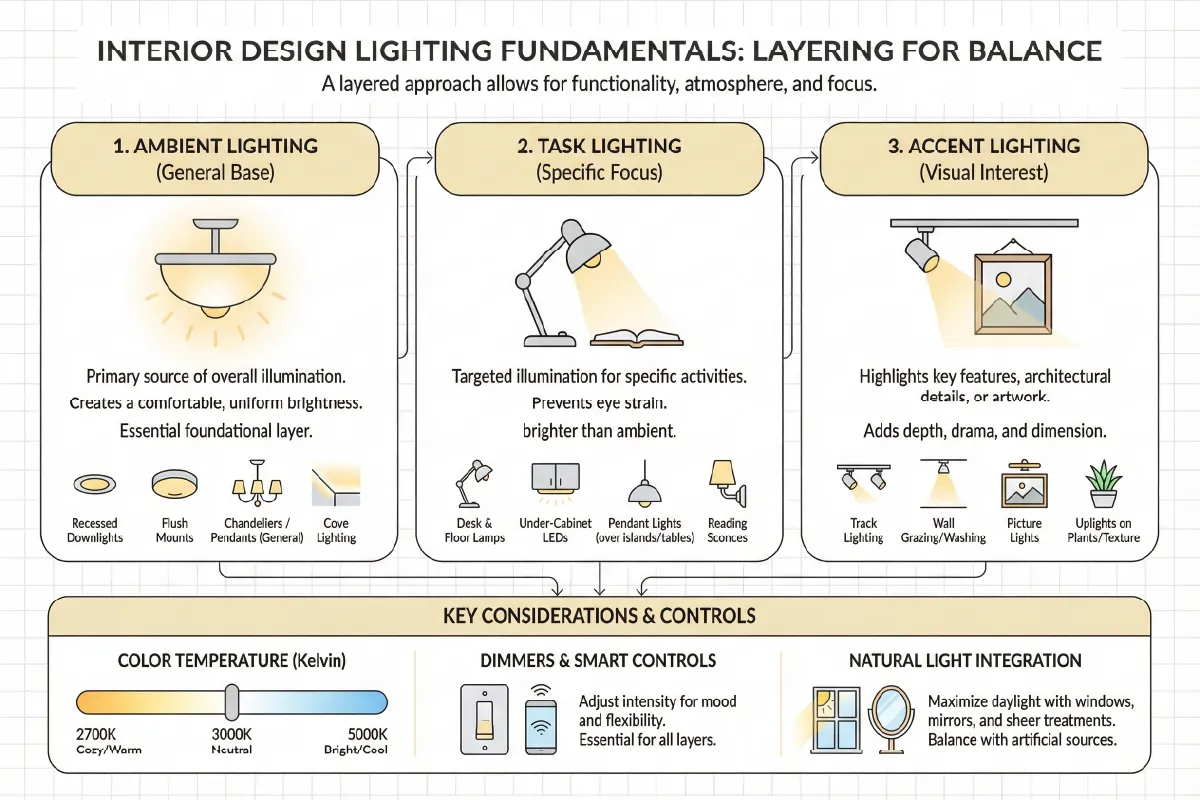
Interior lighting requirements are typically divided into three functional types. Each type serves a specific purpose and must be coordinated rather than applied independently.
| Lighting Type | Purpose | Typical Application |
|---|---|---|
| Ambient Lighting | General illumination | Living areas, circulation spaces |
| Task Lighting | Support specific activities | Kitchens, desks, workstations |
| Accent Lighting | Highlight features and depth | Walls, artwork, architectural details |
Effective lighting requirements balance all three types to avoid over reliance on a single lighting source.
Layered Lighting Approach
The layered lighting approach is a core requirement in professional interior design. It ensures that spaces remain functional, adaptable, and visually comfortable under different conditions.
Layered lighting combines ambient, task, and accent lighting so that each space can respond to different activities and times of day. For example, a Living Room may require general lighting for movement, softer lighting for relaxation, and accent lighting to enhance visual depth.
Without a layered approach, interiors often rely on excessive ceiling lighting, resulting in flat illumination and unnecessary energy consumption.
Lighting Requirements For Residential Interiors
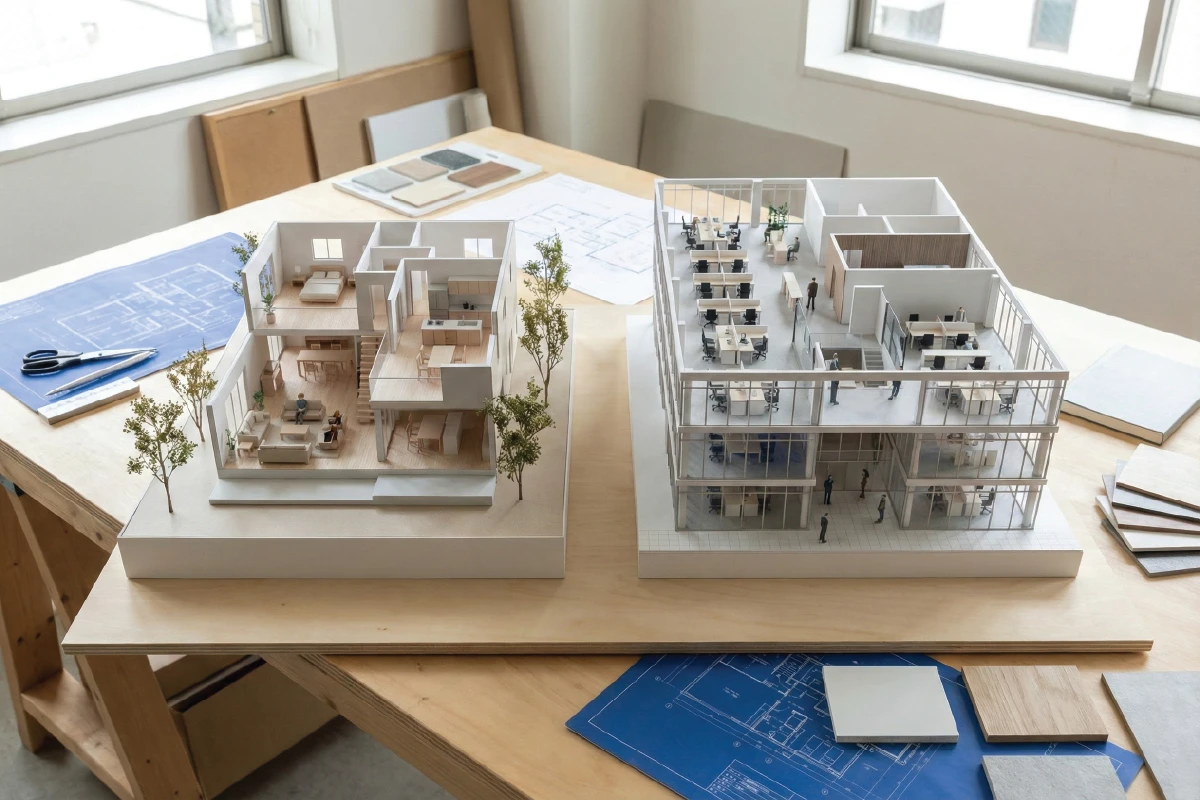
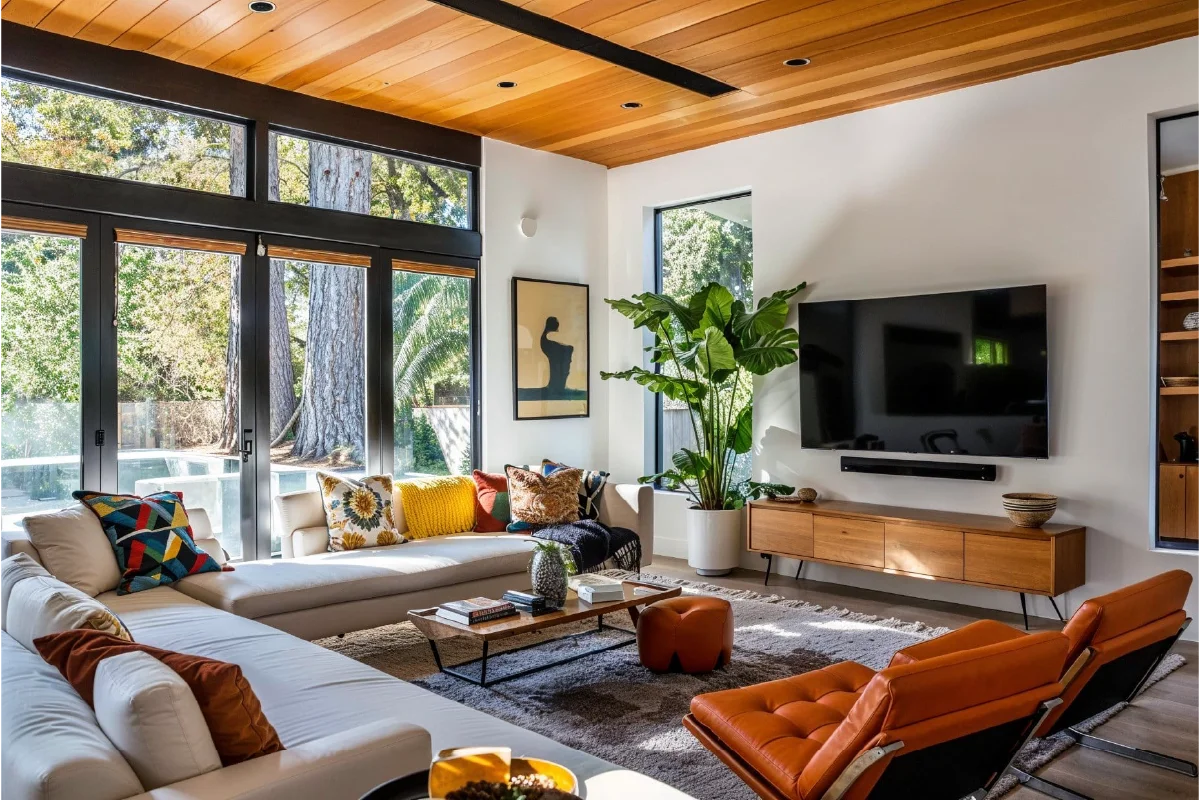
Lighting requirements for residential interiors focus on comfort, mood, safety, and daily usability. Homes are not used uniformly throughout the day, so lighting must adapt to different activities, times, and emotional needs.
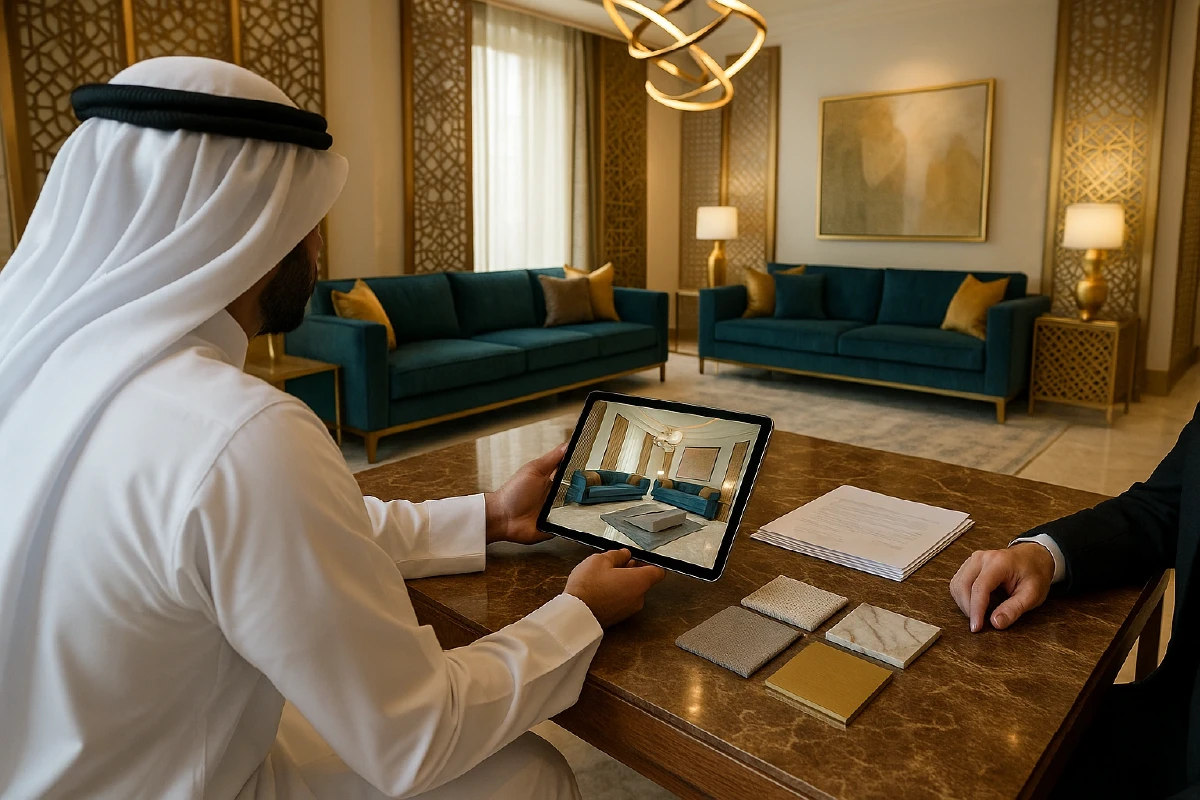
In residential design across Asia and MENA, lighting is often expected to feel warm, balanced, and welcoming rather than purely functional. This is especially important in living rooms, family lounges, and bedrooms where occupants spend extended periods.
- Living areas require soft ambient lighting supported by accent lighting
- Kitchens require focused task lighting for safe food preparation
- Bedrooms require adjustable lighting for rest and privacy
- Bathrooms require clear, shadow free lighting for grooming
Residential lighting requirements must also respect privacy, ensuring that interior lighting does not create unwanted visibility from outside, particularly in densely built neighborhoods.
Lighting Requirements For Offices And Commercial Spaces
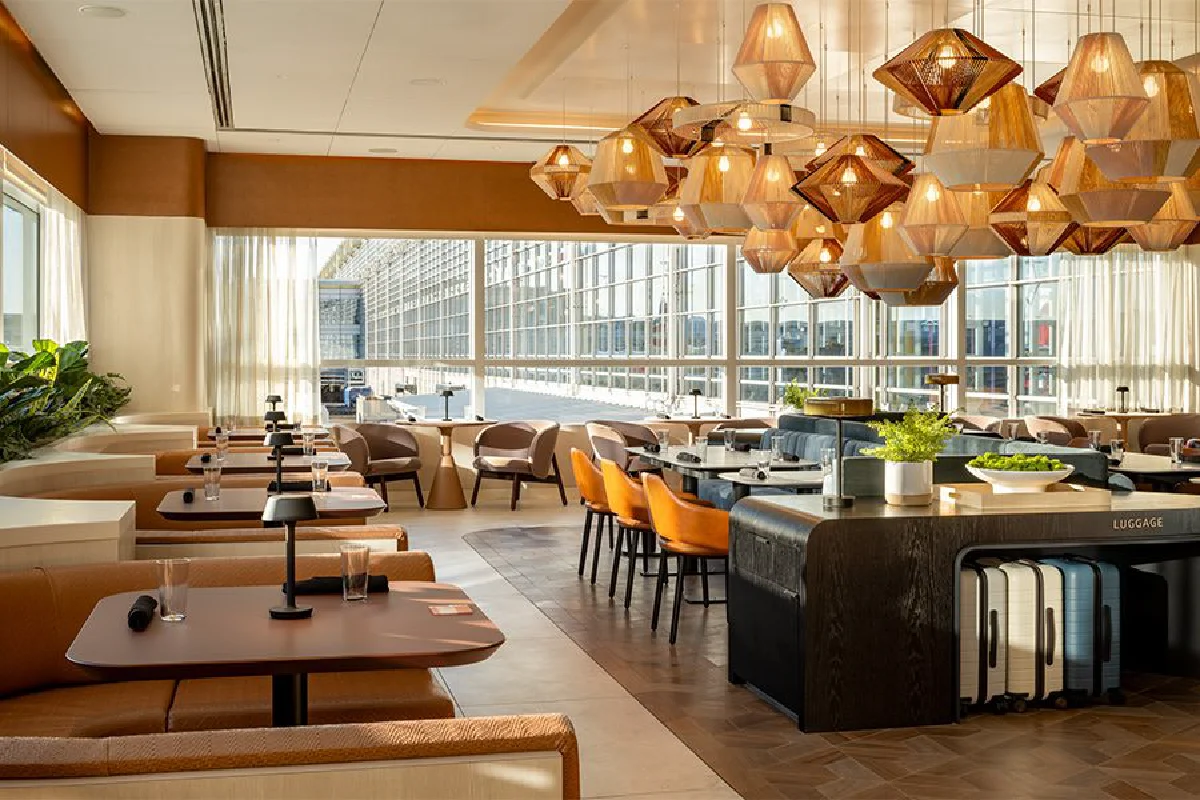
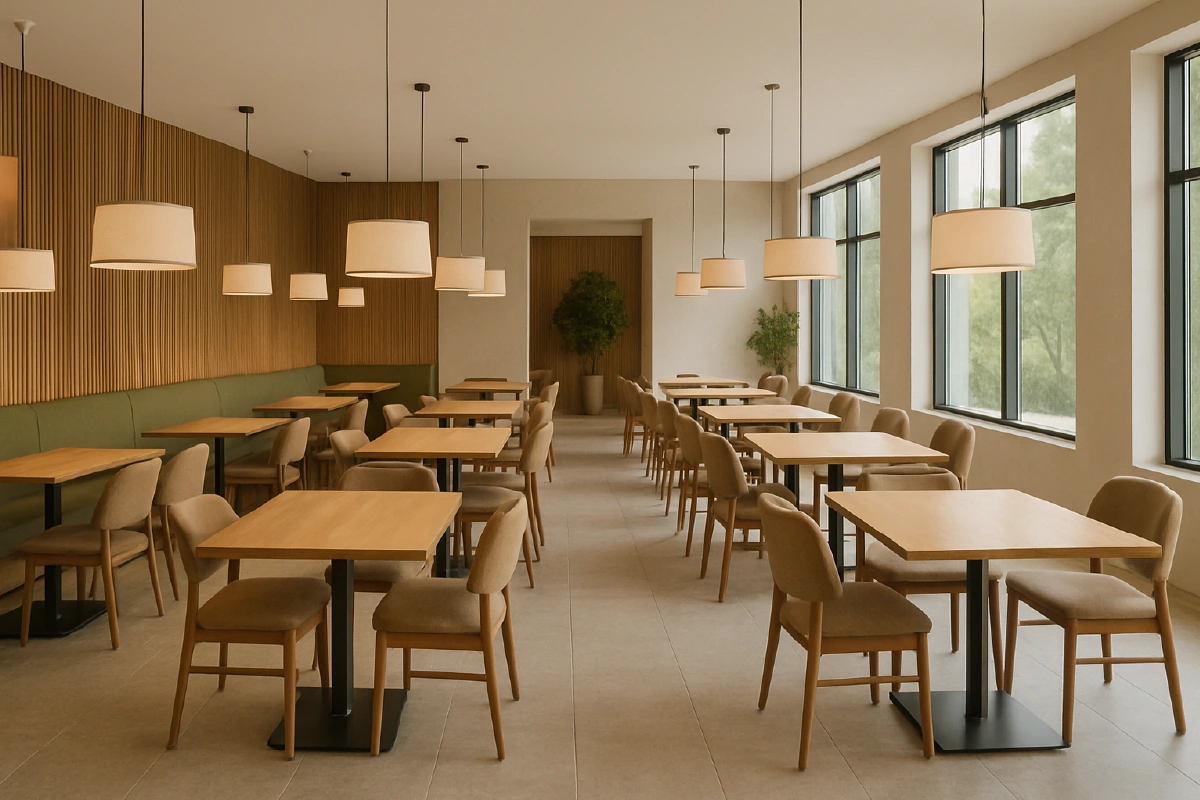
Lighting requirements for offices and commercial spaces prioritize visual clarity, productivity, safety, and regulatory compliance. Unlike homes, commercial interiors must support consistent performance across extended working hours.
Office lighting must reduce glare, prevent eye strain, and support focus. Retail and commercial environments may use accent lighting strategically to guide attention, but functional clarity always remains the primary requirement.
- Uniform lighting for workstations and desks
- Clear lighting for meeting and collaboration areas
- Controlled accent lighting for reception or retail displays
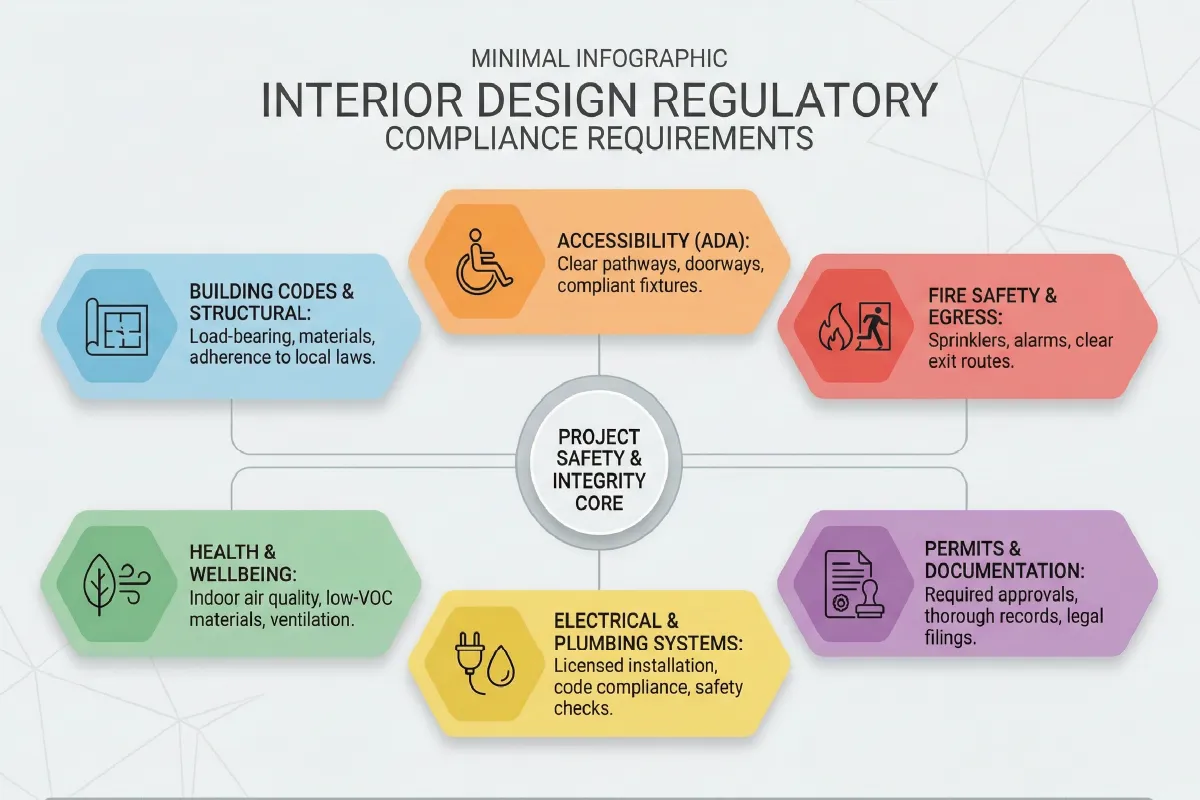
- Emergency and safety lighting as per regulations
From experience, offices with poorly planned lighting often suffer from reduced productivity and increased employee discomfort, even when furniture and layouts are well designed.
Functional Lighting Needs By Space Type
Different interior spaces require different lighting responses based on how they are used. Defining lighting requirements by space type ensures that lighting supports function rather than working against it.
| Space Type | Primary Lighting Need | Design Focus |
|---|---|---|
| Living Rooms | Ambient And Accent | Comfort And Visual Balance |
| Kitchens | Task Lighting | Safety And Visibility |
| Bedrooms | Soft Adjustable Lighting | Rest And Privacy |
| Workstations | Uniform Illumination | Focus And Reduced Glare |
| Meeting Rooms | Balanced Lighting | Communication Clarity |
When lighting requirements are matched correctly to space function, interiors feel intuitive and supportive rather than visually exhausting.
Residential And Commercial Lighting Comparison
Although residential and commercial interiors use similar lighting principles, their priorities and constraints differ. Understanding these differences helps prevent inappropriate lighting strategies.
| Aspect | Residential Interiors | Commercial Interiors |
|---|---|---|
| Main Objective | Comfort And Mood | Productivity And Safety |
| Lighting Control | Flexible And Personalized | Standardized And Regulated |
| Accent Lighting | Decorative Enhancement | Guidance And Branding |
| Energy Focus | Moderate | High Operational Efficiency |
Recognizing these contrasts ensures lighting requirements are aligned with how spaces are actually occupied and managed.
Energy Efficiency And Sustainability Requirements
Energy efficiency is a core lighting requirement in modern interior design, especially in commercial projects and large residential developments. Efficient lighting reduces operational costs, supports sustainability goals, and improves long term performance without compromising visual comfort.
Professional lighting requirements prioritize efficient light sources, appropriate controls, and intelligent distribution rather than excessive fixture counts. In offices and commercial spaces, energy efficiency is often a regulatory expectation in addition to a cost consideration.
- Use of energy efficient lighting technologies
- Lighting controls such as dimming and zoning
- Daylight integration where possible
- Reduced maintenance through longer lifespan fixtures
When energy efficiency is addressed during planning, lighting systems remain flexible, economical, and future ready.
Common Lighting Planning Mistakes
Many lighting issues arise not from poor products but from incomplete planning. Identifying common mistakes helps prevent costly corrections after project completion.
- Relying only on ceiling lighting without layering
- Ignoring glare and reflection on work surfaces
- Over lighting spaces unnecessarily
- Placing fixtures without considering furniture layout
- Failing to coordinate lighting with ceilings and services
Avoiding these mistakes improves comfort, efficiency, and long term user satisfaction across residential and commercial interiors.
Practical Lighting Design Insight
Consider an open plan office that experienced frequent complaints of eye strain and fatigue. The original design relied heavily on uniform ceiling lighting without task level support. By redefining the lighting requirements, task lighting was introduced at workstations, ambient lighting levels were reduced, and glare control was improved.
The result was a noticeable improvement in comfort and productivity without increasing energy consumption. This example highlights how correct lighting requirements influence performance more than decorative choices.
Frequently Asked Questions
Why Is Layered Lighting Important In Interior Design
Layered lighting ensures that spaces support multiple activities by combining ambient, task, and accent lighting. This approach improves comfort, flexibility, and visual balance.
Can Lighting Affect Productivity In Offices
Yes. Poor lighting can cause eye strain, fatigue, and reduced concentration, while well planned lighting supports focus and efficiency.
When Should Lighting Requirements Be Finalized
Lighting requirements should be finalized during early design stages alongside space planning requirements and technical coordination to avoid conflicts and redesign.
Are Residential And Commercial Lighting Requirements The Same
No. Residential lighting prioritizes comfort and mood, while commercial lighting prioritizes productivity, safety, and regulatory compliance.
Key Takeaways
- Lighting Is A Performance System: Good lighting supports comfort, safety, and productivity.
- Layering Is Essential: Ambient, task, and accent lighting must work together.
- Residential And Commercial Needs Differ: Each environment requires a different lighting strategy.
- Energy Efficiency Matters: Efficient lighting reduces costs and improves sustainability.
- Early Planning Prevents Issues: Most lighting problems arise from late or incomplete planning.
References
- Professional lighting design guidelines
- Workplace lighting best practices
- Residential interior lighting standards