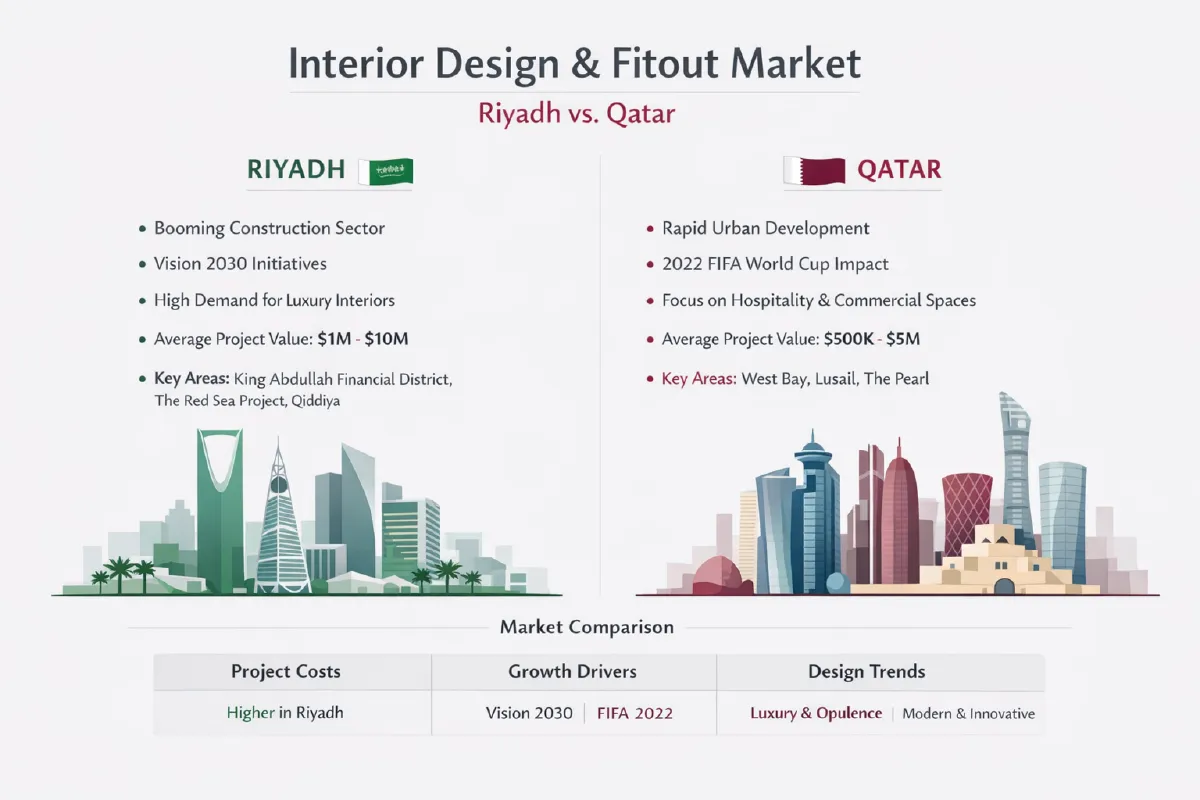
Short answer: while both Riyadh and Qatar regulate interior design and fit-out projects through authority approvals, Riyadh typically enforces broader scope control and centralized review, whereas Qatar applies more segmented authority checks with stricter scope separation between design, fit-out, and structural responsibilities.
Approval Frameworks In Riyadh Versus Qatar
Interior design and fit-out approvals in Riyadh are generally managed through a more centralized authority structure. Municipal and civil defense reviews are often bundled, with approvals tied closely to land use, occupancy classification, and developer master approvals.
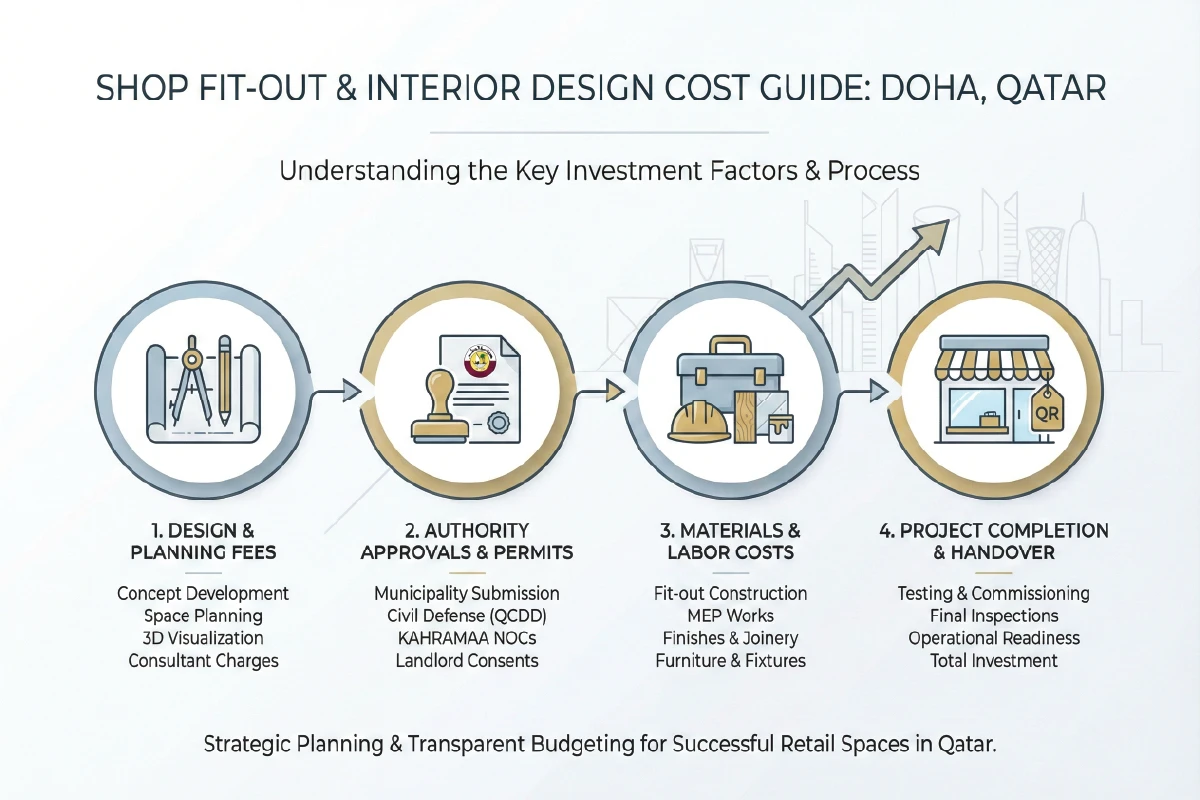
In Qatar, approvals are more segmented. Interior projects may pass through municipality review, Civil Defense fire approval, and building management checks as separate steps. This segmentation allows clearer responsibility boundaries but requires stronger coordination.
For Qatar based clients reviewing Riyadh projects, this difference often translates into fewer submission channels in Saudi Arabia but higher upfront documentation expectations.
Scope Definition Differences Between Markets
Riyadh authorities often treat interior fit-out scope as an extension of building compliance. Interior changes that affect occupancy, circulation, or service capacity are more likely to be reviewed as part of a broader building scope.
In Qatar, interior scope is more clearly delineated. Designers and contractors operate within defined non structural limits, with deviations requiring escalation. This separation is explained in detail in Difference Between Design, Fit-Out & Turnkey Projects Explained.
As a result, Qatar projects tend to involve more explicit scope documentation but less overlap between interior and base building responsibilities.
Practical Impact On Project Planning
These structural differences affect how clients budget time and resources. In Riyadh, early concept alignment is critical because later changes can trigger broader revalidation.
In Qatar, iterative coordination is more common. Clients often refine layouts across authority cycles, provided scope limits are respected. Understanding local coordination expectations is essential, especially when managing multi country portfolios.
Approval Timelines And Cost Implications
Approval timelines in Riyadh and Qatar differ primarily due to how authorities sequence reviews. In Riyadh, approvals often take longer at the initial stage because multiple disciplines are reviewed together. However, once cleared, downstream changes are more restricted.
In Qatar, timelines are distributed across separate reviews. While individual approvals may be faster, total project duration can extend if coordination is weak or if submissions are revised multiple times.
From a cost perspective, Riyadh projects tend to require heavier upfront documentation investment, whereas Qatar projects may incur incremental costs during iterative coordination phases.
Documentation And Submission Depth
| Aspect | Riyadh | Qatar |
|---|---|---|
| Submission Structure | Centralized and bundled | Segmented by authority |
| Scope Flexibility | Limited after approval | Moderate within defined limits |
| Revision Handling | Triggers revalidation | Handled through coordination cycles |
| Typical Approval Risk | Upfront rejection | Delayed coordination |
Client Decision Considerations When Comparing Markets
For Qatar based clients evaluating projects in Riyadh, expectations around flexibility must be adjusted. Riyadh favors early finalization, while Qatar accommodates controlled evolution.
Clients managing portfolios across both markets benefit from separating design intent from approval strategy. Applying Qatar style flexibility assumptions to Riyadh projects often leads to approval friction.
Understanding approval roles locally is critical. For Qatar projects, coordination responsibilities are detailed further in Fitout Authority Coordination in Qatar.
Key Takeaways
- Approval Structure Differs: Riyadh centralizes reviews, Qatar separates them.
- Scope Flexibility Varies: Qatar allows limited iteration, Riyadh restricts changes.
- Cost Timing Changes: Riyadh invests upfront, Qatar spreads costs across stages.
- Planning Assumptions Matter: Misaligned expectations cause delays.
Frequently Asked Questions
Is one market easier for interior approvals?
Neither market is easier overall. Each applies different control points.
Can the same design be used in both countries?
Conceptually yes, but documentation and scope limits must be adjusted.
Do timelines differ significantly?
Differences are more about sequencing than absolute duration.
References
- Local authority review practices observed across mixed use commercial and residential interior fit out projects in Qatar and Riyadh.
- Approval sequencing and coordination principles referenced alongside Municipal Approval Process In Qatar For Interior And Fit Out Projects.