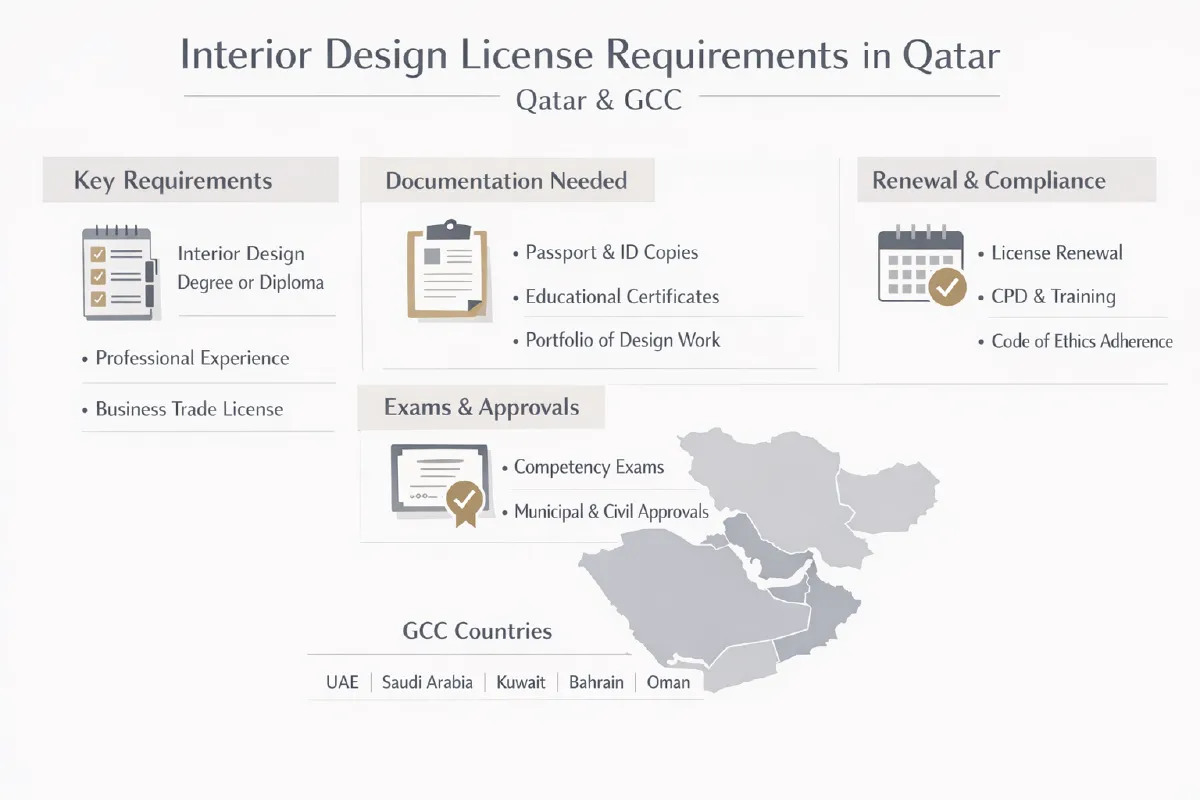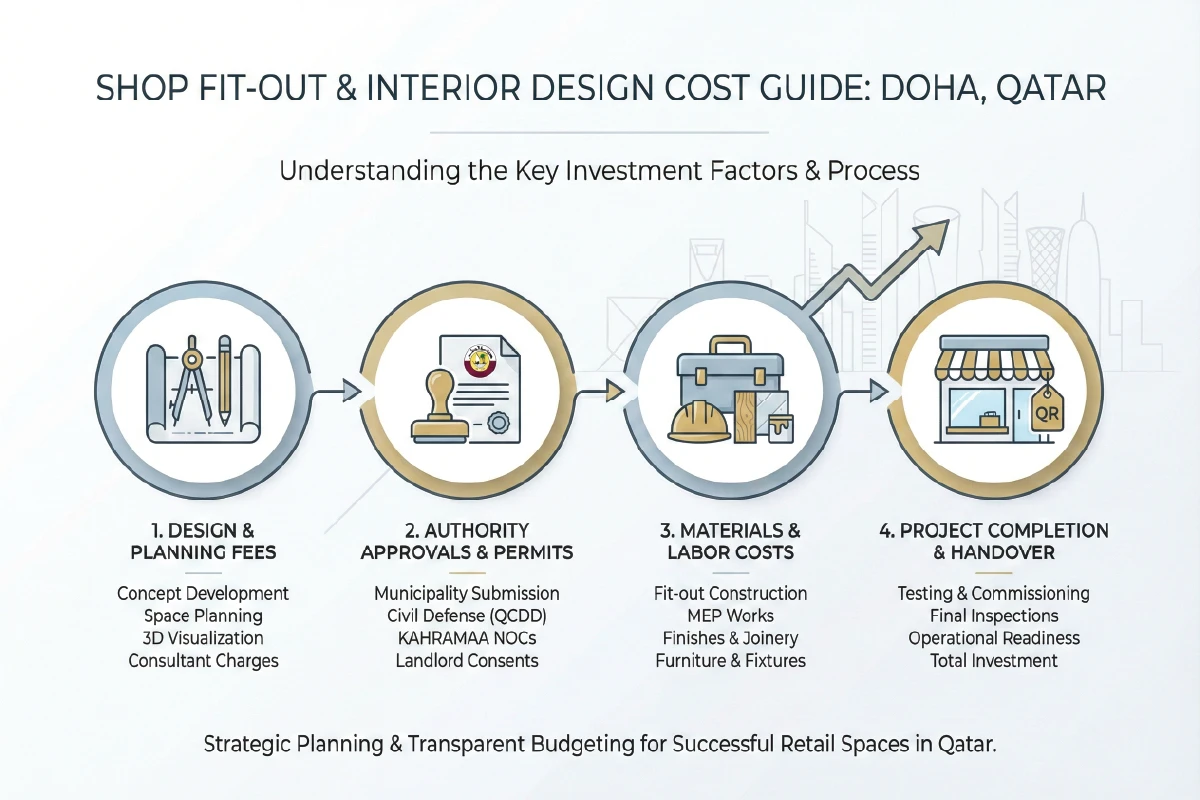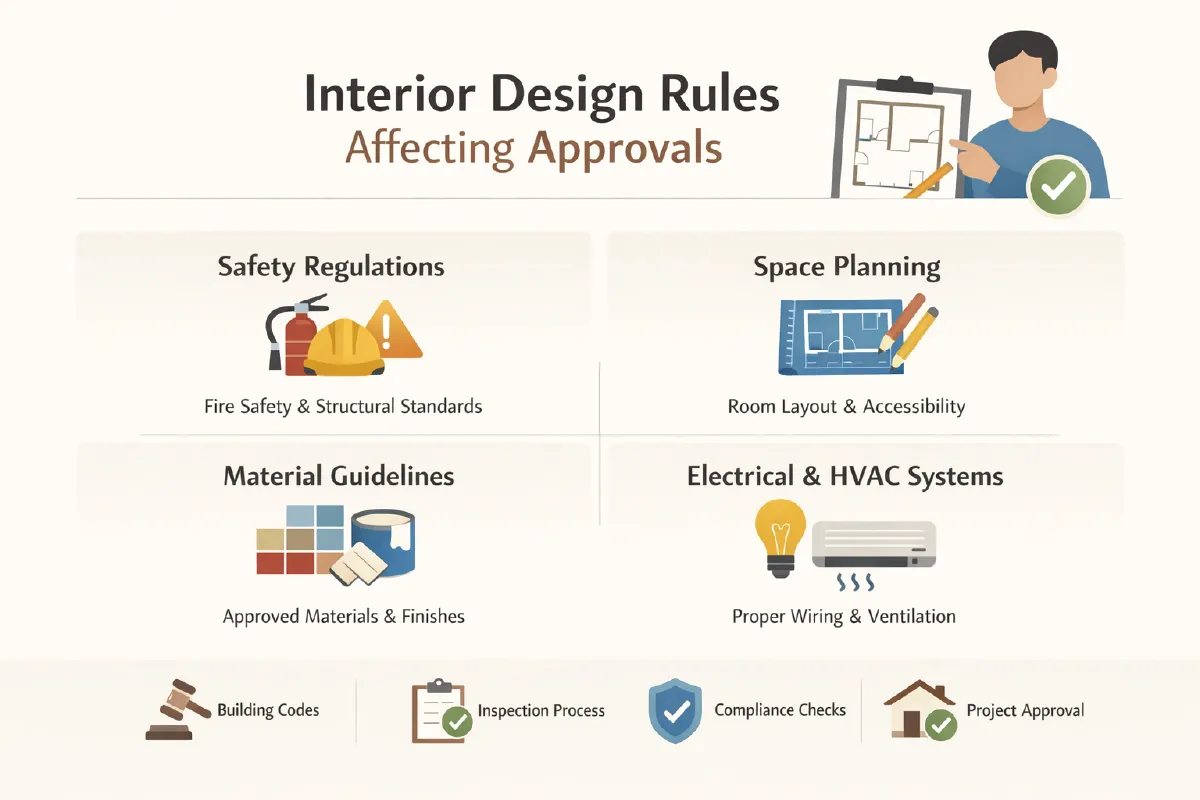
Short answer: interior design approvals in Qatar are governed by enforceable rules related to fire safety, accessibility, and authority-defined scope limits. Designs that do not comply with Civil Defense fire codes, mandatory accessibility provisions, or the licensed scope of the submitting party are routinely rejected or delayed, regardless of aesthetic quality or client intent.
Fire Safety Rules That Affect Interior Approvals
Fire safety compliance is a primary approval gate for interior design projects in Qatar. Civil Defense requirements apply to most commercial interiors and to residential projects above certain size or occupancy thresholds.
Interior layouts must respect fire compartmentation, exit travel distances, door swing directions, fire rated material usage, and visibility of escape signage. Even minor deviations, such as reducing corridor widths or concealing fire devices behind decorative panels, can trigger rejection.
In practice, fire compliance often dictates layout decisions before aesthetics. Designers typically coordinate early with authority submission consultants to avoid redesign cycles later in the approval process.
Accessibility Requirements In Interior Design
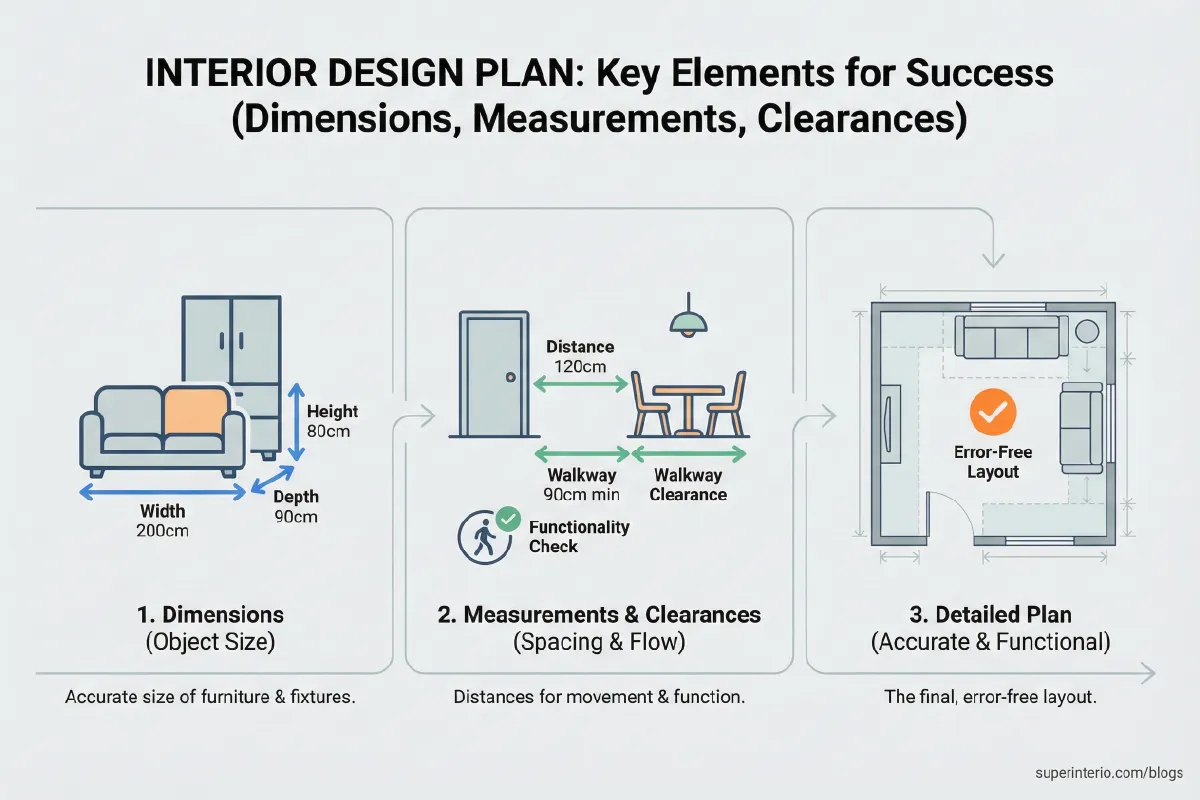
Accessibility is not optional in Qatar for public facing or commercial interior spaces. Authorities review compliance with minimum clearances, ramp gradients, restroom layouts, and access routes during approval.
Interior designs that reduce maneuvering space, alter door widths, or introduce level changes without compliant ramps are commonly flagged. These issues often arise when designers prioritize space efficiency without accounting for accessibility codes.
Accessibility compliance affects layout efficiency, usable area calculations, and sometimes furniture selection. Clients should be aware that accessibility rules can slightly increase circulation space but significantly reduce approval risk.
How These Rules Affect Approval Timelines
In Qatar, fire safety, accessibility, and scope compliance directly influence approval timelines. Projects that align with these rules at concept stage usually move through authority review with fewer cycles.
When non compliant elements are identified during review, authorities typically issue comments rather than partial approvals. Each clarification or revision round can add days or weeks depending on submission queues and consultant availability.
For most commercial interior projects, rule related revisions are the single largest cause of approval delays, exceeding material or aesthetic related comments.
Common Interior Design Rejection Scenarios
| Issue Identified | Why It Happens | Typical Consequence |
|---|---|---|
| Blocked or extended escape routes | Furniture or partitions reduce clear widths | Layout redesign and resubmission |
| Accessibility non compliance | Door widths or restroom layouts below minimum | Circulation changes and area loss |
| Scope overreach | Interior drawings imply structural or MEP changes | Referral to additional authorities |
Do And Don’t Guidelines For Clients
Clients play an active role in preventing approval issues by setting realistic boundaries during design briefing and review.
- Confirm early whether fire and accessibility rules apply to the project type.
- Accept that some circulation space is mandatory and not negotiable.
- Do not request design changes that imply structural modification without approvals.
- Avoid late stage layout changes after authority submission.
- Ensure designers understand local approval expectations, not just visual preferences.
Key Takeaways
- Fire Rules Drive Layout: Escape routes and fire ratings often dictate interior planning.
- Accessibility Is Mandatory: Reduced clearances are a common cause of rejection.
- Authority Scope Matters: Interior design approvals have defined legal limits.
- Early Compliance Saves Time: Most delays stem from avoidable rule conflicts.
Frequently Asked Questions
Do fire rules apply to small interior renovations?
Applicability depends on building type, occupancy, and whether authority approvals are required.
Can accessibility rules be waived for design reasons?
No. Accessibility requirements are reviewed as compliance items, not design preferences.
Why are some interior changes treated as structural?
Changes that affect load bearing elements, shafts, or major services exceed interior scope.
References
- Qatar Civil Defense fire and life safety review criteria applied to interior fit-out submissions.
- Municipal accessibility and circulation standards used during interior design approvals.
- Related approval sequencing and submission limits discussed in Municipal Approval Process In Qatar For Interior And Fit Out Projects.