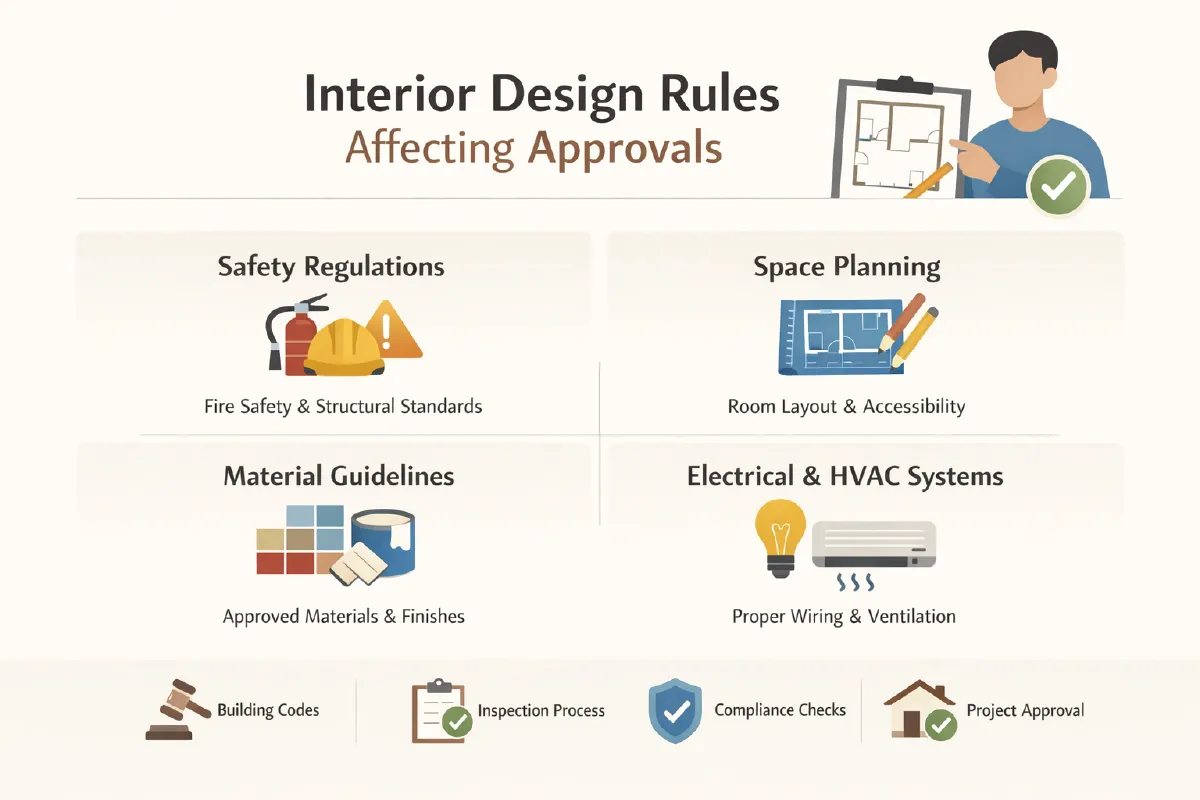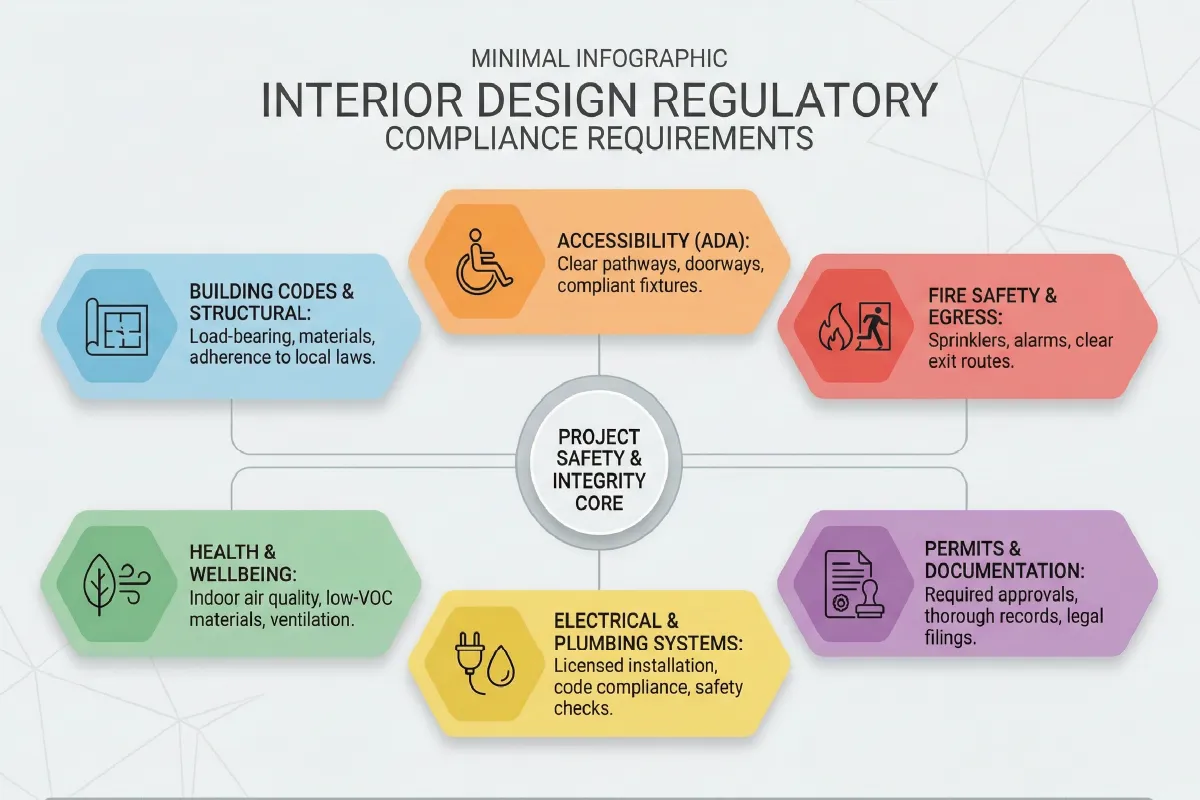
short answer: Regulatory and compliance requirements in interior design define the legal, safety, and authority guidelines that interior projects must follow before execution and occupancy. These requirements ensure that interiors meet fire safety, accessibility, building approval, and authority standards for residential and commercial spaces. When compliance is addressed early, projects avoid approval delays, redesign, and operational risk.
What Are Regulatory And Compliance Requirements
Regulatory and compliance requirements are the mandatory rules and standards that govern how interior spaces are designed, built, and approved. These requirements are enforced by local authorities to ensure occupant safety, accessibility, and lawful use of interior environments.
Unlike design preferences, compliance requirements are not optional. They apply to residential, commercial, hospitality, healthcare, and public interiors, although the level of enforcement varies by project type.
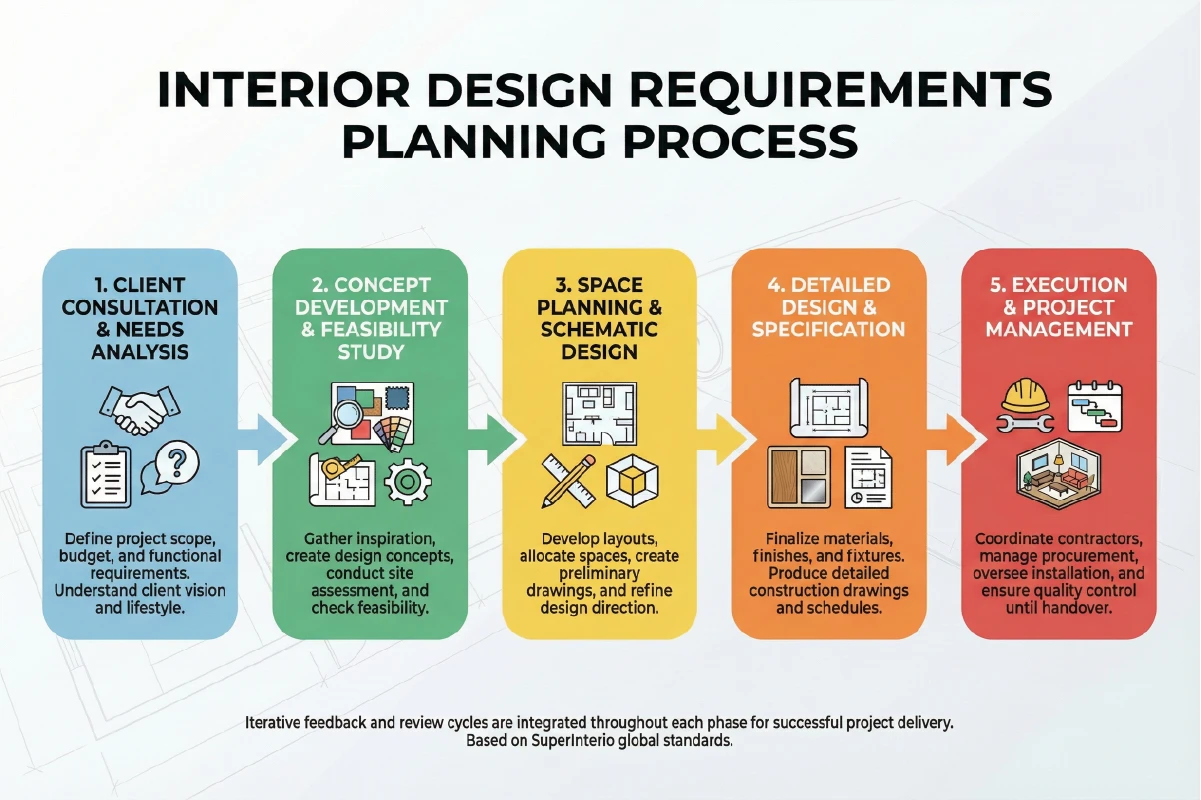
In professional interior practice, compliance is addressed alongside planning and technical coordination, not after design completion. Late compliance checks often lead to redesign, delays, and increased costs.
Why Compliance Is Critical In Interior Design
Compliance is critical because interior spaces directly affect human safety and accessibility. Fire risks, evacuation routes, and barrier free movement are all influenced by interior design decisions, particularly early space planning requirements.
In commercial interiors, non compliant designs can result in project rejection, penalties, or inability to obtain occupancy approvals. In residential projects, compliance failures may lead to safety hazards and legal liability.
- Ensures occupant safety and emergency readiness
- Prevents approval delays and redesign
- Protects clients from legal and operational risk
- Builds trust with authorities and stakeholders
From experience, many compliance issues arise not from ignorance of rules, but from failing to integrate compliance early within the interior design requirement planning process.
Fire And Life Safety Requirements
Fire and life safety requirements are among the most critical compliance aspects in interior design. Interior layouts, materials, and finishes all influence fire behavior and evacuation efficiency.
Key fire safety considerations include escape routes, fire resistant materials, smoke control, and visibility of exit signage. These requirements vary between residential and commercial interiors but are strictly enforced in public spaces.
Interior designers must coordinate closely with fire consultants and authorities to ensure that layouts, partitions, and finishes do not compromise safety standards.
Accessibility And Universal Design Requirements
Accessibility requirements ensure that interior spaces can be safely and comfortably used by people of all abilities. These requirements influence circulation widths, door clearances, sanitary layouts, and furniture placement.
In commercial and public interiors, accessibility compliance is mandatory. In residential projects, universal design principles improve long term usability and inclusivity.
Proper accessibility planning enhances user experience while reducing the need for future modifications.
Residential And Commercial Compliance Differences
Compliance requirements differ significantly between residential and commercial interiors. While residential projects may have simplified approval processes, commercial projects are subject to stricter safety, accessibility, and operational regulations.
| Aspect | Residential Interiors | Commercial Interiors |
|---|---|---|
| Approval Process | Limited Or Not Required | Mandatory Authority Approval |
| Fire Safety Standards | Basic Residential Compliance | Strict Life Safety Regulations |
| Accessibility | Recommended | Mandatory |
| Documentation | Simplified | Detailed And Regulated |
Applying commercial compliance standards to residential projects improves safety, but failing to meet mandatory commercial requirements can result in project rejection.
Documentation And Submission Requirements
Proper documentation is essential for compliance approval. Authorities rely on accurate and coordinated documentation to assess whether interior designs meet regulatory requirements.
Typical submission packages include layout drawings, material schedules, fire safety plans, and accessibility details. Any inconsistencies between drawings and specifications can delay approvals.
- Interior layout and partition plans
- Material and finish schedules
- Fire safety and evacuation layouts
- Accessibility and circulation drawings
Maintaining clear and coordinated documentation improves approval timelines and reduces the need for revisions.
Common Compliance Mistakes
Many compliance related issues arise not from complex regulations but from oversight during early design stages. Identifying common mistakes helps prevent approval delays, redesign, and operational risk.
- Addressing compliance only after design completion
- Using non compliant materials or finishes
- Ignoring accessibility requirements in circulation planning
- Failing to coordinate interior layouts with fire safety systems
- Submitting incomplete or inconsistent documentation
Avoiding these mistakes requires integrating compliance considerations into planning, space design, and technical coordination from the start.
Practical Compliance Insight
Consider a commercial office project where interior partitions were designed without aligning escape routes to fire safety requirements. During authority review, the layout was rejected, requiring significant redesign.
By revisiting compliance requirements early, the revised layout integrated clear escape paths, compliant door widths, and approved materials. This adjustment secured approval and prevented further delays, highlighting the value of early compliance planning.
Frequently Asked Questions
Do All Interior Projects Require Regulatory Approval
Not all residential projects require formal approval, but most commercial, hospitality, and public interiors must obtain authority clearance before execution and occupancy.
Who Is Responsible For Compliance In Interior Design
Compliance responsibility is shared between designers, consultants, and project stakeholders. Interior designers must coordinate with specialists and authorities to ensure requirements are met.
Can Compliance Requirements Affect Interior Design Choices
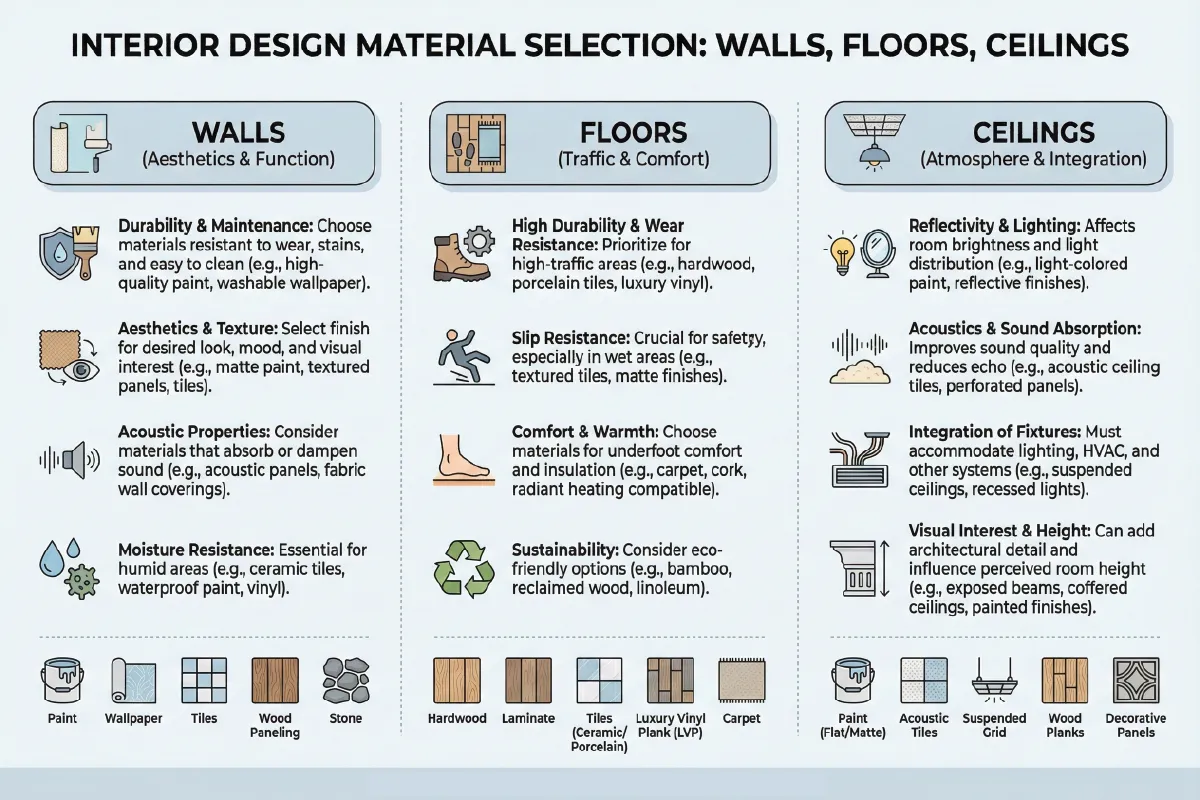
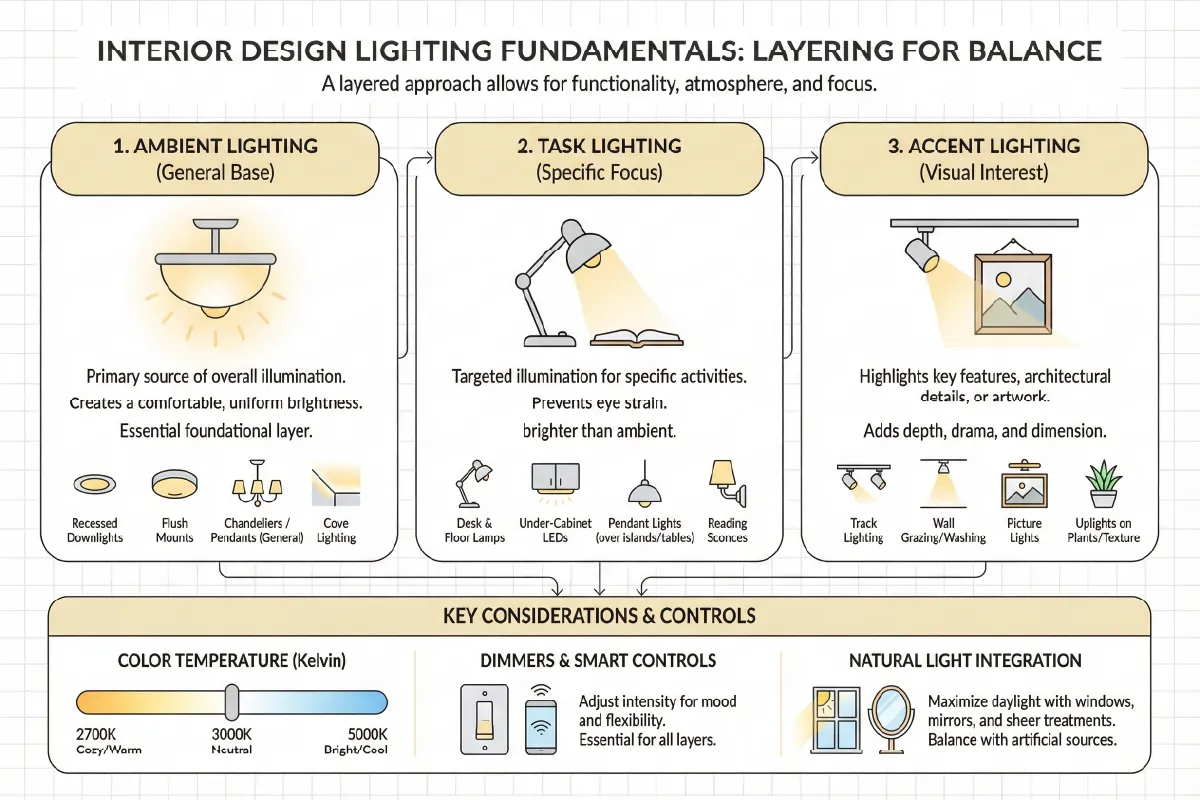
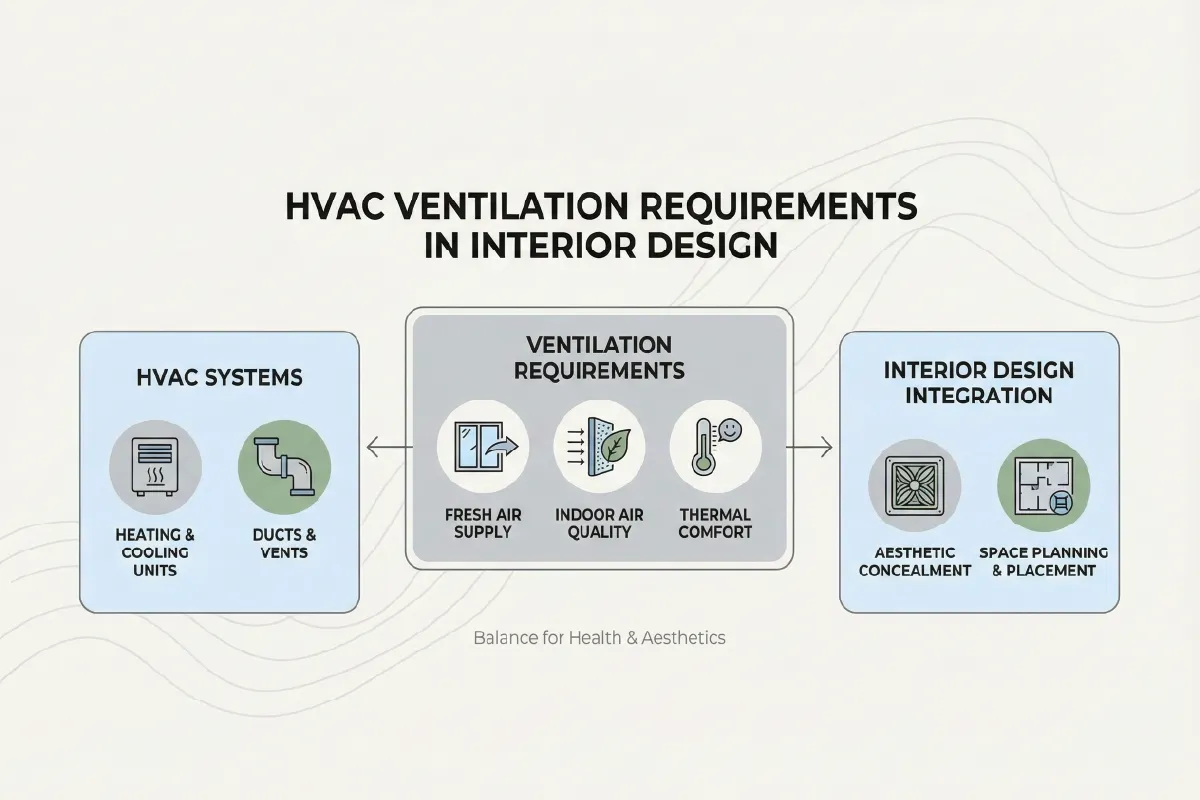
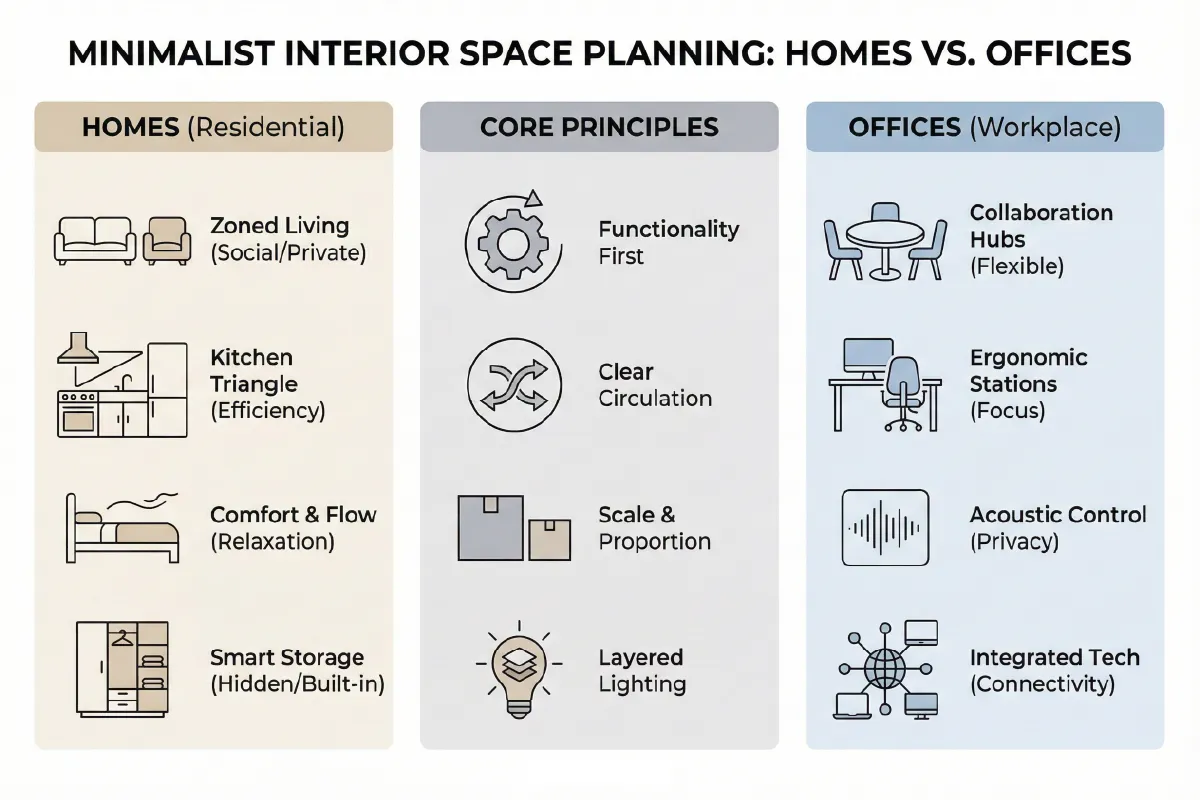
Yes. Compliance influences layouts, material selection requirements, lighting, HVAC integration, and circulation planning, shaping many core design decisions.
When Should Compliance Be Checked During A Project
Compliance should be reviewed continuously, starting from concept planning through detailed design and before execution, to avoid late stage issues.
Key Takeaways
- Compliance Is Mandatory: Regulatory requirements are not optional and must guide design decisions.
- Early Integration Is Essential: Addressing compliance early prevents redesign and approval delays.
- Residential And Commercial Rules Differ: Commercial projects face stricter regulatory oversight.
- Documentation Matters: Clear and coordinated submissions improve approval outcomes.
- Compliance Supports Safety: Regulations exist to protect occupants and ensure functional interiors.
References
- Interior design regulatory guidelines
- Fire and life safety standards for interiors
- Accessibility and universal design best practices