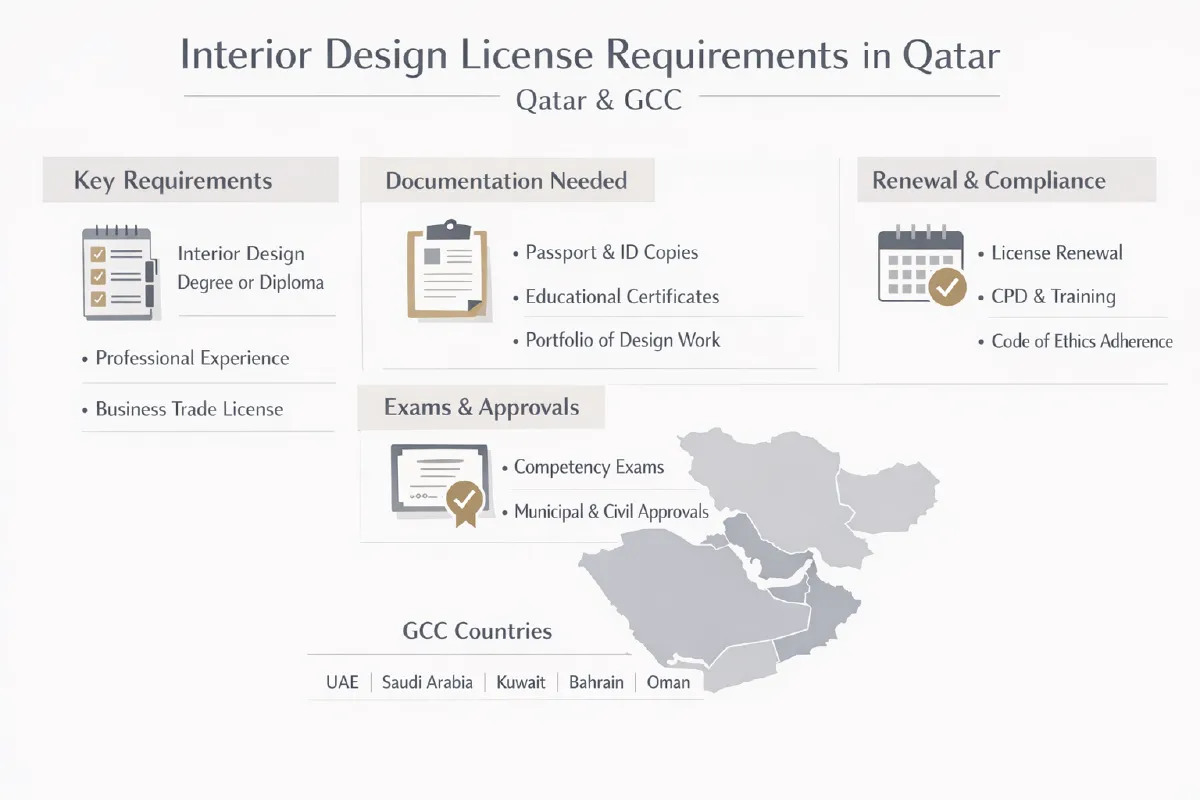
Short answer: Interior design licensing in Qatar determines what scope a firm or professional is legally allowed to perform, submit for approval, and execute on site. Clients must verify licenses early because an incorrect or insufficient license can delay approvals, restrict scope, or require project restructuring during execution.
Why Interior Design Licenses Matter In Qatar
In Qatar, interior design licenses are not a formality. They define whether a company can prepare drawings, submit for authority approvals, manage fit-out scope, or coordinate execution. Projects often face delays when licensing is checked late, particularly during approval submissions.
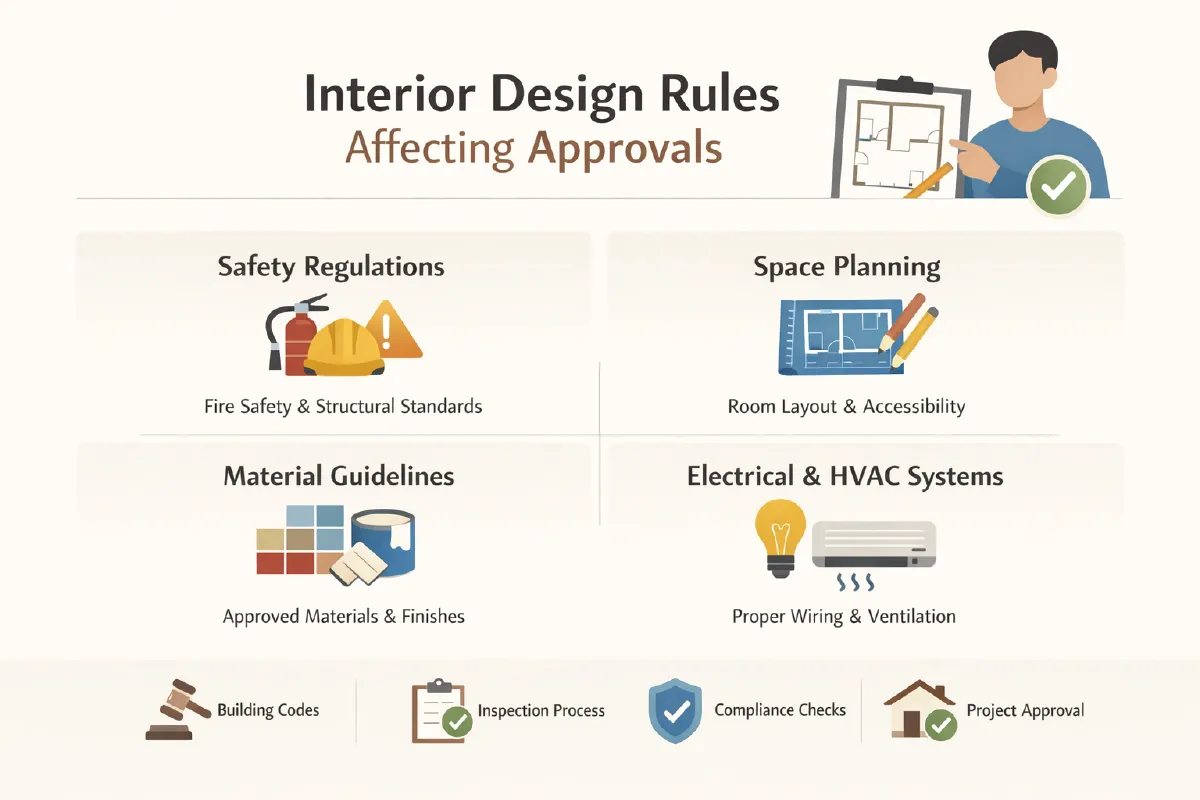
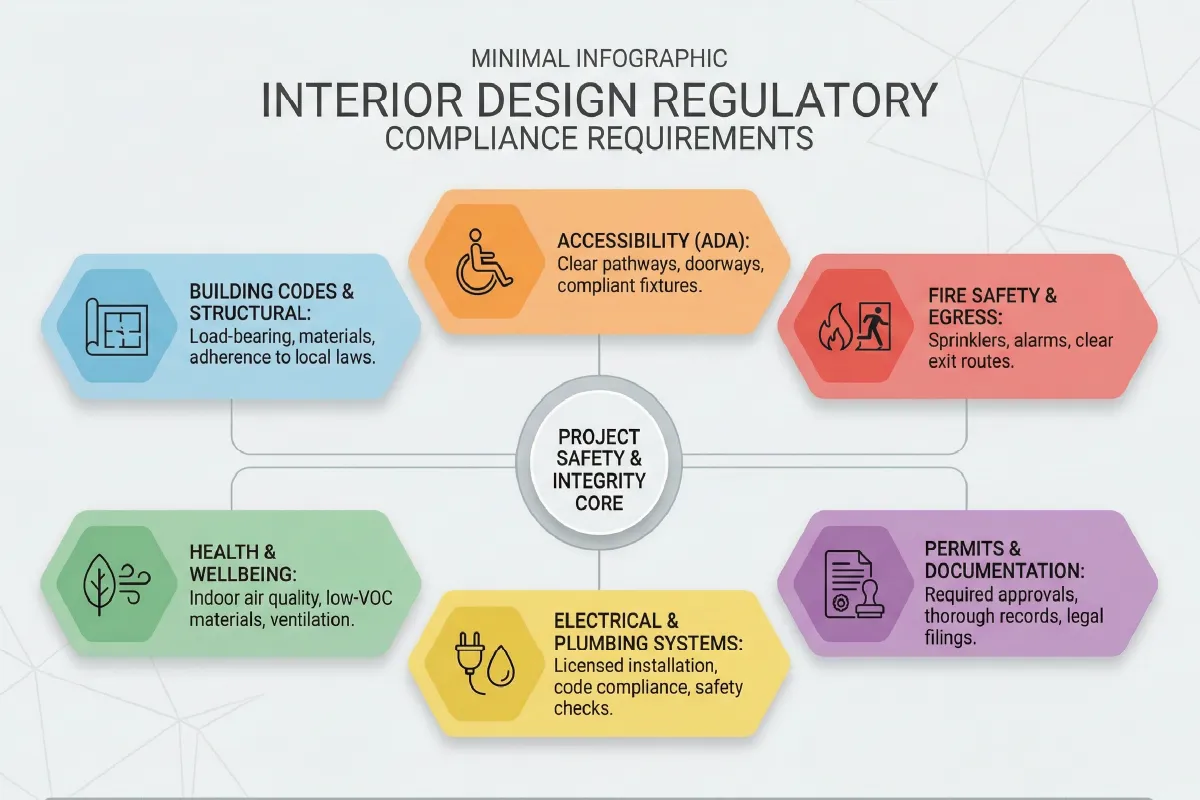
Licensing becomes critical when interior works intersect with fire safety, accessibility, or base building constraints. In such cases, only firms with appropriate scope authorization can respond to authority comments without escalation.
Interior Design License Structure In Qatar
Interior design activities in Qatar are typically registered under commercial licenses that define permitted professional activities. These licenses are issued through local authorities and aligned with municipal and regulatory bodies involved in approvals.
| License Scope | Typical Permitted Activities | Common Limitations |
|---|---|---|
| Interior Design Consultancy | Design drawings, layouts, concept development | No direct construction execution |
| Interior Fit-out Contracting | Execution, site coordination, subcontracting | Design submission may be restricted |
| Combined Design And Fit-out | Design, approvals, execution | Higher compliance and documentation burden |
Mismatch between license scope and actual project requirements is one of the most common causes of approval comments and scope disputes.
What Licenses Allow And Do Not Allow
Licenses define both permissions and boundaries. For example, a design-only license may allow concept and layout preparation but not authority submissions for fire or accessibility. Similarly, a fit-out license may permit execution but rely on third-party consultants for design approvals.
This distinction directly affects coordination workflows similar to those seen in fit-out execution sequencing, where roles must be clearly defined before site work begins.
What Clients Should Verify Before Engagement
Before finalizing any interior design or fit-out engagement, clients should verify license validity, activity scope, and alignment with project requirements. This step is especially important for commercial and mixed-use projects.
| Check Item | Why It Matters |
|---|---|
| Licensed activity description | Confirms permitted scope of work |
| Authority submission rights | Affects approval timelines |
| Execution authorization | Determines who can manage site works |
| Subcontracting limitations | Impacts cost and coordination |
How GCC Licensing Differs From Qatar
While GCC countries share similarities, licensing structures vary significantly. In some markets, interior design licenses are more flexible, while others require strict separation between design and execution.
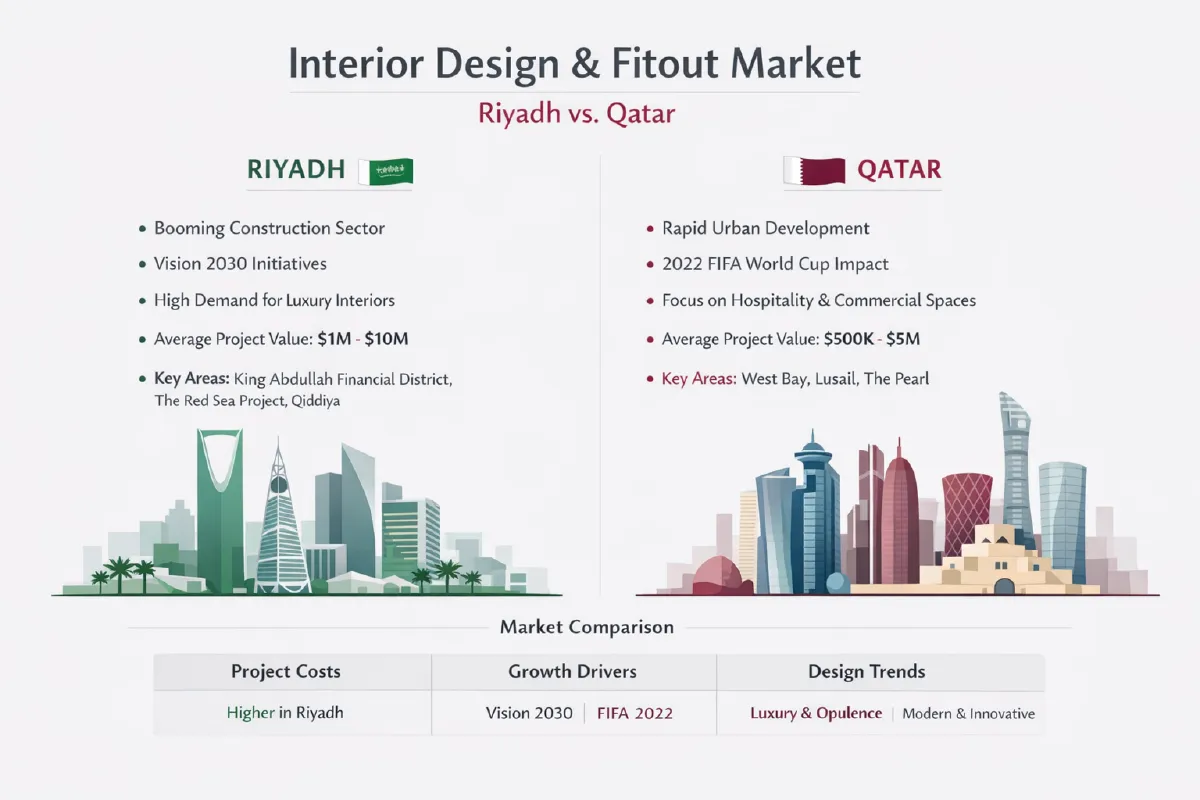
This contrast becomes evident when comparing Qatar with markets such as Riyadh, where approval pathways and permitted scopes differ, as outlined in regional fit-out market comparisons.
Approval Flows And Timelines In Qatar
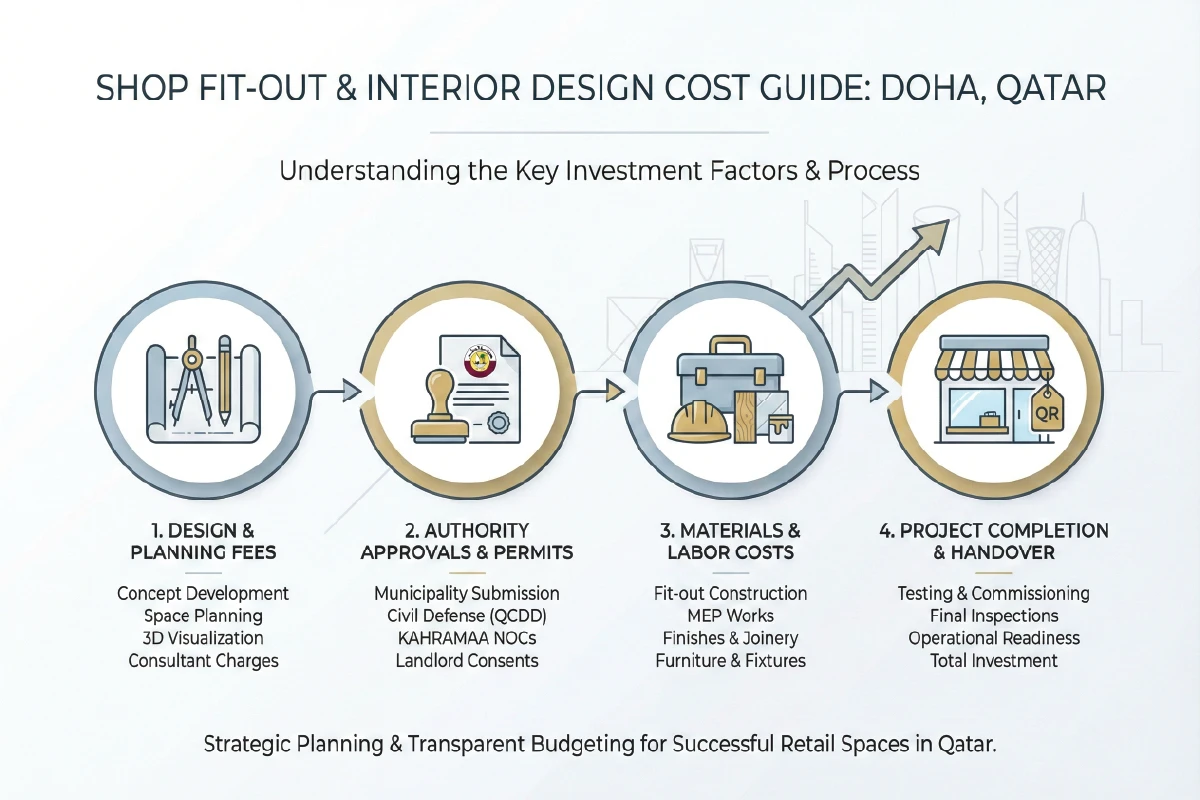
In practice, interior design licensing directly affects how approval flows progress in Qatar. Authorities typically review submissions based on the declared scope of the licensed entity, not on project intent or client agreements.
Where the license scope does not align with the submitted drawings or responsibilities, authorities may request resubmission through a properly licensed party. This can add several weeks to approval timelines, especially for commercial or regulated occupancies.
For standard interior fit-out projects, clients should expect approval timelines to vary depending on whether design and execution are handled under a single licensed entity or split across multiple parties.
Common Licensing Issues That Delay Projects
Licensing-related delays often arise not from missing paperwork, but from misunderstandings about what a license actually permits. These issues usually surface during authority review or site inspections.
| Issue | Root Cause | Impact On Project |
|---|---|---|
| Design submissions rejected | License does not permit authority submissions | Resubmission delays and redesign costs |
| Execution scope challenged | Fit-out work exceeds licensed activity | Work stoppages or scope reassignment |
| Coordination disputes | Unclear responsibility between designers and contractors | Timeline extensions and cost variations |
Do And Don’t Guidelines For Clients
Clients can significantly reduce licensing-related risks by applying a few practical checks before contracts are signed and submissions begin.
- Confirm that the licensed scope matches the actual project responsibilities.
- Request copies of valid commercial and activity licenses.
- Clarify who is responsible for authority submissions and responses.
- Avoid assuming that a design license automatically allows execution.
- Do not rely on verbal assurances regarding approval authority.
Key Takeaways
- Licenses Define Legal Scope: Interior design licenses determine what can be designed, submitted, and executed.
- Early Verification Prevents Delays: Checking licenses early avoids approval-stage disruptions.
- Scope Mismatch Is A Common Risk: Many project issues arise from misunderstanding license permissions.
- GCC Rules Differ By Market: Assumptions based on other GCC countries do not always apply in Qatar.
Frequently Asked Questions
Is an interior design license mandatory for all projects in Qatar?
Licensing requirements depend on project scope, approvals involved, and whether authority submissions are required.
Can one company handle both design and fit-out in Qatar?
Yes, but only if the license explicitly allows both design and execution activities.
What happens if a license is insufficient during approvals?
Authorities may require resubmission through a properly licensed entity, causing delays.
References
- Qatar Ministry of Commerce and Industry licensing classifications and commercial activity definitions.
- Municipality and Civil Defense fit-out submission requirements applicable to interior projects in Qatar.
- Typical approval coordination practices referenced in Fitout Authority Coordination in Qatar.
- Related scope clarification discussed in Difference Between Design, Fit-Out & Turnkey Projects Explained.