Short answer: An interior design room planner is a professional planning framework used to define room layouts, circulation, furniture positioning, lighting coordination, and functional zoning before design execution begins. It ensures that each room supports daily activities, cultural habits, privacy needs, and long-term usability while aligning with space planning, lighting, material selection, and the overall interior design planning process.
What Is An Interior Design Room Planner
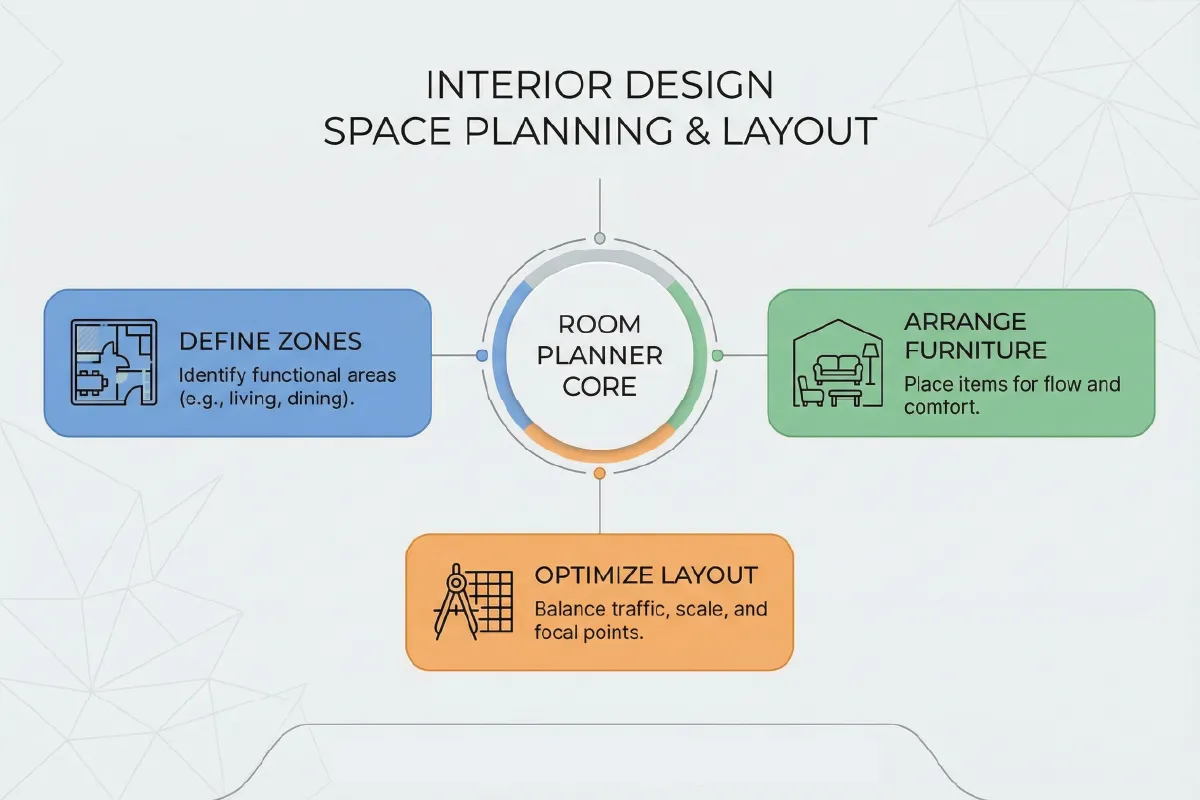
An interior design room planner is a structured method used by interior designers and architects to organize how a single room functions, feels, and performs before any finishes, furniture, or lighting fixtures are finalized. It focuses on room level decisions such as furniture placement, movement paths, activity zones, sightlines, privacy control, and comfort.
In practice, room planning answers very practical questions. Where will people walk first when they enter the room. How many people use the space at the same time. What activities happen daily, occasionally, or seasonally. Without answering these questions early, even visually impressive interiors often fail in real use.
In residential projects across Qatar and the wider MENA region, we often see beautiful villas where rooms feel oversized yet uncomfortable. The reason is not lack of space but lack of room planning. A room planner corrects this by shaping the room around human behavior rather than decoration.
Professionally, room planning sits under broader space planning requirements and directly influences lighting requirements, material selection requirements, and the interior design requirement planning process.
Imagine a Doha apartment living room designed only with furniture catalog dimensions. Now imagine the same room planned by observing family gatherings, guest flow during Ramadan, television viewing distance, and natural light angles. The difference is not style but planning intelligence.
Room Planning Vs Space Planning
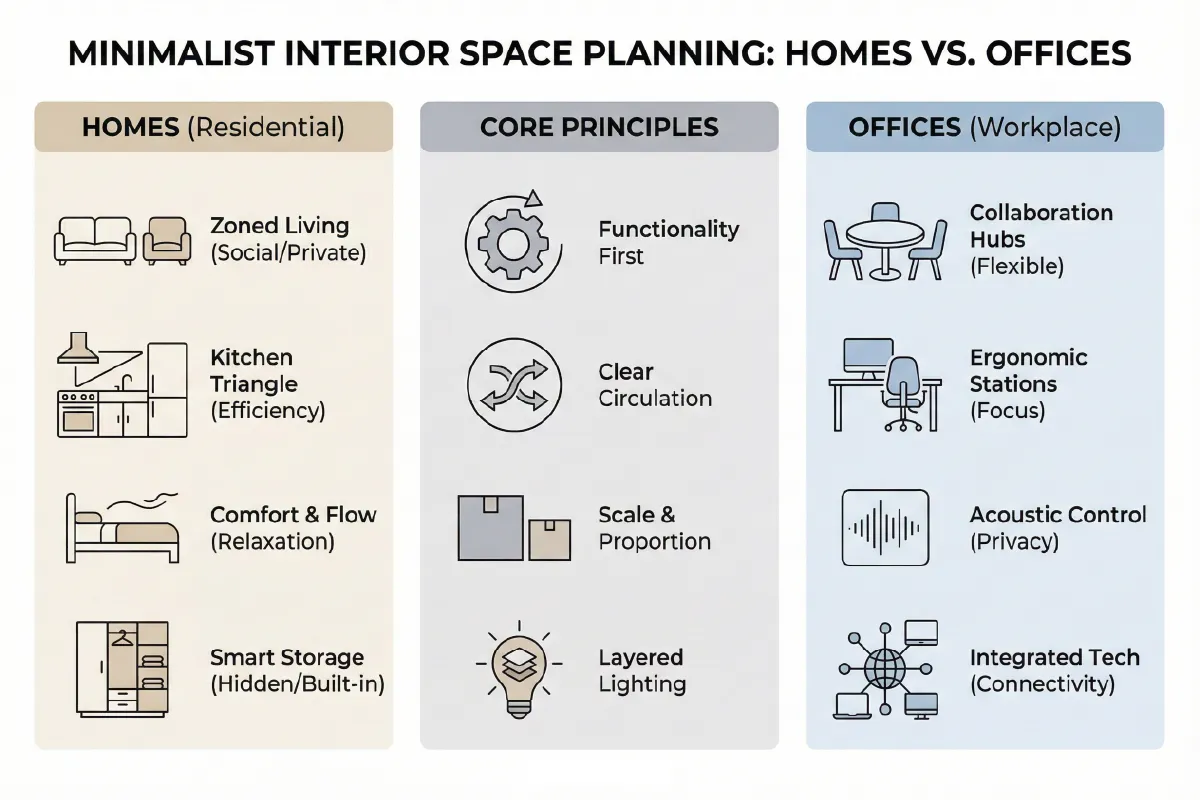
Room planning and space planning are closely related but not the same. Space planning deals with the overall organization of an entire floor or property, while room planning focuses on how each individual room works internally.
Think of space planning as deciding where rooms go, how they connect, and how circulation flows across the property. Room planning begins only after that framework is established by clearly defined space planning requirements and refines each room in detail.
| Aspect | Space Planning | Room Planning |
|---|---|---|
| Scale | Entire floor or building | Individual room |
| Focus | Zoning and circulation | Furniture, activities, comfort |
| Decisions | Room locations and adjacencies | Layout and functional use |
| Impact | Overall efficiency | Daily usability |
In real projects, problems occur when designers jump directly into furniture selection without resolving room planning. For example, a master bedroom may meet size requirements but feel cramped because circulation around the bed was never properly planned.
From experience, most layout corrections requested by clients happen at the room planning stage, not at space planning level. This makes room planning one of the most critical yet underestimated phases of interior design.
Room Planner Layout Principles
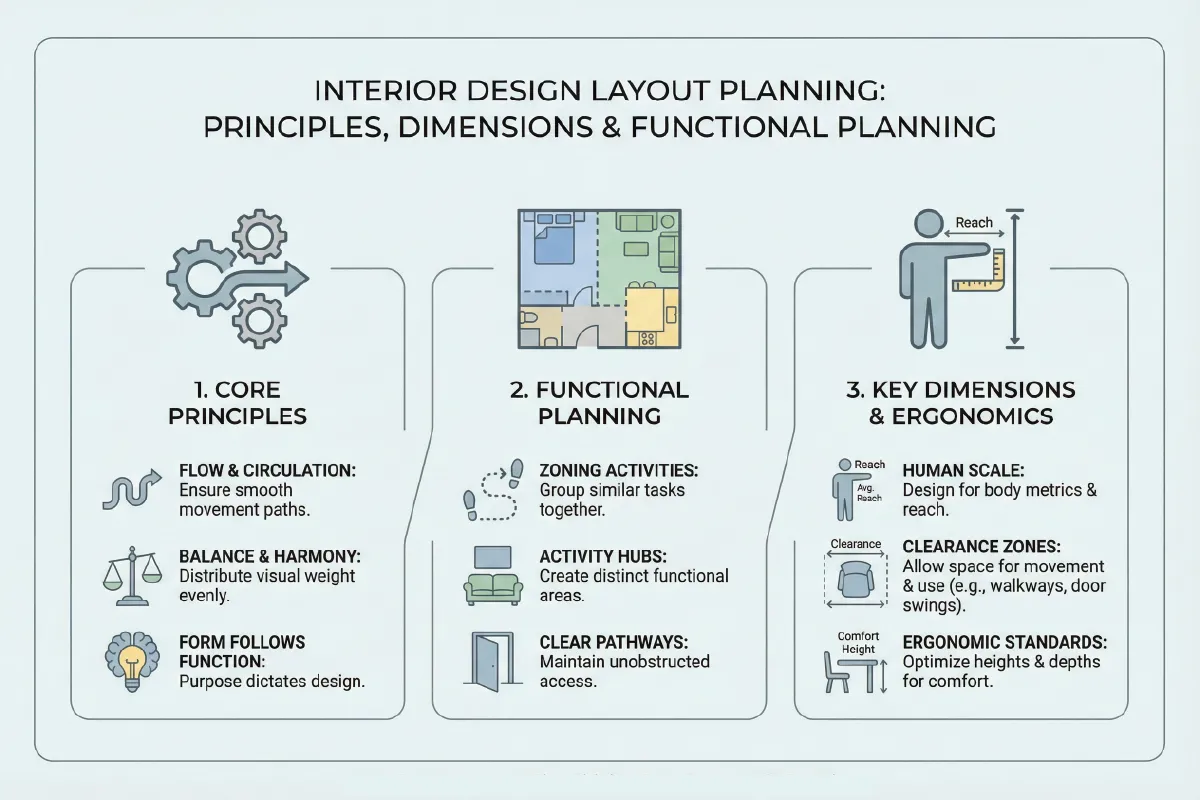
Room planner layout principles are the rules used to organize furniture, circulation, and functional zones within a room. These principles are universal, but their application varies based on culture, climate, and lifestyle.
In Middle Eastern interiors, for example, seating layouts often prioritize social interaction and hospitality. This directly affects furniture orientation, spacing, and focal points within an interior design layout plan.
- Clear circulation paths without obstruction
- Defined activity zones within the same room
- Balanced furniture proportions relative to room size
- Visual hierarchy and focal points
- Comfortable viewing and interaction distances
A practical rule we follow is that circulation should never pass through the center of a primary activity zone. When people walk through a seating or sleeping area, the room feels unsettled and uncomfortable.
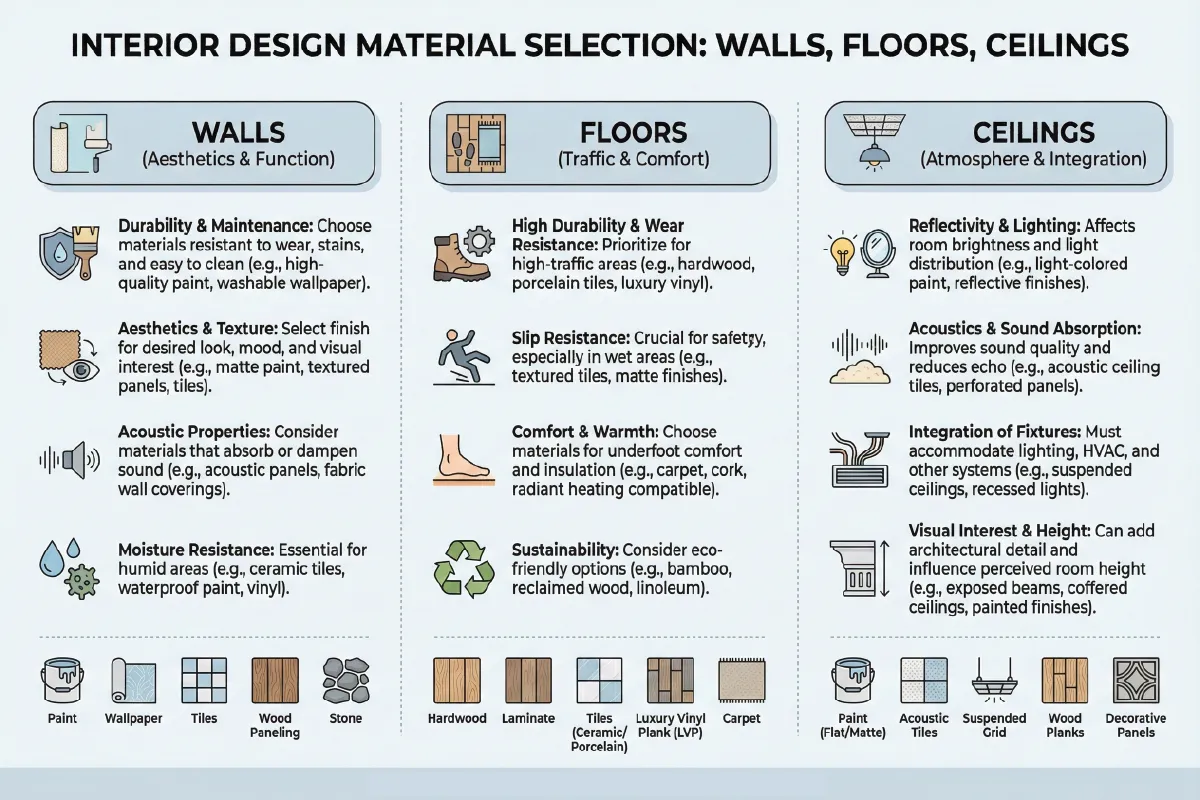
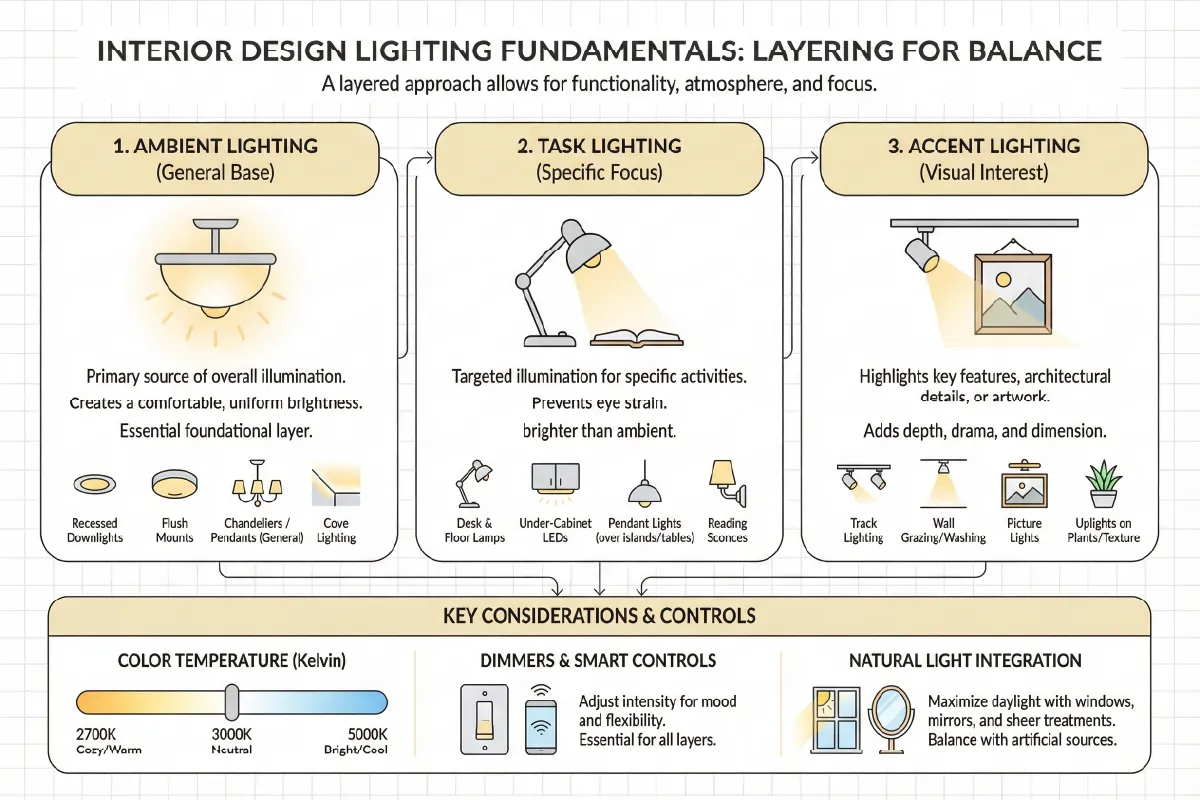
Moreover, layout planning must consider lighting and material behavior. A glossy floor amplifies light, while dark wall finishes absorb it. Ignoring this relationship often results in rooms that look correct on paper but feel visually harsh in reality.
Room By Room Planning
Room by room planning means tailoring the layout of each room based on its specific function, usage frequency, privacy needs, and cultural expectations. No two rooms should be planned using the same logic, even within the same home or office.
In professional practice, we plan rooms by observing behavior rather than furniture catalogs. A living room designed for weekend gatherings behaves very differently from a living room used mainly for evening relaxation.
Living Room Planning
A living room planner focuses on social interaction, circulation clarity, and visual comfort. In Qatari and GCC homes, living rooms often serve both family use and guest hosting, which requires flexible layouts.
Key questions we ask before planning a living room include how many people typically gather, whether the room hosts formal guests, and how often television or media is used.
- Seating should face each other to encourage interaction
- Main circulation must remain outside seating zones
- Television viewing distances must align with screen size
- Accent lighting should reinforce focal points
In one Doha villa project, repositioning seating by just 600 millimeters transformed the room from visually cluttered to calm, without changing furniture or finishes.
Bedroom Planning
Bedroom planning prioritizes rest, privacy, and ease of movement. A well planned bedroom feels effortless to use even in low light conditions.
The bed position is the anchor point. It must allow comfortable access from both sides, clear sightlines to windows, and adequate distance from wardrobes.
- Minimum clearance around the bed for circulation
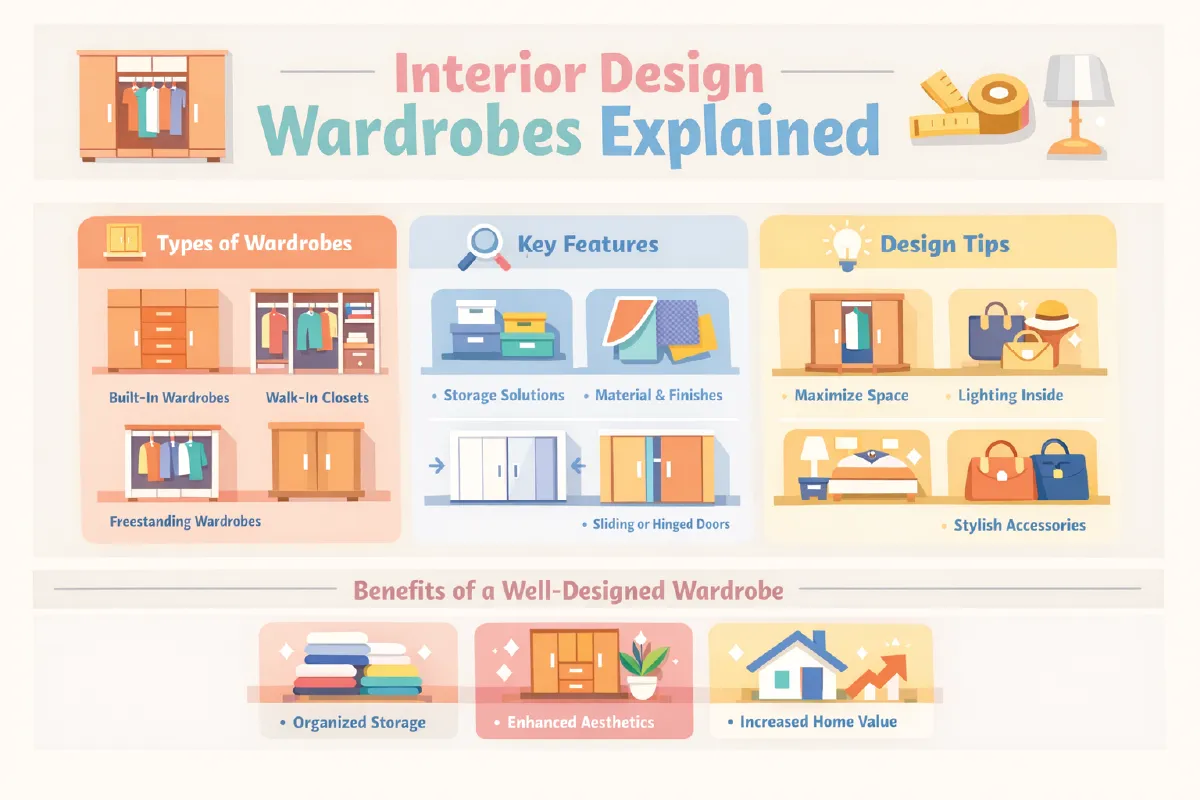
- Direct access to wardrobes without obstruction
- Soft layered lighting for night time comfort
- Privacy from adjacent rooms and corridors
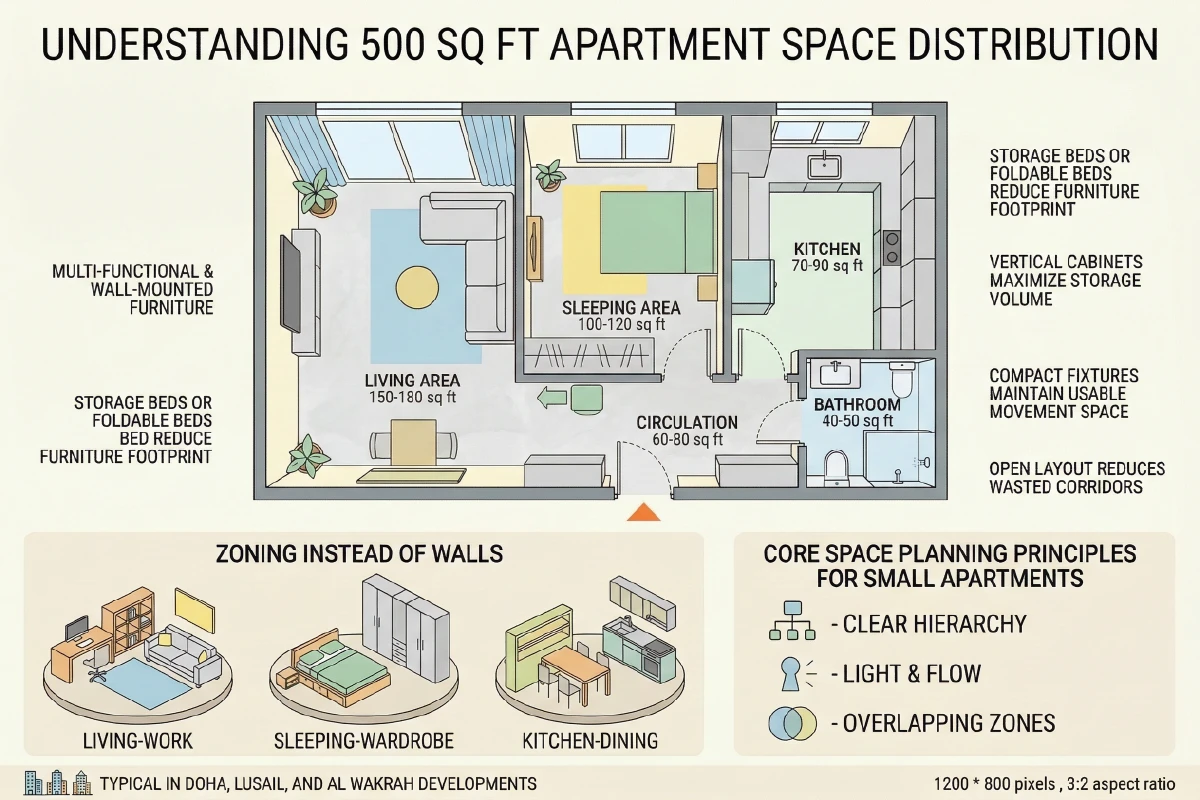
In apartments across Lusail and West Bay, we often see oversized beds placed too close to walls, making daily use inconvenient. Correct room planning solves this without increasing room size.
Kitchen Planning
Kitchen planning is one of the most technical aspects of room planning. It must balance workflow efficiency, safety, and storage optimization.
The classic work triangle between sink, cooktop, and refrigerator still applies, but modern kitchens often expand this into zones for preparation, cooking, cleaning, and serving.
- Clear separation between cooking and preparation zones
- Safe circulation paths away from hot surfaces
- Task lighting directly over work areas
- Materials that resist heat, moisture, and stains
In high end residences, kitchens that look impressive but ignore workflow quickly become frustrating. Proper room planning prevents this mismatch between appearance and usability.
3D Room Planning Concepts
3D room planning concepts help visualize room layouts, proportions, and spatial relationships before construction or fit out begins. These concepts are not tools themselves but design representations used by professionals to test decisions.
In practice, 3D planning allows designers and clients to identify issues that are difficult to detect in two dimensional drawings, such as tight circulation, awkward furniture spacing, or excessive visual clutter.
For example, in a commercial office project in Msheireb, 3D room planning revealed that workstation aisles appeared sufficient on plan but felt restrictive once visualized with partitions and storage units.
| Aspect | 2D Planning | 3D Planning |
|---|---|---|
| Spatial Clarity | Abstract understanding | Realistic perception |
| Furniture Scale | Estimated | Visually accurate |
| Lighting Interaction | Limited | Clearly visible |
| Client Understanding | Requires experience | Immediate comprehension |
However, 3D concepts should always support professional judgment. Over reliance on visuals without understanding planning principles often leads to design decisions based on appearance rather than function.
Common Room Planning Mistakes
Many interior issues arise not from poor materials or finishes but from incorrect room planning decisions made early in the project.
- Prioritizing furniture size over circulation comfort
- Ignoring door swing and clearance zones
- Placing lighting without reference to room layout
- Over furnishing rooms beyond functional needs
- Designing for appearance rather than daily use
In fact, one of the most frequent mistakes we encounter in residential projects is treating every room as a display space rather than a living environment.
Correct room planning prevents costly changes during execution and ensures that interiors age gracefully as lifestyle needs evolve.
How Room Planning Fits Into The Interior Design Process
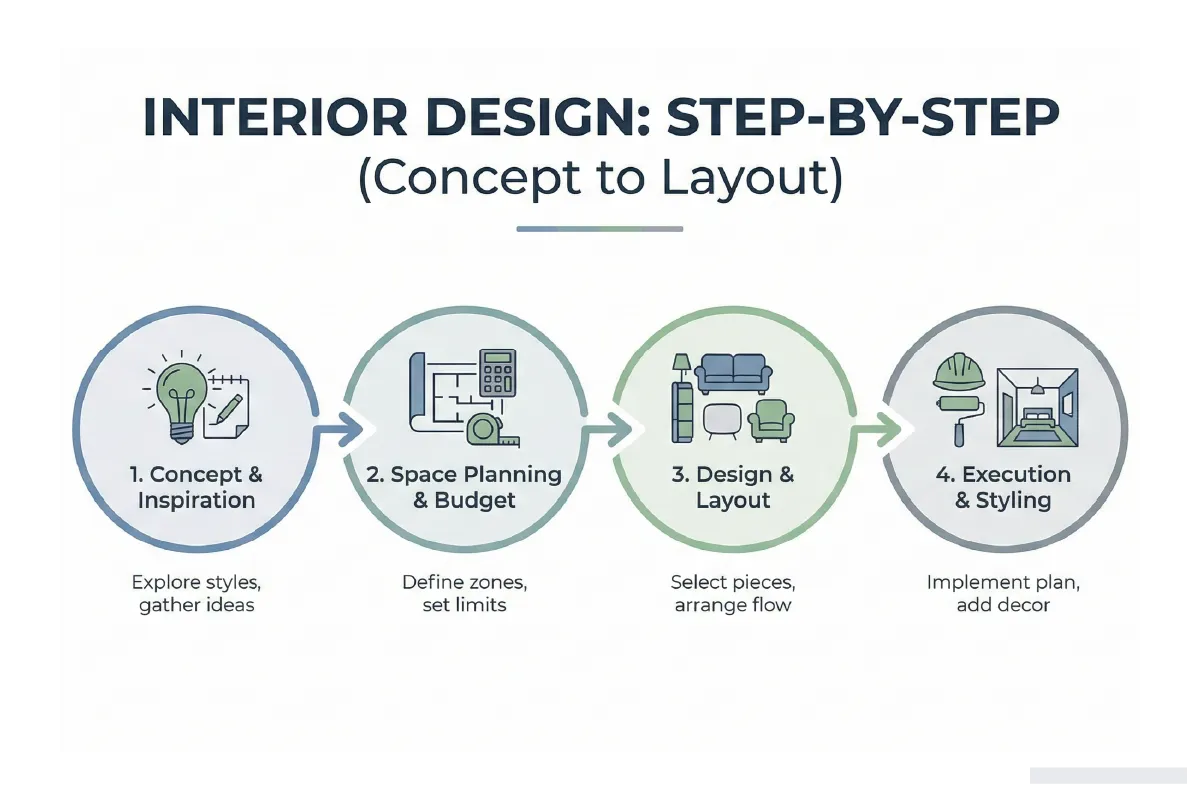
Room planning is not an isolated exercise. It sits at the core of the interior design workflow and directly influences technical coordination, approvals, and execution quality.
Professionally, room planning is finalized after space planning and before lighting, materials, and detailing are locked. This sequencing prevents conflicts and redesign.
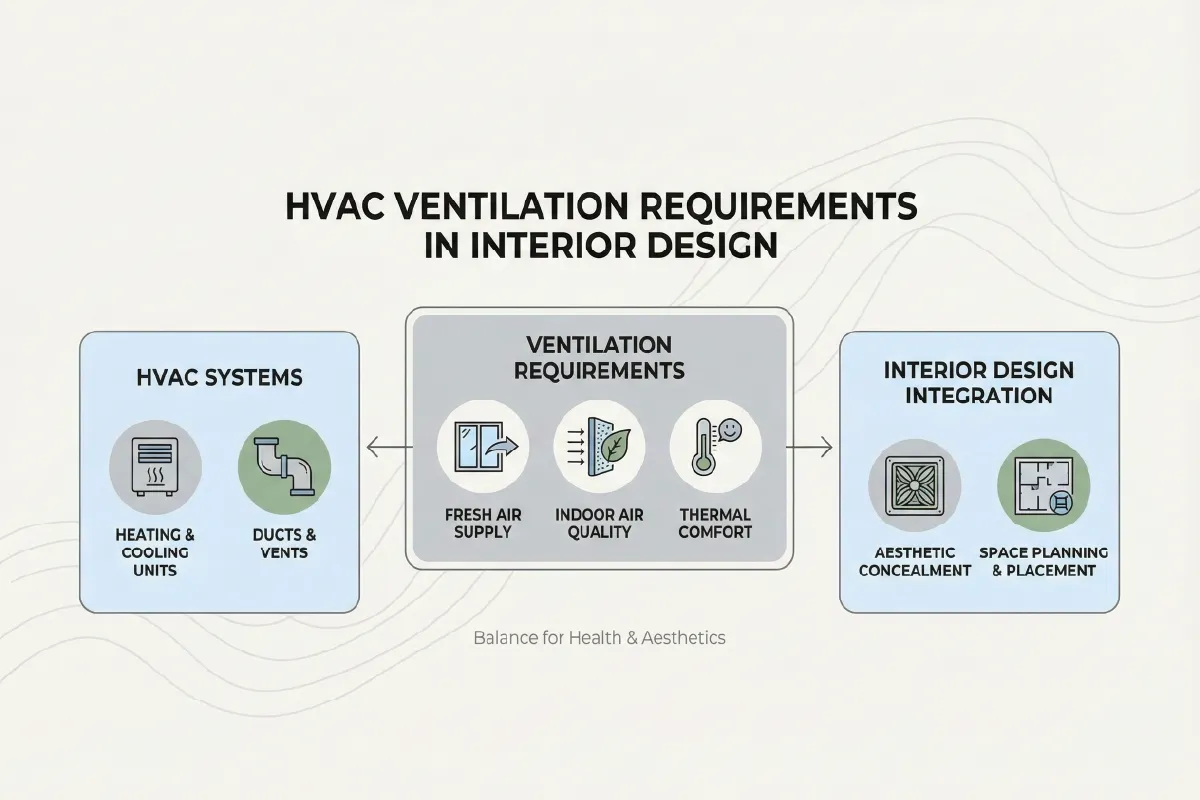
When room planning is skipped or rushed, downstream systems suffer. Lighting layouts fail to align with furniture, material selections do not respond to use patterns, and HVAC distribution becomes inefficient.
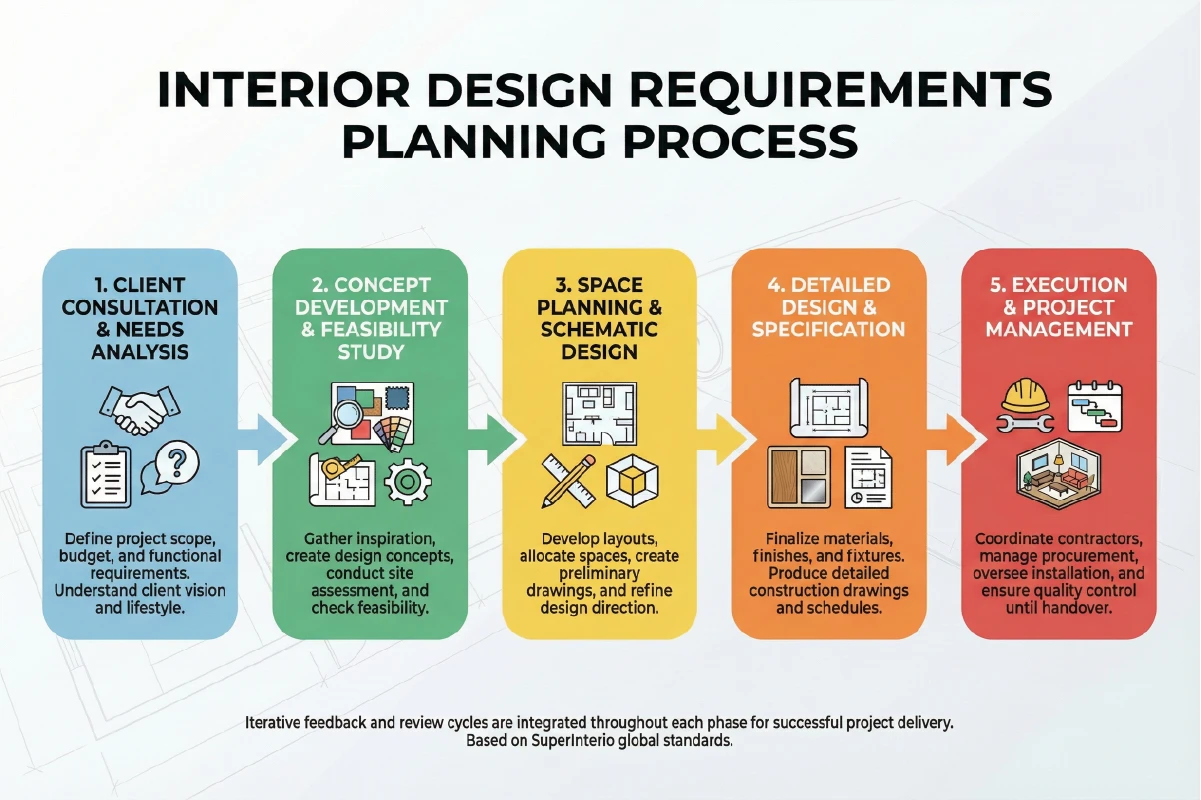
This is why experienced designers integrate room planning early within the interior design requirement planning process, ensuring all disciplines work from a unified functional framework.
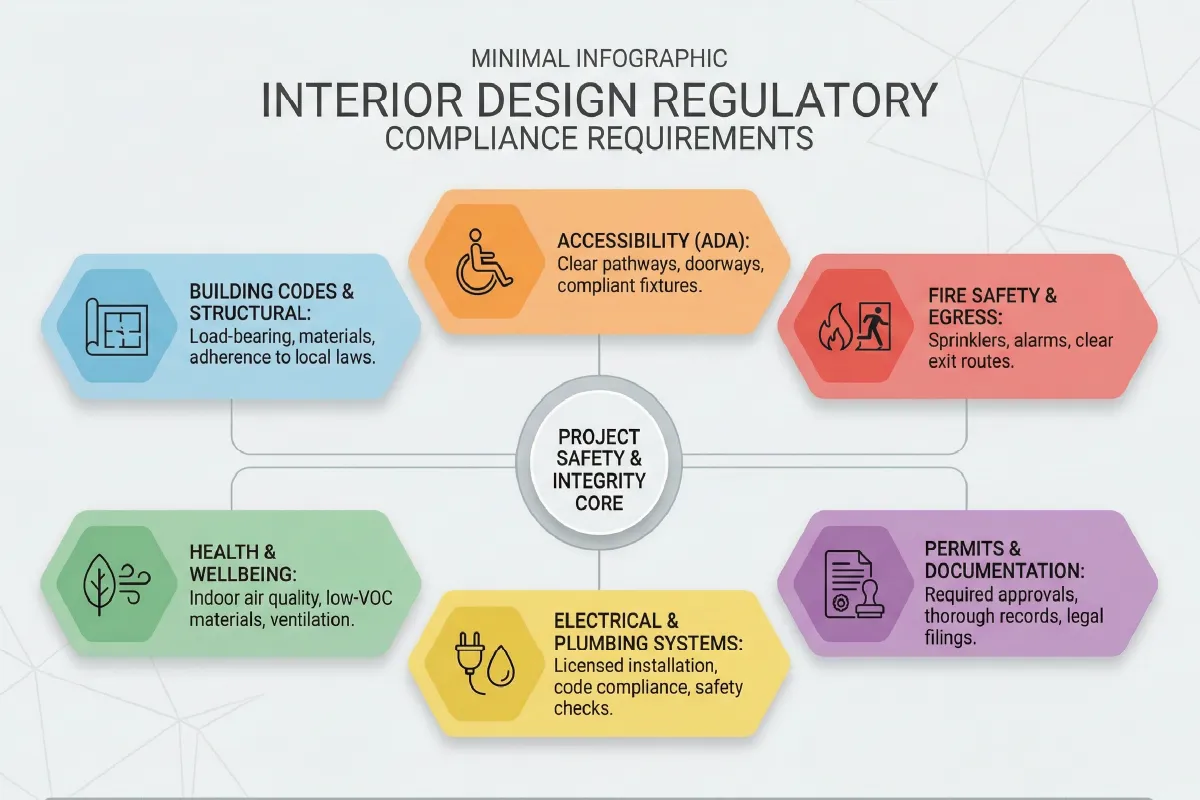
For example, in a mixed use commercial project in Doha, aligning room planning with early compliance reviews avoided costly post approval changes related to circulation widths and accessibility clearances.
In practical terms, room planning acts as the bridge between intent and execution. It translates lifestyle, business needs, and cultural expectations into buildable design decisions.
Key Takeaways
- Room Planning Is Foundational: Well planned rooms determine comfort, usability, and long term satisfaction more than finishes or décor.
- Each Room Requires A Unique Strategy: Living rooms, bedrooms, and kitchens function differently and must be planned accordingly.
- Room Planning Supports Other Systems: Lighting, materials, and HVAC performance depend on correct room layouts.
- Early Planning Prevents Costly Changes: Most execution issues trace back to poor room planning decisions.
- Professional Process Matters: Integrating room planning into the full interior design process improves outcomes and reduces risk.
Frequently Asked Questions
What Is The Main Purpose Of An Interior Design Room Planner
The main purpose of an interior design room planner is to organize furniture, circulation, and activities within a room so that it functions comfortably and efficiently in daily use.
Is Room Planning Only Important For Large Homes
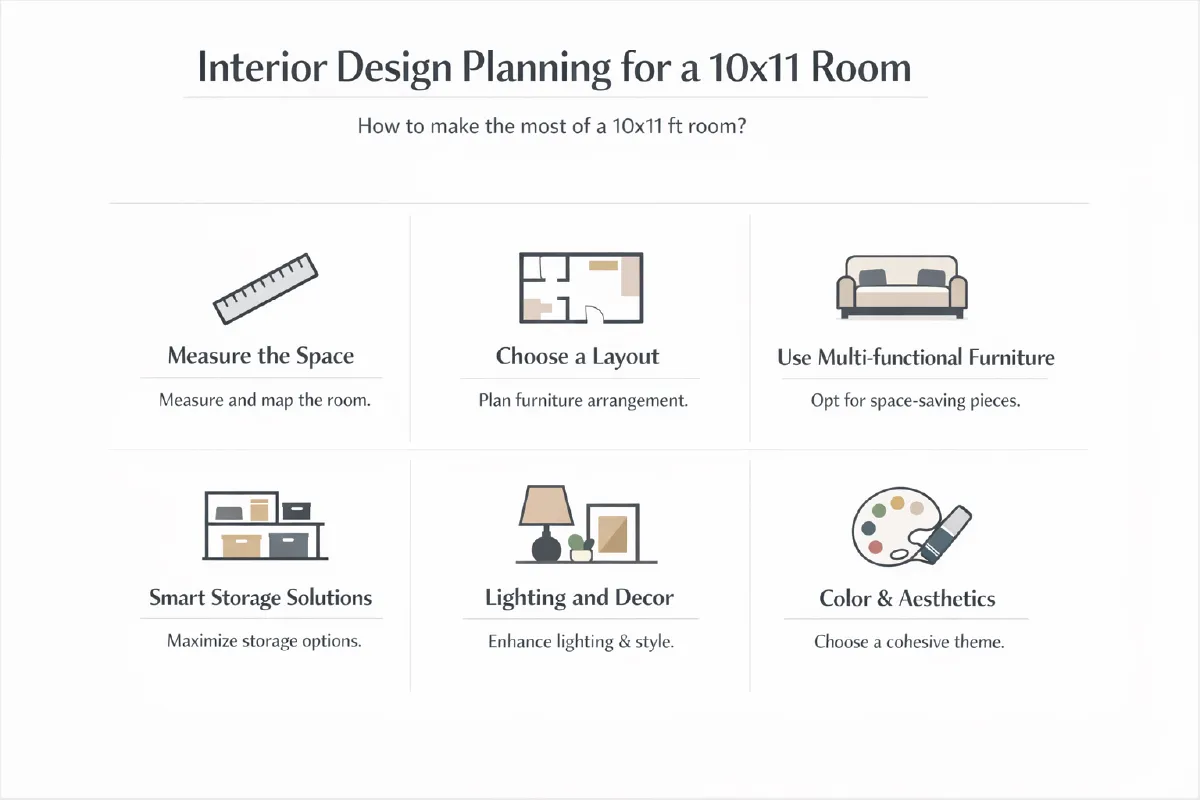
No. Room planning is even more critical in small apartments and compact offices, where every square meter must be used efficiently.
How Early Should Room Planning Be Done In A Project
Room planning should be completed immediately after space planning and before finalizing lighting layouts, materials, or furniture specifications.
Can Room Planning Reduce Project Costs
Yes. Proper room planning minimizes redesign, avoids incorrect furniture purchases, and reduces execution changes during construction.
Does Room Planning Affect Compliance And Approvals
Absolutely. Circulation widths, accessibility, and safety clearances are all determined at the room planning stage, directly impacting compliance outcomes.