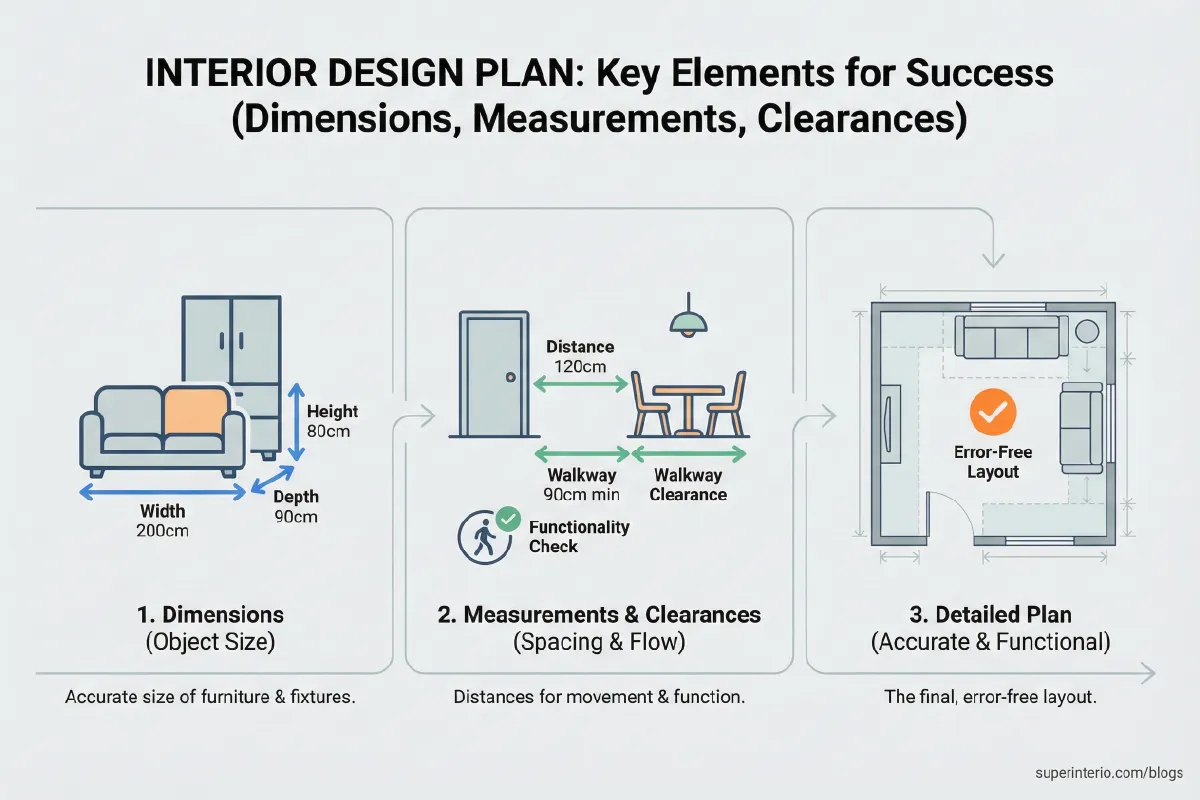
Short answer: An interior design plan with dimensions is a technical planning document that defines exact measurements, clearances, and spatial relationships so interior layouts can be executed accurately, safely, and without costly on-site corrections in residential and commercial projects.
What Is An Interior Design Plan With Dimensions
An interior design plan with dimensions is a scaled drawing that communicates exact sizes, distances, and positions of furniture, walls, openings, and circulation spaces. Unlike conceptual layouts, dimensioned plans remove ambiguity and allow designs to be built exactly as intended.
In professional practice, dimensioned plans are used by contractors, consultants, and suppliers to coordinate work accurately. Without dimensions, execution relies on assumptions, which often leads to errors, delays, and disputes.
Across residential projects in Qatar and the wider MENA region, many layout issues arise not because of poor design intent, but because dimensions were never properly defined or validated before construction.
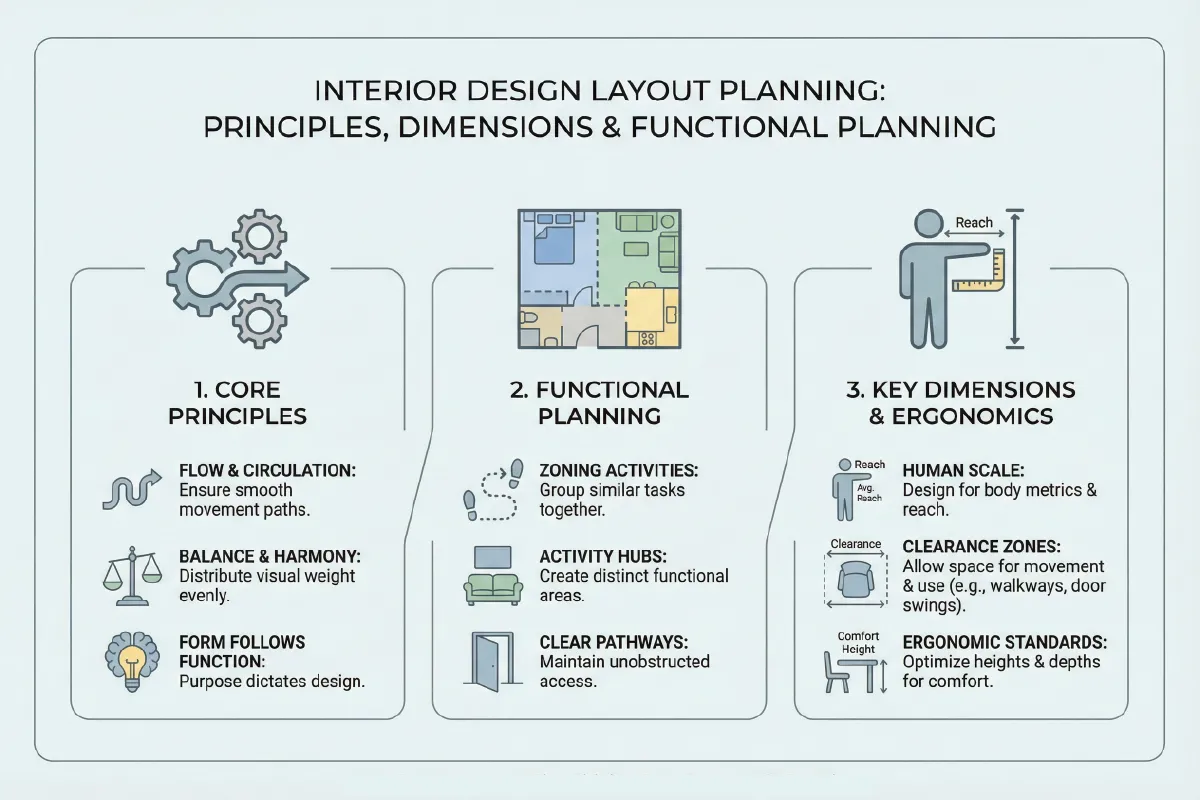
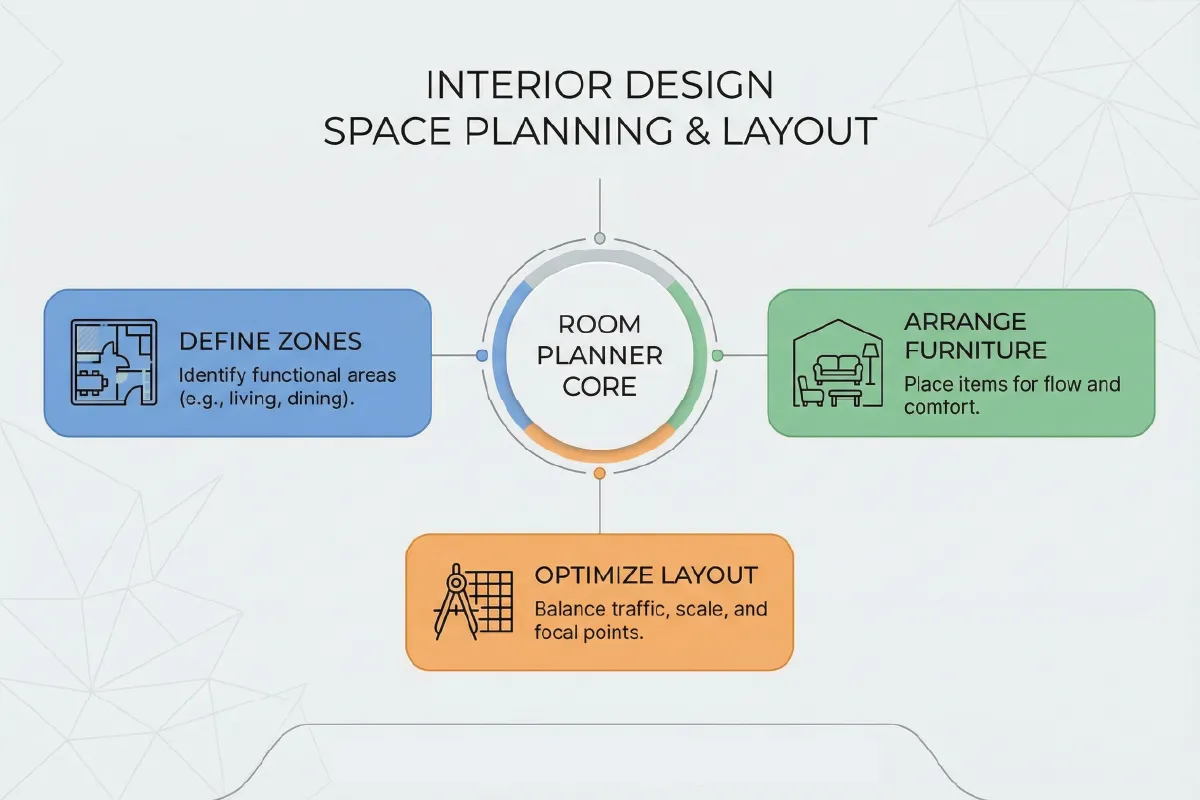
A properly dimensioned interior plan builds upon earlier decisions made during space planning requirements and interior design layout planning, translating those decisions into executable information.
Why Dimensions Matter In Interior Design
Short answer: Dimensions ensure that interior designs function as intended in real life, not just visually.
Furniture comfort, circulation flow, accessibility, and safety all depend on correct measurements. A difference of even a few centimeters can determine whether a space feels comfortable or constrained.
From professional experience, many post handover complaints relate to insufficient clearances around furniture, doors that clash, or circulation paths that feel tight. These issues are almost always traceable to missing or incorrect dimensions.
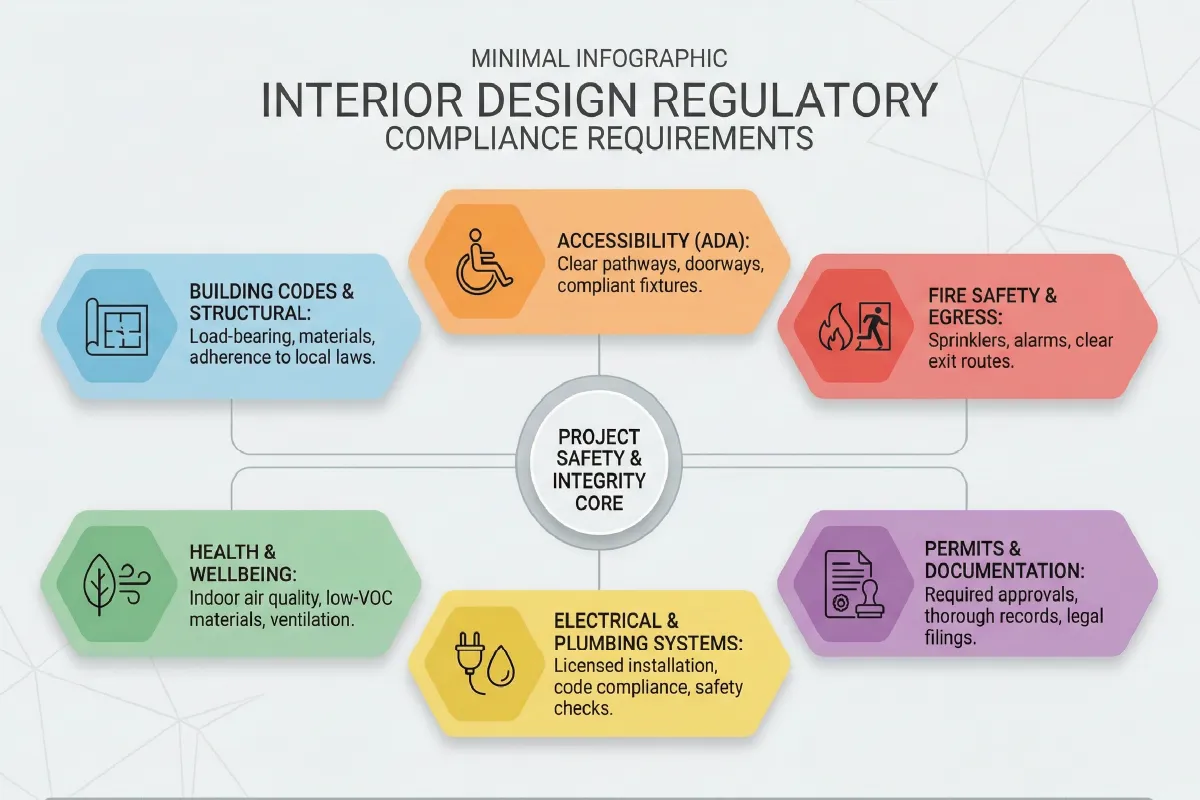
Dimensioned plans also support coordination with lighting, HVAC, and regulatory and compliance requirements by providing clear reference points for technical systems.
Types Of Dimensions Used In Interior Design Plans
Interior design plans use multiple types of dimensions, each serving a specific purpose during execution.
- Overall room dimensions defining total space size
- Furniture dimensions showing exact widths, depths, and heights
- Clearance dimensions around furniture and circulation paths
- Opening dimensions for doors and windows
- Fixed element dimensions for counters, partitions, and built-ins
Using all dimension types together ensures that the design intent is clearly communicated and consistently executed.
Dimensioned Plans Versus Non Dimensioned Layouts
Short answer: Dimensioned plans eliminate guesswork, while non dimensioned layouts rely on interpretation.
Conceptual layouts are useful during early planning stages, but they are not suitable for construction. Without precise dimensions, contractors may interpret layouts differently, leading to inconsistent results.
Dimensioned plans act as a single source of truth, ensuring that all stakeholders work from the same information.
Standard Interior Dimensions And Clearances
Short answer: Standard interior dimensions and clearances provide proven benchmarks that ensure comfort, safety, and usability across different interior spaces.
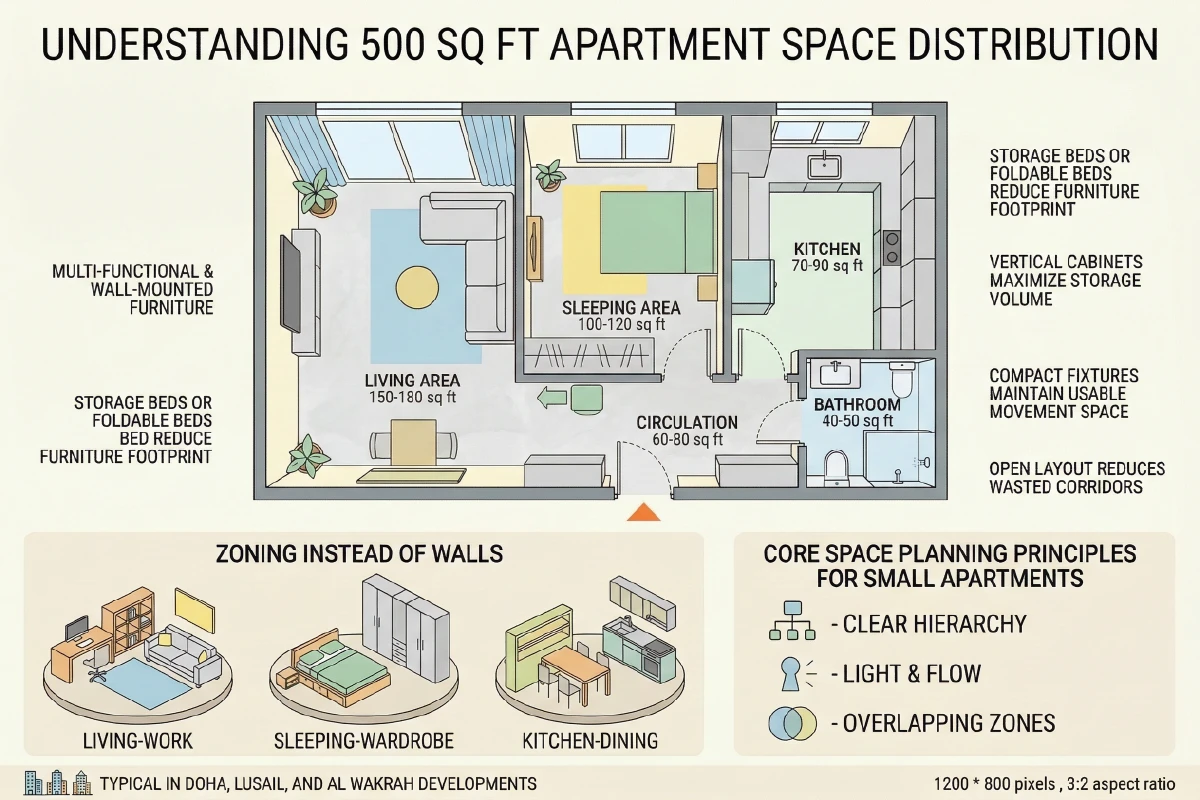
While dimensions may vary based on project type and local regulations, experienced designers rely on established clearance ranges to avoid functional issues. These benchmarks are especially important in high use areas such as living rooms, kitchens, offices, and circulation zones.
| Element | Recommended Dimension | Functional Reason |
|---|---|---|
| Main Circulation Paths | 900 To 1200 Millimeters | Comfortable Movement And Accessibility |
| Space Behind Dining Chairs | 900 Millimeters | Ease Of Seating And Walking |
| Clearance Around Beds | 750 To 900 Millimeters | Daily Use And Access |
| Kitchen Work Aisles | 1000 To 1200 Millimeters | Safe And Efficient Workflow |
| Office Workstation Clearance | 900 Millimeters Minimum | Ergonomic Movement |
These dimensions form a practical baseline. Adjustments are made based on furniture size, occupancy, and accessibility requirements.
Residential Versus Commercial Dimensioning
Short answer: Residential and commercial interiors follow different dimensioning priorities due to usage intensity and regulatory requirements.
Residential interiors prioritize comfort, privacy, and flexibility. Clearances are often more forgiving, and layouts may adapt to lifestyle preferences.
Commercial interiors, on the other hand, must accommodate higher occupancy, consistent workflows, and stricter safety and accessibility standards. Dimensioning in these projects is less flexible and more standardized.
| Aspect | Residential Interiors | Commercial Interiors |
|---|---|---|
| Primary Focus | Comfort And Lifestyle | Efficiency And Safety |
| Clearance Flexibility | Moderate | Limited And Regulated |
| Furniture Density | Lower To Moderate | Higher And Standardized |
| Compliance Impact | Basic Residential Codes | Strict Accessibility And Fire Codes |
Applying residential dimensioning assumptions to commercial spaces often leads to compliance issues and operational inefficiencies.
Dimensioning And Construction Accuracy
Short answer: Accurate dimensioning is essential for translating design intent into precise construction outcomes.
Contractors rely on dimensioned drawings to position walls, furniture, built-ins, and services correctly. Missing or unclear dimensions increase the risk of on-site interpretation errors.
In practice, projects with clear dimensioned plans experience fewer site queries, faster execution, and better alignment between design intent and final outcome.
Coordinating Dimensions With Lighting Materials And Services
Short answer: Dimensioned interior plans must align with lighting layouts, material thicknesses, and building services to ensure execution accuracy and long term performance.
Once dimensions are fixed, designers coordinate plans with lighting placement, ceiling systems, and mechanical services. Furniture positions affect lighting coverage, while ceiling heights and wall thicknesses influence air distribution and service routing.
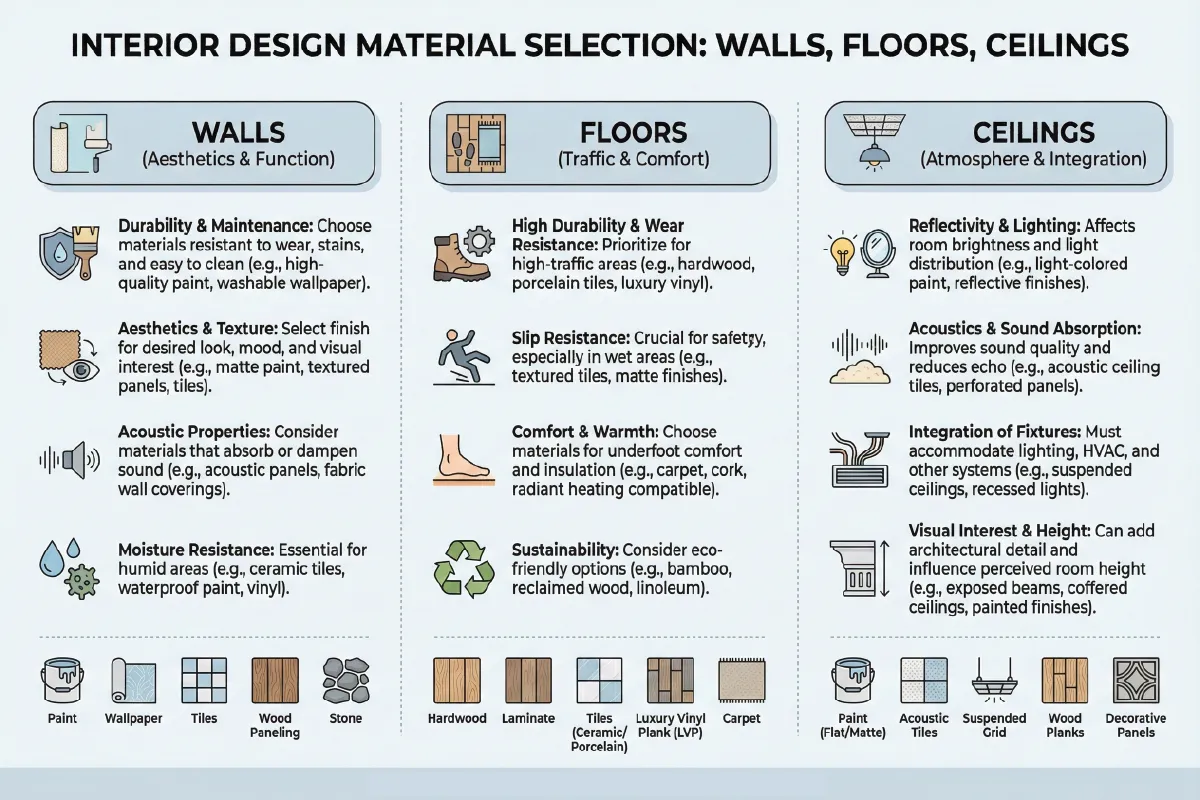
Material selections also depend on accurate dimensions. Floor buildup thickness, wall finishes, and ceiling details must be accounted for so that final clearances remain comfortable after installation.
This coordination ensures consistency across drawings and supports smooth execution without last minute adjustments.
Common Dimensioning Mistakes In Interior Design
Short answer: Most dimensioning mistakes occur when assumptions replace measurement and validation.
- Using generic furniture sizes instead of actual product dimensions
- Ignoring door swings and access zones
- Failing to account for material thickness and finishes
- Overlooking circulation clearances in tight spaces
- Relying on conceptual layouts for construction
Avoiding these mistakes requires discipline in measuring, checking, and coordinating drawings before execution begins.
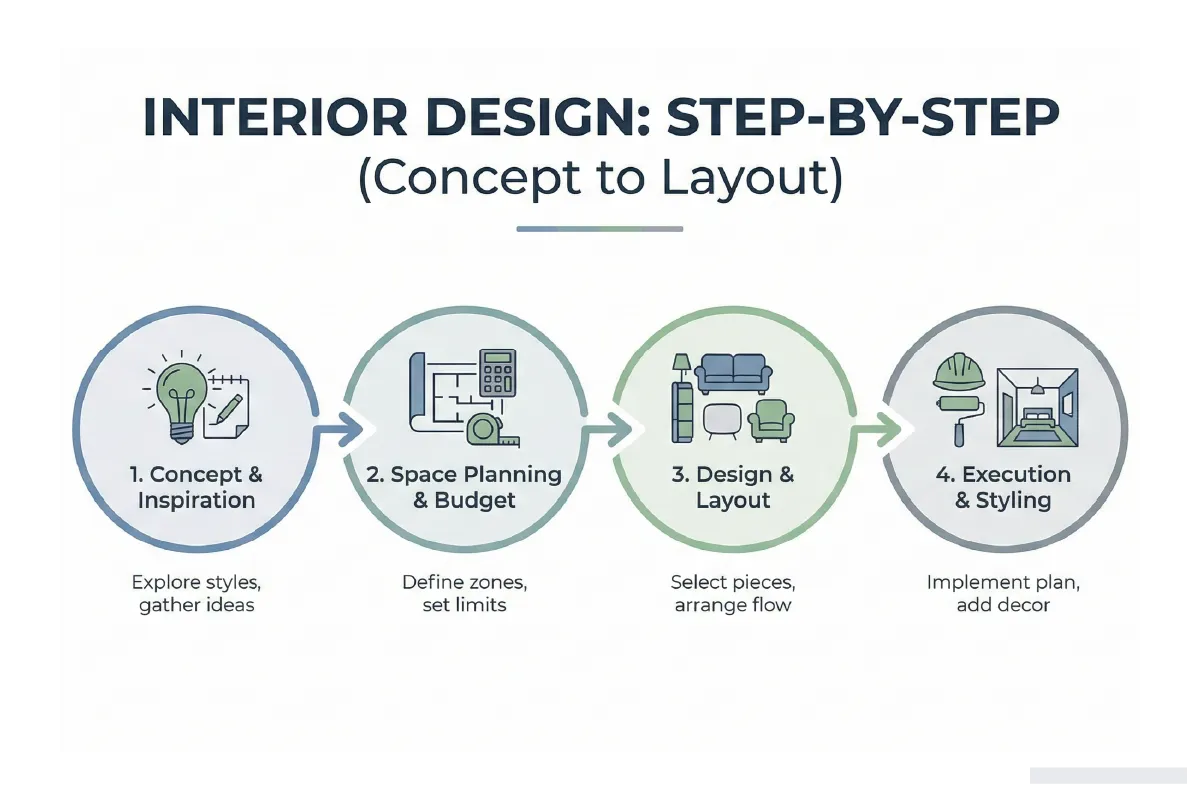
How To Create An Interior Design Plan With Dimensions
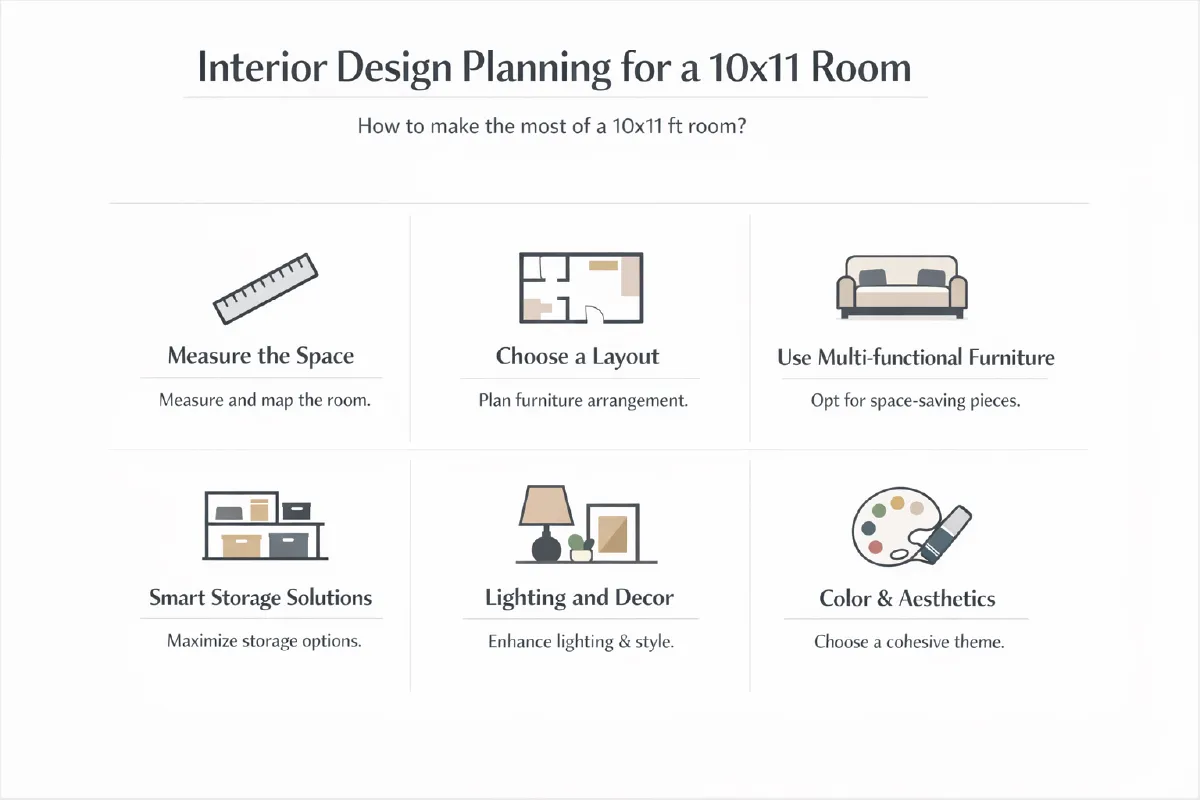
- Measure the space accurately including walls, openings, and ceiling heights
- Confirm furniture and built in element dimensions
- Define circulation and clearance requirements
- Apply dimensions to the layout plan
- Validate measurements and resolve conflicts
- Coordinate dimensions with lighting, materials, and services
- Finalize and issue dimensioned drawings for execution
Dimensioned Plans And Long Term Performance
Short answer: Well dimensioned plans support interiors that remain functional and adaptable over time.
As lifestyles and business needs evolve, accurate clearances allow spaces to accommodate new furniture arrangements and operational changes without structural modifications.
This long term perspective is particularly valuable in residential investments and commercial interiors where adaptability directly affects value and usability.
Key Takeaways
- Dimensions Enable Execution: Accurate measurements turn design intent into buildable reality.
- Clearances Protect Usability: Proper spacing ensures comfort, safety, and accessibility.
- Residential And Commercial Needs Differ: Dimensioning standards vary based on usage and regulation.
- Coordination Prevents Errors: Aligning dimensions with lighting, materials, and services avoids rework.
- Good Plans Age Well: Dimensioned interiors adapt better to future changes.
Frequently Asked Questions
What Is Included In An Interior Design Plan With Dimensions
A dimensioned interior design plan includes room sizes, furniture dimensions, clearances, circulation widths, door and window openings, and fixed element measurements.
Are Dimensioned Plans Required For Residential Projects
While not always legally required, dimensioned plans are strongly recommended for residential projects to avoid execution errors and post handover issues.
Do Dimensioned Plans Help With Contractor Coordination
Yes. Dimensioned plans provide clear reference points for contractors and consultants, reducing assumptions and site queries.
Can Dimensions Be Adjusted During Construction
Adjustments are possible, but changes made during construction often increase cost and delay timelines compared to resolving dimensions during planning.
Who Prepares Dimensioned Interior Design Plans
Interior designers typically prepare dimensioned plans in coordination with architects and consultants to ensure accuracy and compliance.