Super Fitout helps businesses in Qatar plan and execute office interior projects by connecting them with independent interior designers and fit-out companies through a structured digital marketplace. As work environments continue to evolve, organisations are increasingly focused on creating office interiors that support productivity, comfort, and inclusivity for everyone who uses the space.
Designing an office interior that works for everyone is no longer limited to visual appeal or brand expression. Modern offices in Qatar are expected to accommodate different working styles, physical needs, and operational requirements while remaining adaptable over time. This page explains how office interiors can be planned to support diverse users and how inclusive design influences workplace performance.
Office Interior Design in the Qatar Workplace Context
Office environments in Qatar have undergone significant change in recent years. Businesses are moving away from rigid layouts and uniform workstations toward more flexible, people-focused interiors that reflect how teams actually work.
Factors such as hybrid work models, diverse workforces, and increased attention to employee well-being have reshaped expectations around office design. As a result, office interiors are now evaluated not only on appearance, but on how effectively they support collaboration, focus, accessibility, and long-term usability.
In this context, designing an office that works for everyone means considering a wide range of needs from the outset rather than retrofitting solutions later.
Understanding Different User Needs in Offices
No two employees use an office in the same way. Some roles require long periods of focused work, while others depend on frequent collaboration, meetings, or movement throughout the day. An office interior that works for everyone recognises these differences and provides appropriate environments for each.
Common variations in office usage include:
- Employees who require quiet, low-distraction spaces
- Teams that depend on open collaboration and discussion
- Staff who alternate between desk work and meetings
- Individuals with physical or sensory accessibility requirements
Offices designed around a single working style often create friction. Inclusive office interiors aim to reduce this friction by offering choice rather than enforcing uniformity.
Ergonomics as the Foundation of Office Design
Ergonomics plays a central role in creating offices that support health, comfort, and productivity. Poorly designed workstations can contribute to physical strain, fatigue, and reduced performance over time.
In modern office interiors, ergonomic considerations typically include:
- Height-adjustable desks that accommodate different users
- Task chairs with adjustable lumbar support and armrests
- Workstation layouts that support neutral posture
- Breakout seating that allows posture variation during the day
From a client perspective, ergonomic furniture is increasingly viewed as a baseline requirement rather than an optional upgrade. Offices that invest in ergonomics tend to experience better comfort outcomes and reduced long-term strain-related issues.
Flexible Layouts That Support Multiple Work Styles
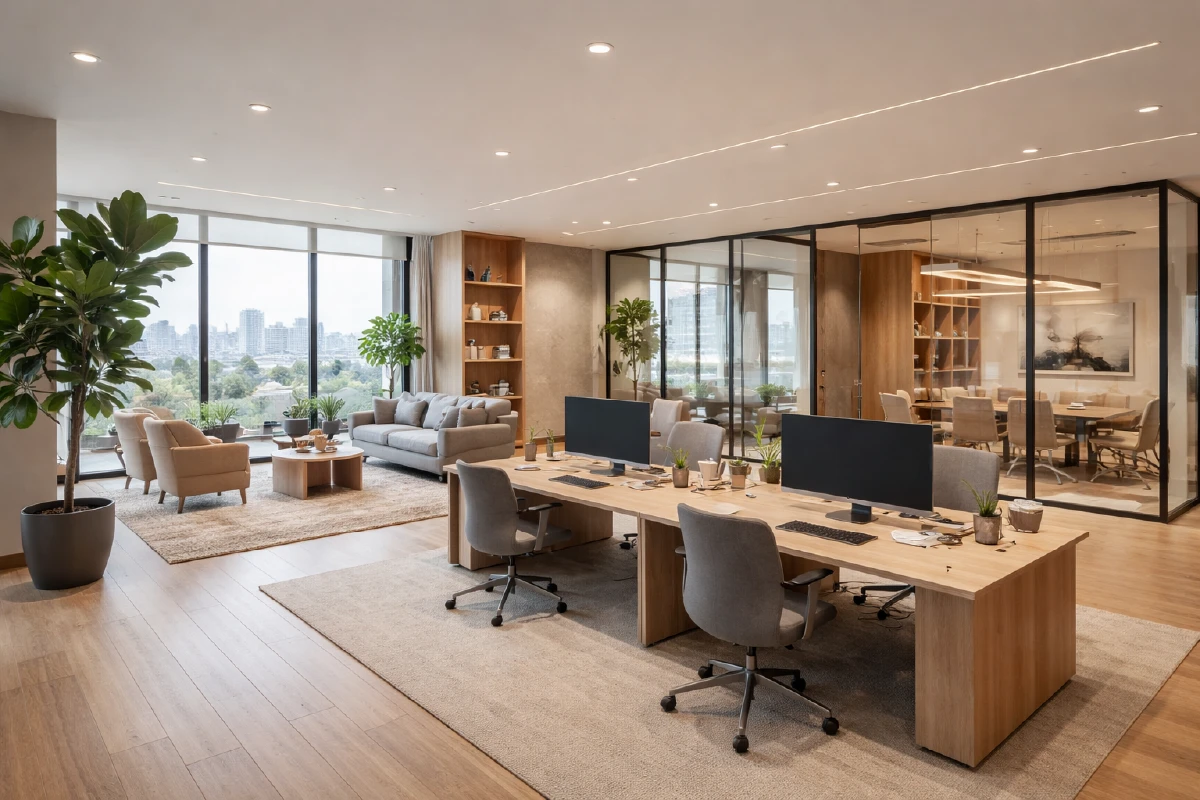
A single layout rarely serves every function within an office. Effective office interiors use zoning to support different activities without creating barriers between teams.
Common layout zones in inclusive office interiors include:
- Focus zones for individual, concentrated work
- Meeting rooms for structured discussions
- Open collaboration areas for team interaction
- Informal spaces for short meetings or breaks
Flexible furniture systems and movable partitions allow offices to adapt as teams grow or operational needs change. In Qatar’s dynamic business environment, this adaptability supports long-term value and reduces the need for frequent redesigns.
Lighting Strategies That Support Focus and Well-Being
Lighting is one of the most influential yet underestimated elements of office interior design. In workplaces, lighting affects visual comfort, concentration levels, energy use, and overall well-being. Offices designed without adequate lighting planning often experience higher fatigue and lower productivity.
In Qatar, where natural daylight can be abundant but unevenly distributed across floor plates, effective office interiors balance daylight access with carefully planned artificial lighting.
Key lighting considerations in inclusive office design include:
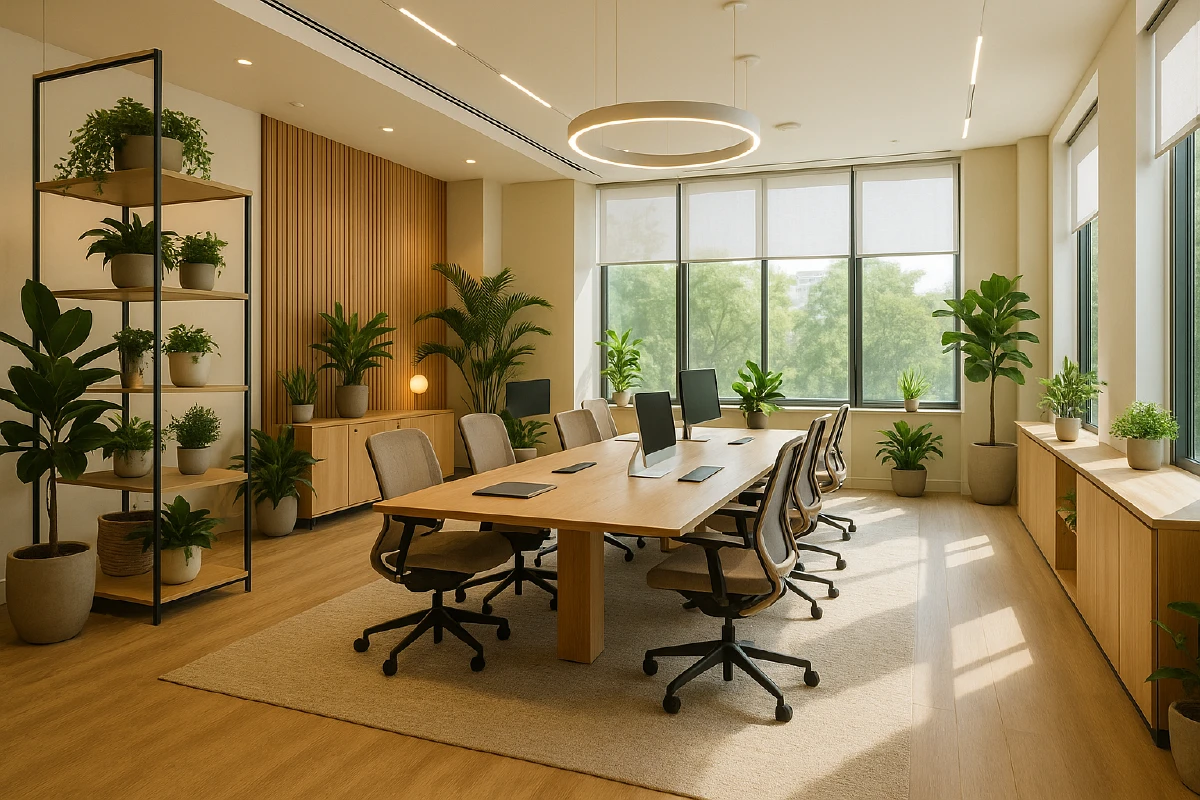
- Maximising Natural Light: Open layouts, glazed partitions, and thoughtful workstation placement help distribute daylight deeper into the office.
- Layered Artificial Lighting: Combining ambient lighting, task lighting, and accent lighting allows different activities to be supported without over-illumination.
- Adjustable Controls: Dimmers, occupancy sensors, and tunable colour temperatures allow lighting to adapt to different user preferences and times of day.
Offices that allow users some degree of control over their lighting environment tend to be more comfortable and inclusive for a wider range of employees.
Acoustic Comfort and Noise Management
Noise is one of the most common challenges in modern office environments, particularly in open-plan layouts. Without adequate acoustic planning, offices can become distracting and stressful for users who require focus or quiet working conditions.
Inclusive office interiors recognise that sensitivity to noise varies significantly between individuals. Designing for acoustic comfort means offering a range of environments rather than assuming one solution fits all.
Common acoustic strategies include:
- Sound-absorbing ceiling systems and wall panels
- Carpet tiles or acoustic flooring in high-traffic zones
- Soft furnishings that reduce sound reflection
- Dedicated quiet rooms or phone booths
By addressing acoustics early in the design process, offices can reduce distractions and support both collaborative and focused work without constant compromise.
Material Selection for Durability and Inclusivity
Materials used in office interiors must perform well under daily use while supporting comfort and accessibility. High-traffic environments require finishes that are durable, easy to maintain, and safe for diverse users.
Inclusive material selection often considers:
- Durability: Flooring, work surfaces, and wall finishes that resist wear and reduce maintenance disruption.
- Slip Resistance: Particularly important in circulation areas and near entrances.
- Low-Emission Finishes: Materials with low VOC emissions that support healthier indoor air quality.
- Tactile Comfort: Finishes that are pleasant to touch and reduce glare or harsh reflections.
In Qatar’s commercial environments, material longevity is also closely linked to cost efficiency, as durable interiors require fewer repairs and replacements over time.
Colour Psychology in Office Environments
Colour has a measurable impact on mood, perception, and behaviour within office spaces. Thoughtful colour planning helps create environments that feel balanced, welcoming, and aligned with the activities taking place.
In offices designed for diverse users, colour is often used strategically:
- Calm Tones: Blues and muted greens are commonly used in focus areas to support concentration.
- Energetic Accents: Warmer colours such as yellow or orange can encourage interaction in collaboration zones.
- Neutral Bases: Greys, soft whites, and beiges provide visual balance and allow branding elements to stand out.
Consistency across colour palettes also helps create visual clarity, making offices easier to navigate and more comfortable for individuals sensitive to visual overstimulation.