Short answer: Zen style interior design focuses on spatial calm, balance, and intentional simplicity by reducing visual noise, controlling proportions, and prioritizing natural materials and circulation, but in Qatar it requires careful adaptation to climate, lifestyle expectations, and maintenance realities to work practically.
What Zen Style Means In Interior Design
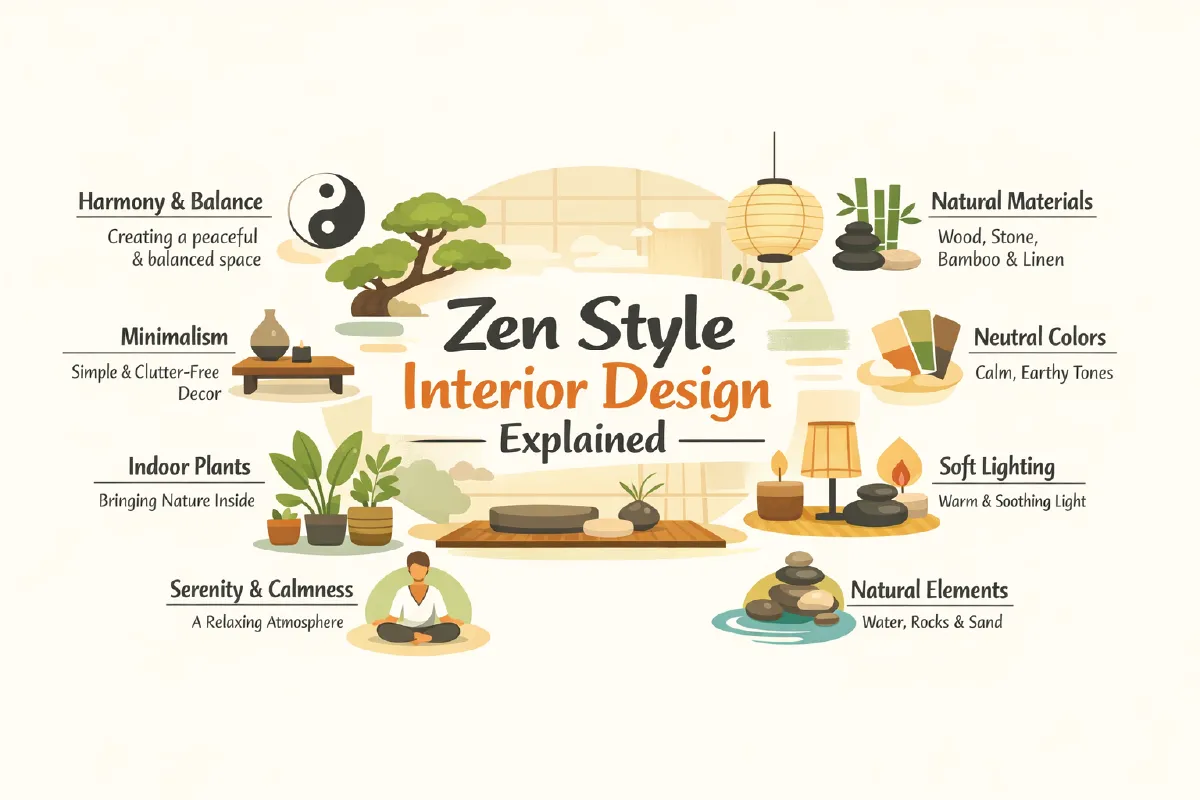
Zen style interior design is defined by intentional simplicity, controlled emptiness, and visual balance rather than decorative minimalism. The focus is on how space feels and functions, not how many elements are removed.
Core Principles Of Zen Style Interiors
Zen interiors rely on proportion, restraint, and harmony. Each element is selected for purpose, material honesty, and spatial contribution rather than visual impact.
| Principle | Design Intent | Practical Effect |
|---|---|---|
| Simplicity | Limit visual clutter | Calmer and more readable spaces |
| Natural Materials | Use honest finishes | Reduced visual fatigue |
| Balance | Control proportions | Improved spatial comfort |
| Empty Space | Allow breathing room | Clear circulation and focus |
Spatial Balance And Layout In Zen Design
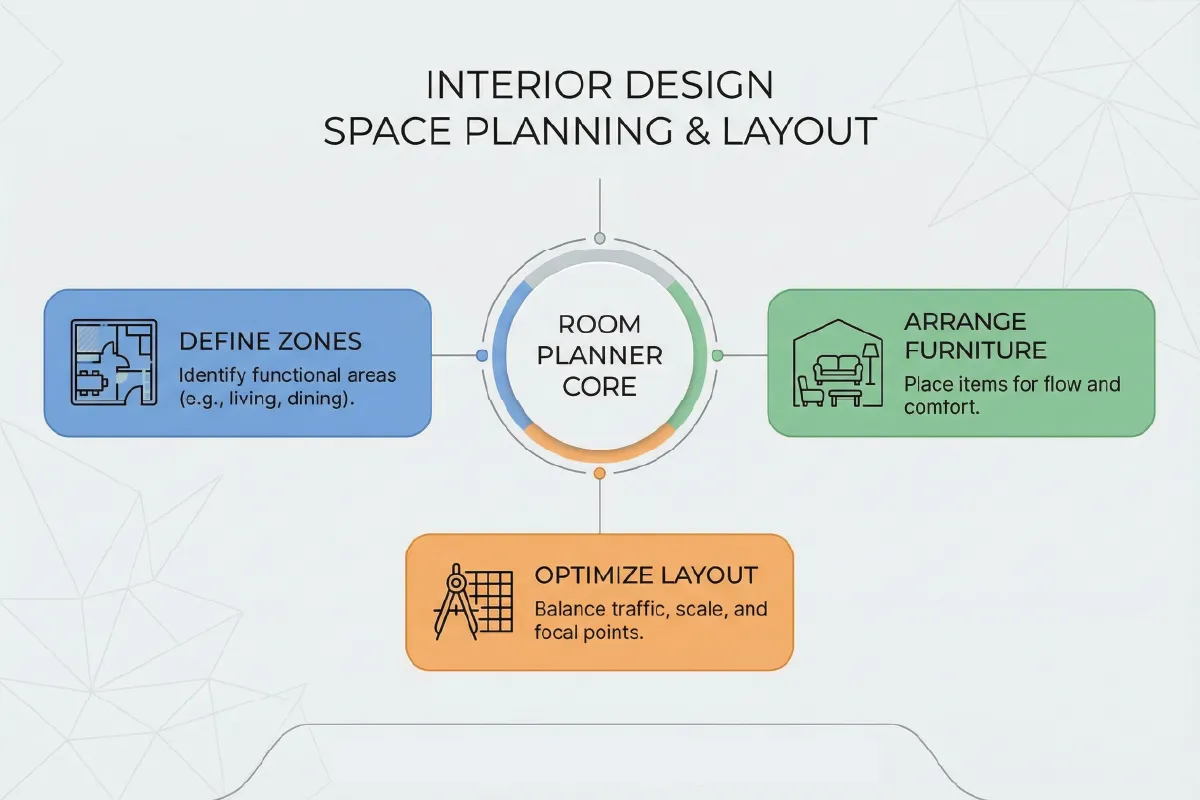
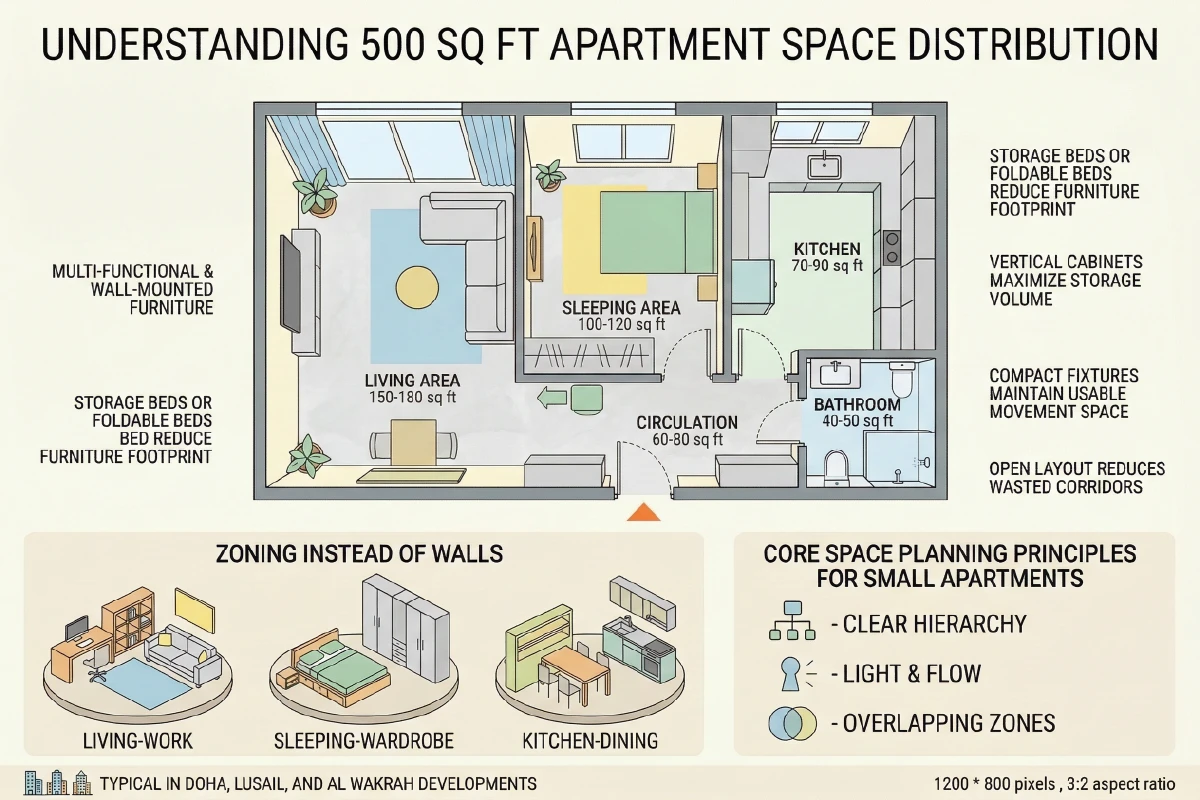
Zen layouts prioritize circulation and negative space. Furniture placement is driven by movement paths and visual pauses rather than maximum seating or storage density.
Material Selection In Zen Style Interiors
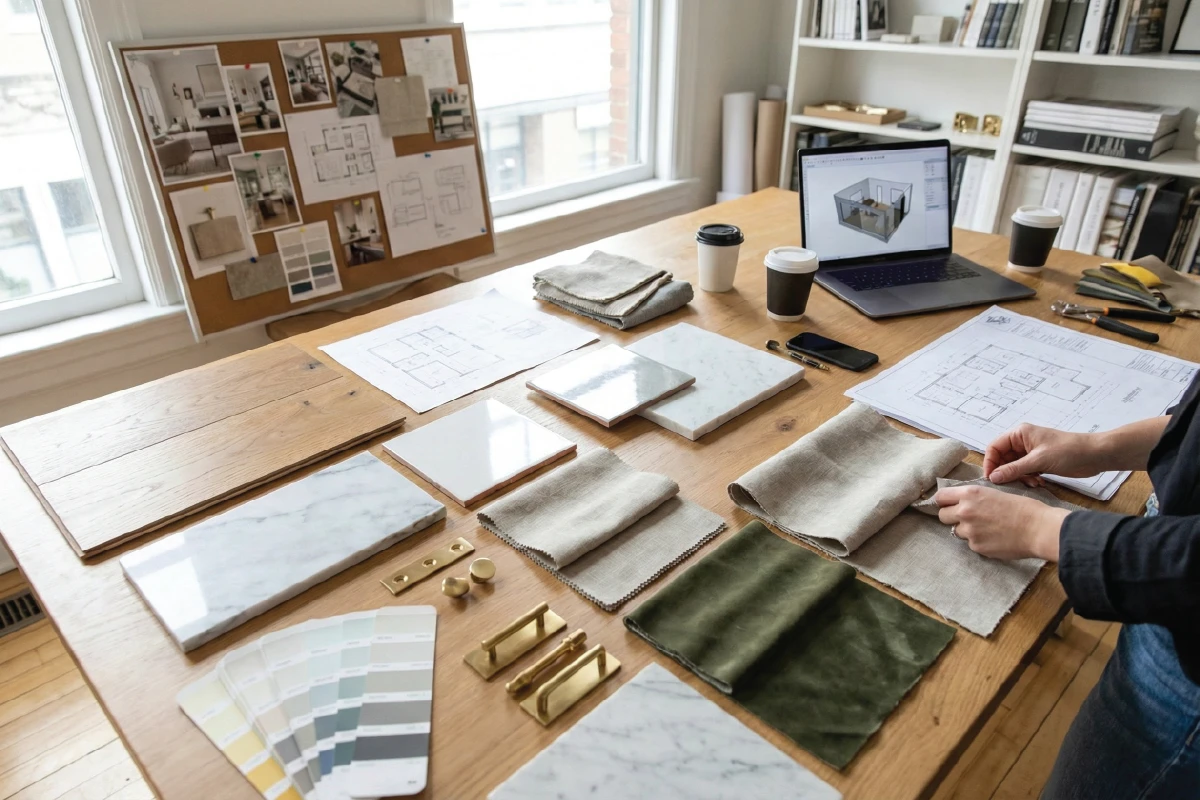
Material selection in Zen interiors emphasizes texture consistency and muted finishes. Overuse of glossy or reflective surfaces typically undermines the intended calm.
Practical Application Of Zen Style In Qatar
In Qatar, Zen style must be adapted for dust control, air conditioning performance, and family oriented living patterns. Fully open layouts often require selective zoning to remain practical.
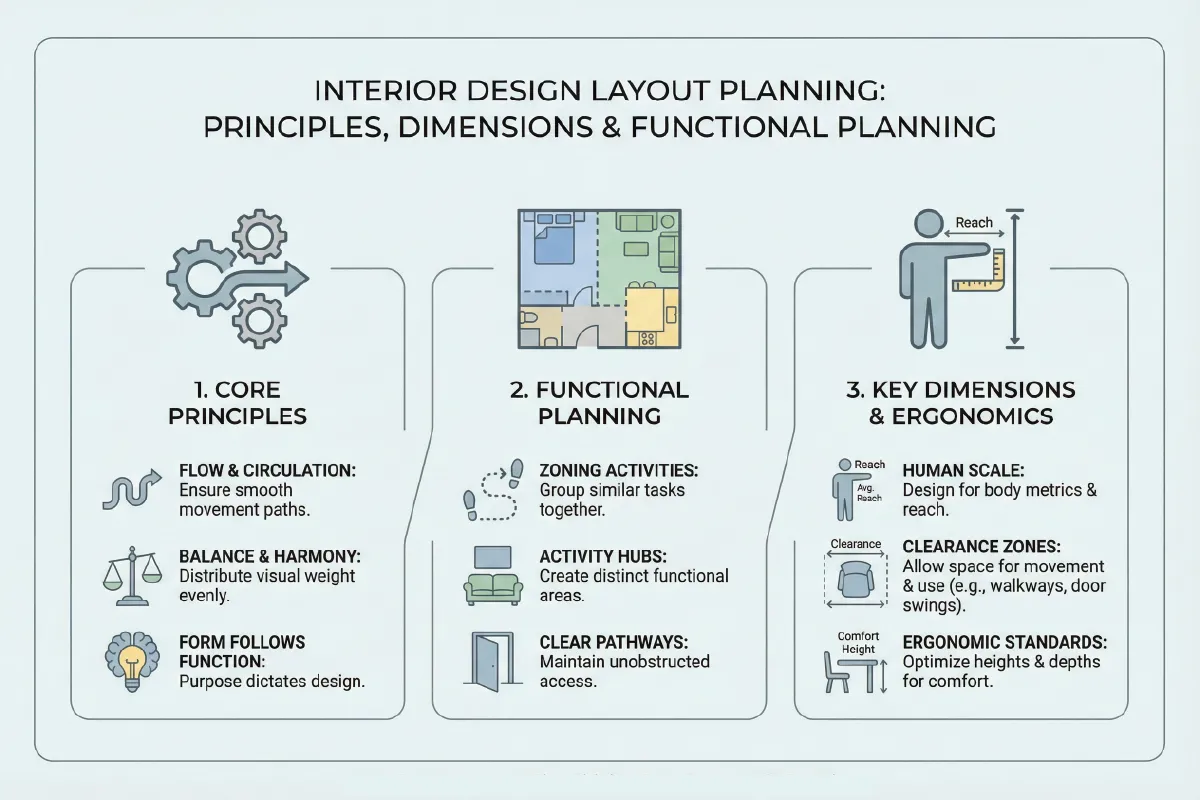
Clients often cross reference layout fundamentals from Interior Design Layout Plan: Principles, Dimensions And Functional Planning to ensure Zen concepts remain functional.
Common Mistakes When Applying Zen Style
Common errors include confusing Zen with unfinished spaces, eliminating storage completely, or selecting materials that are difficult to maintain in local conditions.
Frequently Asked Questions
Is Zen Style Suitable For Family Homes
Yes, but only when storage and zoning are planned carefully to avoid clutter accumulation.
Does Zen Style Reduce Project Costs
Not always. While fewer finishes are used, higher quality materials and detailing can balance out cost savings.
Cost And Timeline Considerations For Zen Interiors
Zen style interiors are not automatically low cost or fast to execute. While the visual language appears simple, execution requires precision in detailing, alignment, and material consistency.
In Qatar, Zen interiors often involve longer design coordination stages to finalize proportions and material samples. Execution timelines can be comparable to contemporary interiors, especially when custom joinery or concealed services are involved.
Storage And Functionality Trade Offs
Zen design minimizes visible storage, which creates a trade off between visual calm and day to day usability. In practice, storage is usually consolidated into concealed zones rather than eliminated.
Clients should expect early planning discussions around what remains visible and what must be hidden. This approach reduces clutter but can increase joinery scope.
Approval And Compliance Considerations
Zen style does not exempt projects from authority rules. Fire safety, accessibility, and material compliance still apply regardless of aesthetic intent.
Designers must ensure that minimal layouts do not obstruct fire equipment, exit paths, or required clearances. Approval considerations are explained further in Interior Design Rules That Affect Approvals.
When Zen Style Is Not Recommended
Zen interiors are not ideal for spaces with heavy storage demands, high foot traffic, or frequent layout changes. Retail, dense offices, and storage intensive homes often struggle to maintain Zen clarity over time.
Key Takeaways
- Zen Is Intentional Simplicity: Calm is achieved through proportion and restraint, not emptiness.
- Planning Is Critical: Storage and circulation must be resolved early.
- Costs Are Detail Driven: Fewer elements do not always mean lower budgets.
- Compliance Still Applies: Minimal design must meet full approval requirements.
References
- Observed residential and commercial Zen style interior applications across GCC residential projects.
- Local approval considerations referenced alongside Interior Design Rules That Affect Approvals.