Interior design quotes vary widely because they reflect far more than price alone. A quote represents scope, materials, execution standards, timelines, and risk allocation. This pillar guide explains how interior design quotations work, how to compare them correctly, and how to choose the right offer without cost overruns, scope gaps, or quality compromises.
What Is an Interior Design Quote?
An interior design quote is a formal commercial proposal issued by an interior designer, fit-out contractor, or turnkey service provider. It outlines what will be delivered, how it will be executed, and how much it will cost. Unlike simple price estimates, professional quotes are structured documents that define responsibility, expectations, and financial commitment.
Depending on the provider, a quote may include design services only, execution only, or a combined design-and-build scope. Some quotes focus on concept and drawings, while others include materials, site execution, approvals, and post-handover support.
Understanding this distinction is critical. Many project issues arise not because quotes were expensive, but because clients assumed different things were included.
Why Interior Design Quotes Vary So Much
It is common for clients to receive interior design quotes that differ significantly in price, even when the project brief appears identical. This variation is not random. It reflects differences in execution model, material selection, technical assumptions, and risk coverage.
- Design-only vs fit-out vs turnkey execution models
- Local materials versus imported finishes
- Level of customisation and detailing
- Approval and authority compliance responsibilities
- Labour skill level and supervision standards
A lower quote may exclude approvals, detailed shop drawings, or specific materials. A higher quote may include contingencies, warranties, and stronger quality control. Comparing quotes without understanding these differences leads to incorrect decisions.
Typical Interior Design Quote Ranges
While every project is unique, interior design quotes generally fall within predictable ranges based on project type, size, and execution scope. The table below provides realistic market-level guidance rather than promotional pricing.
| Project Type | Approximate Quote Range | What Is Typically Included |
|---|---|---|
| Apartment Interior | QAR 40,000 – 120,000 | Design, basic fit-out, standard materials |
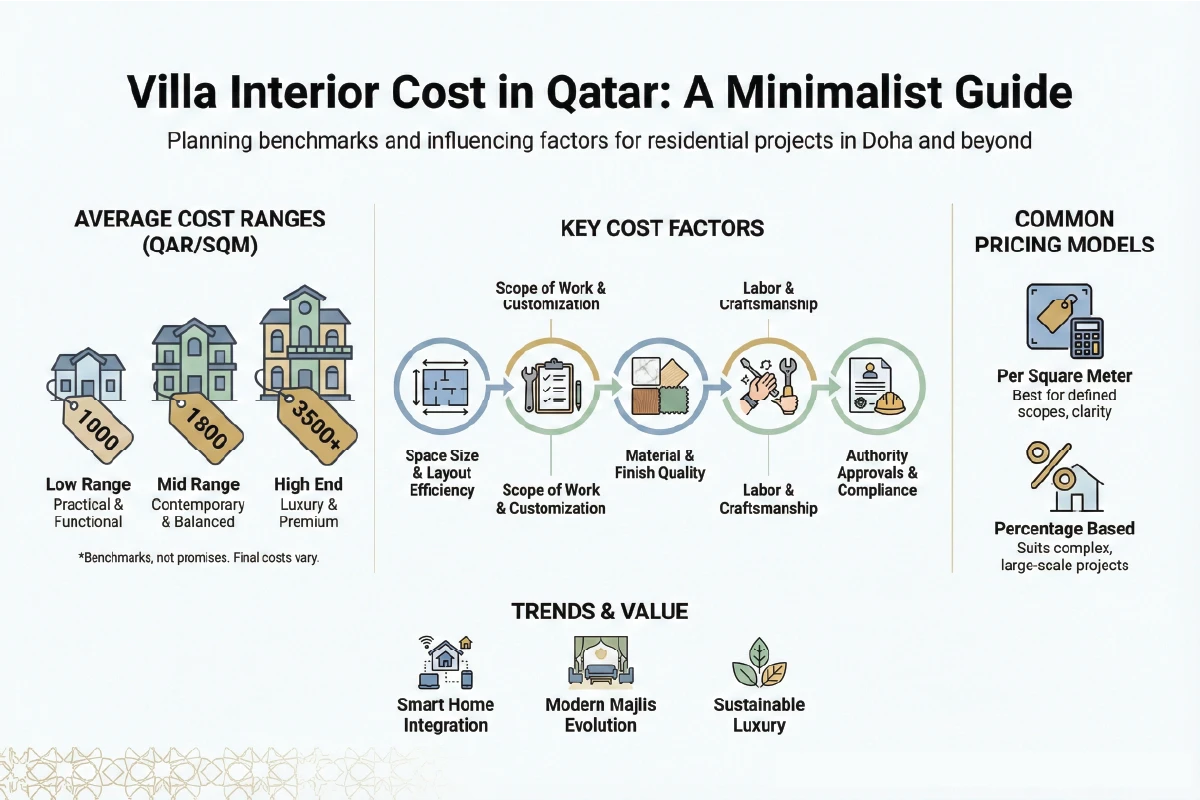
| Villa Interior | QAR 150,000 – 500,000+ | Custom design, approvals, full execution |
| Office Fit-Out | QAR 800 – 2,000 per sqm | Partitions, MEP, finishes, furniture |
| Retail / Hospitality | QAR 1,200 – 3,000 per sqm | Brand-driven design, custom finishes |
These ranges are indicative and depend heavily on scope definition. Quotes below these ranges often omit essential components, while quotes above them typically reflect premium materials, extended warranties, or complex execution requirements.
Key Components of an Interior Design Quote
A professional interior design quote should clearly break down what the client is paying for. When reviewing quotations, ensure the following components are explicitly stated.
- Scope of Work: Detailed list of services and deliverables
- Design Inclusions: Concept, drawings, 3D visuals, approvals
- Material Specifications: Brands, finishes, quantities
- Execution Timeline: Start date, milestones, completion
- Payment Structure: Milestones and payment terms
- Exclusions: Items not covered by the quote
Quotes that lack clarity in these areas often lead to disputes, variations, and unexpected costs during execution.
Step 1: Review Each Interior Design Quote Carefully
The first step in managing interior design quotes is careful review. Do not compare quotes side by side immediately. Review each proposal independently to understand its structure and assumptions.
- Check whether the quote matches your original project brief
- Verify that all requested spaces and services are included
- Confirm timelines and delivery expectations
- Look for vague language that may hide exclusions
Quotes that appear simple or short are not necessarily efficient. In many cases, they lack detail and increase project risk later.
Step 2: Compare Interior Design Quotes Beyond Price
Price comparison alone does not reveal value. Two quotes with similar totals can represent completely different execution outcomes. Effective comparison focuses on what you receive for the cost.
- Material quality and brand transparency
- Design depth and technical documentation
- Execution supervision and workmanship
- Warranty, after-handover support, and liability
A higher quote may offer better long-term value if it reduces maintenance, rework, or approval delays. The goal is alignment with your expectations, not simply selecting the lowest number.
Step 3: Ask the Right Questions and Negotiate Intelligently
Negotiation in interior design projects is not about pushing prices down aggressively. Effective negotiation focuses on scope alignment, material alternatives, and execution clarity rather than headline cost reduction.
Before negotiating numbers, clients should ensure the quote accurately reflects their priorities. Reducing cost without understanding implications often results in compromised finishes, delayed approvals, or incomplete delivery.
Smart Questions to Ask Before Negotiation
- Which items contribute most to the total cost?
- Are there alternative materials with similar performance?
- What elements are flexible versus fixed?
- Does the quote include authority approvals and coordination?
- What happens if the project scope changes?
Negotiation should improve clarity and value. Quotes that resist transparency often create problems during execution.
Step 4: Finalise the Best Quote and Confirm Responsibilities
Once quotes have been reviewed, compared, and clarified, the final decision should be based on alignment rather than price alone. The selected quote becomes the foundation of the project relationship.
In structured marketplaces like Super Fitout, awarding a bid functions as a formal confirmation of scope, pricing, and delivery expectations. This reduces ambiguity and provides a reference point throughout execution.
- Ensure the awarded quote reflects all agreed clarifications
- Confirm timelines, milestones, and deliverables
- Review payment stages carefully
- Document all revisions before project start
Keeping Your Interior Project on Track After Awarding the Quote
Effective project management begins after the quote is accepted. Clients who actively monitor progress experience fewer delays, clearer communication, and better outcomes.
Digital project management tools simplify this process by allowing clients to track milestones, review samples, and monitor variations without constant site visits.
- Track progress against agreed milestones
- Approve materials and samples before execution
- Monitor variation requests and cost impact
- Maintain written communication for changes
Projects stay on schedule when expectations remain aligned throughout execution.
Common Mistakes Clients Make When Managing Quotes
- Selecting the lowest quote without scope verification
- Ignoring exclusions and assumptions
- Negotiating price without understanding impact
- Proceeding without written confirmations
- Underestimating approval and coordination timelines
Avoiding these mistakes significantly improves project outcomes and protects long-term value.
Frequently Asked Questions
-
Why do interior design quotes differ so much?
Because quotes reflect different scopes, materials, execution standards, and risk assumptions. -
Is a higher quote always better?
No. The best quote is the one that aligns with your expectations, timeline, and quality requirements. -
Should approvals be included in the quote?
Ideally yes. If excluded, the responsibility should be clearly defined. -
Can quotes change after the project starts?
Yes, but only through documented variations approved by both parties. -
How long is an interior design quote valid?
Most quotes are valid for 15–30 days, depending on material pricing and market conditions.