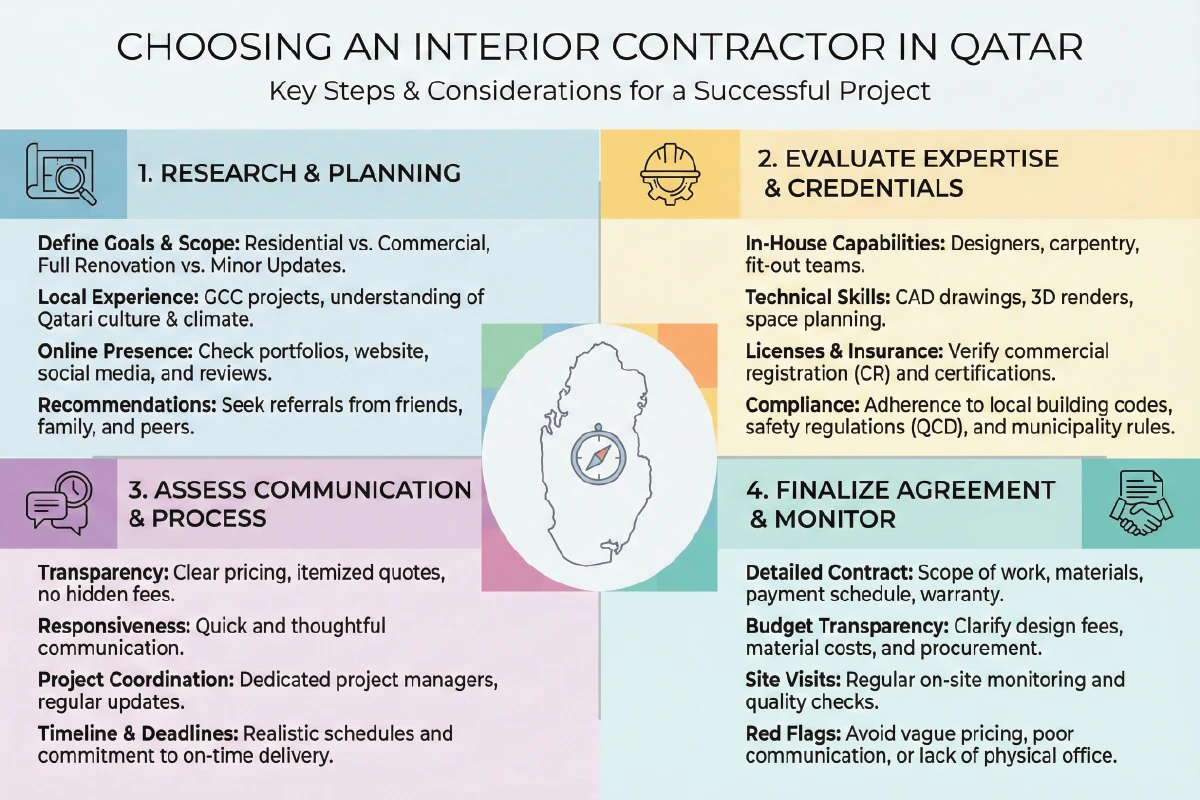
Short Answer: Choosing an interior contractor in Qatar requires evaluating more than price. The right contractor is one who clearly defines scope, understands local approval processes, coordinates design and execution properly, provides transparent cost breakdowns, and has proven experience with Qatar specific regulations, landlords, and inspection requirements. Most project failures occur when selection is based on cost alone rather than capability, coordination strength, and approval readiness.
Why Choosing The Right Interior Contractor Matters In Qatar
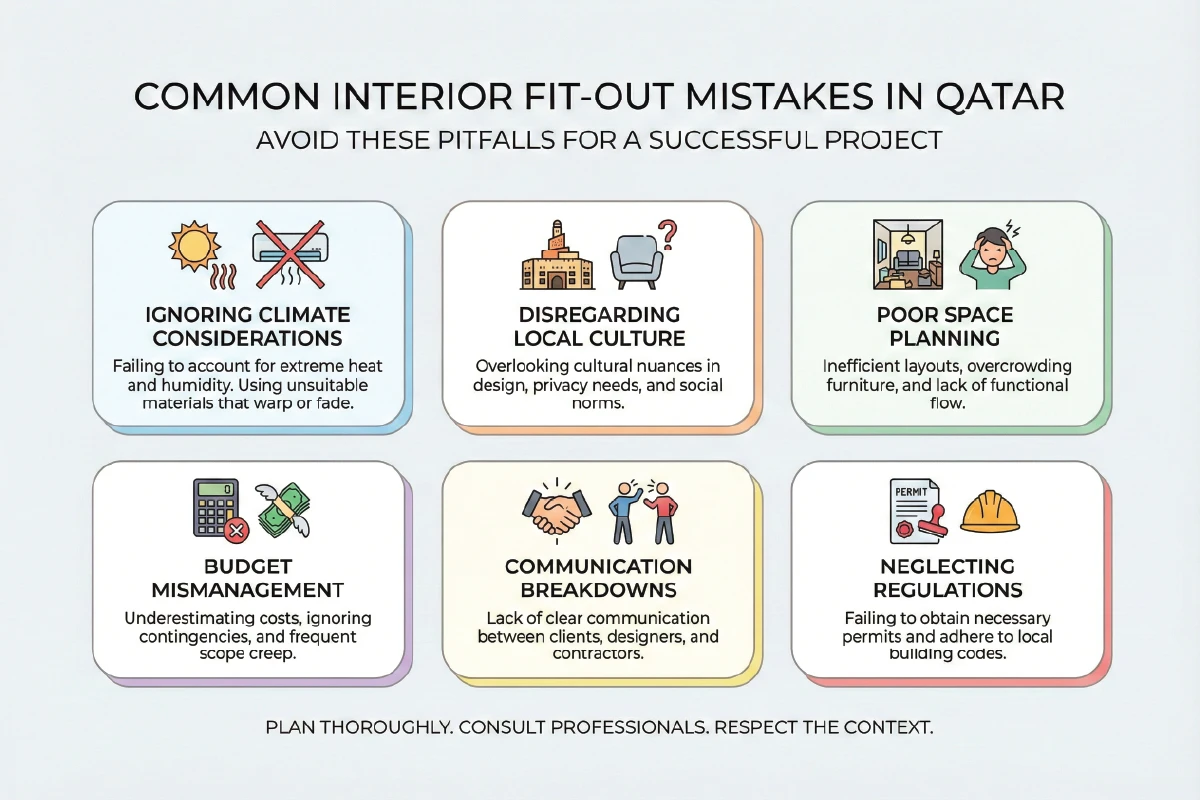
In Qatar, interior fit out projects operate within a tightly regulated environment that includes municipal approvals, civil defense requirements, landlord rules, and inspection protocols. Selecting the wrong contractor often leads to approval delays, rework, budget overruns, or stalled projects.
Unlike markets where execution can begin quickly, Qatar requires alignment between design intent, authority submissions, and site execution. A contractor without local experience may underestimate timelines or misinterpret compliance requirements, creating risks that are difficult to recover from later.
Understanding The Role Of An Interior Contractor In Qatar
An interior contractor in Qatar is responsible not only for executing physical works but also for coordinating drawings, approvals, inspections, and site readiness. The role often overlaps with design coordination, authority liaison, and material procurement.
Misunderstanding this role is common. Many clients assume the contractor will manage approvals automatically, while in reality this responsibility must be clearly defined in the contract. Clarifying responsibilities early prevents gaps between design, approvals, and execution.
| Responsibility Area | What It Involves |
|---|---|
| Site Execution | Fit out works based on approved drawings |
| Design Coordination | Aligning drawings with site and authority comments |
| Approval Support | Assisting or managing authority submissions if agreed |
| Inspections | Preparing site for authority inspections |
Step One Define Your Project Scope Before Shortlisting Contractors
Before evaluating contractors, the project scope must be clearly defined. This includes what is included in design, what is part of fit out execution, who manages approvals, and which materials are finalized.
Without a defined scope, quotations become inconsistent and difficult to compare. Contractors may price different assumptions, leading to variation claims later. Clear scope definition protects both cost and timeline.
| Scope Element | Why It Matters |
|---|---|
| Design Stage | Ensures pricing reflects approval level drawings |
| Approval Responsibility | Avoids confusion during authority submissions |
| Material Specifications | Prevents pricing changes after contract award |
| Execution Boundaries | Clarifies inclusions and exclusions |
Step Two Check Qatar Specific Approval And Compliance Experience
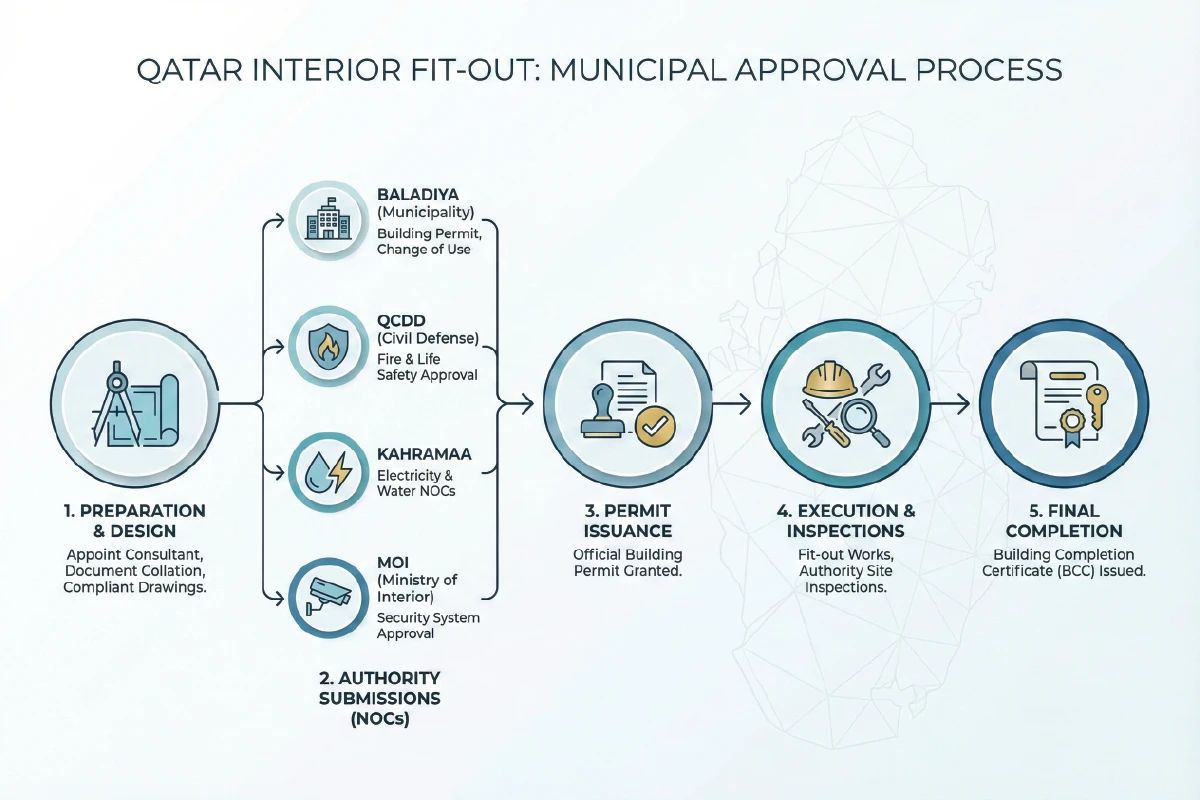
Approval experience is one of the most important criteria when choosing an interior contractor in Qatar. Contractors should demonstrate familiarity with municipal processes, civil defense requirements, and landlord approval systems.
Asking how approvals are handled, which authorities are involved, and how long approvals typically take provides insight into a contractor’s real experience. Contractors who cannot clearly explain approval pathways often underestimate project complexity.
Step Three Evaluate Contractor Quotations Beyond Price
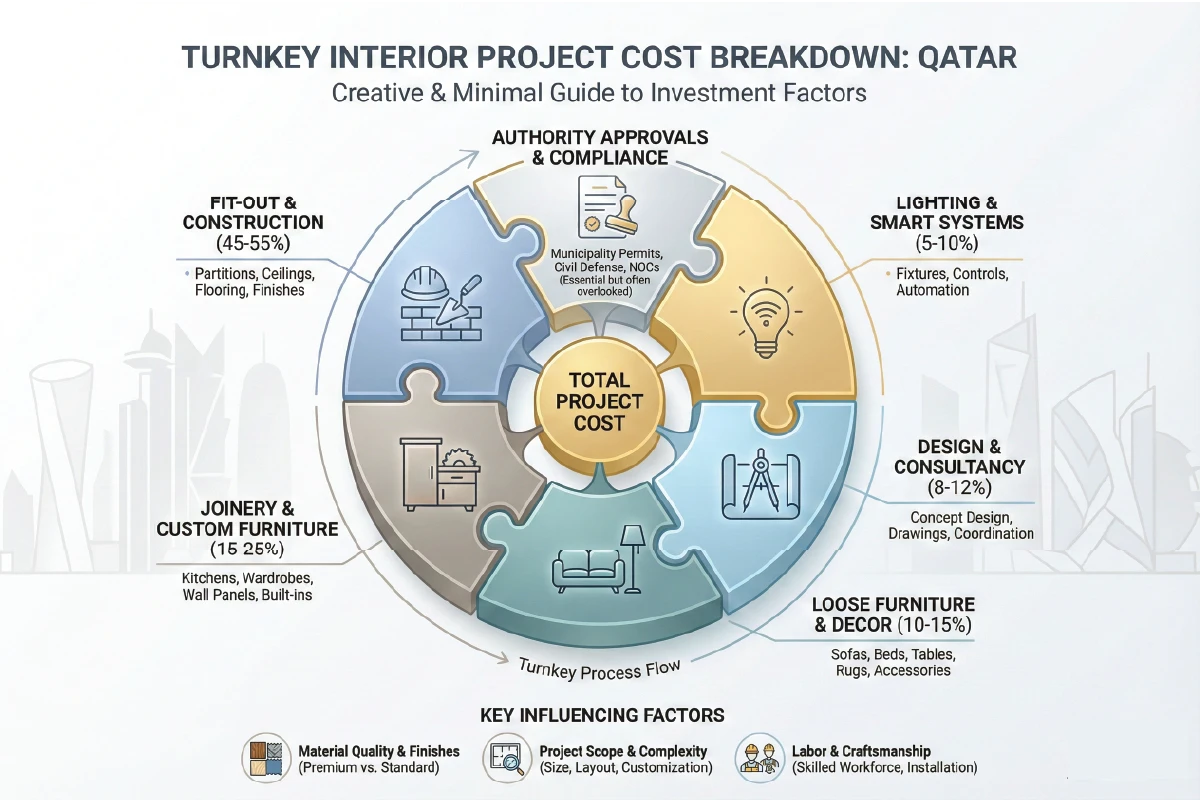
In Qatar, interior contractor quotations often vary significantly even when the project scope appears similar. This variation usually reflects differences in assumptions, exclusions, approval responsibilities, material specifications, and coordination effort rather than pure cost efficiency.
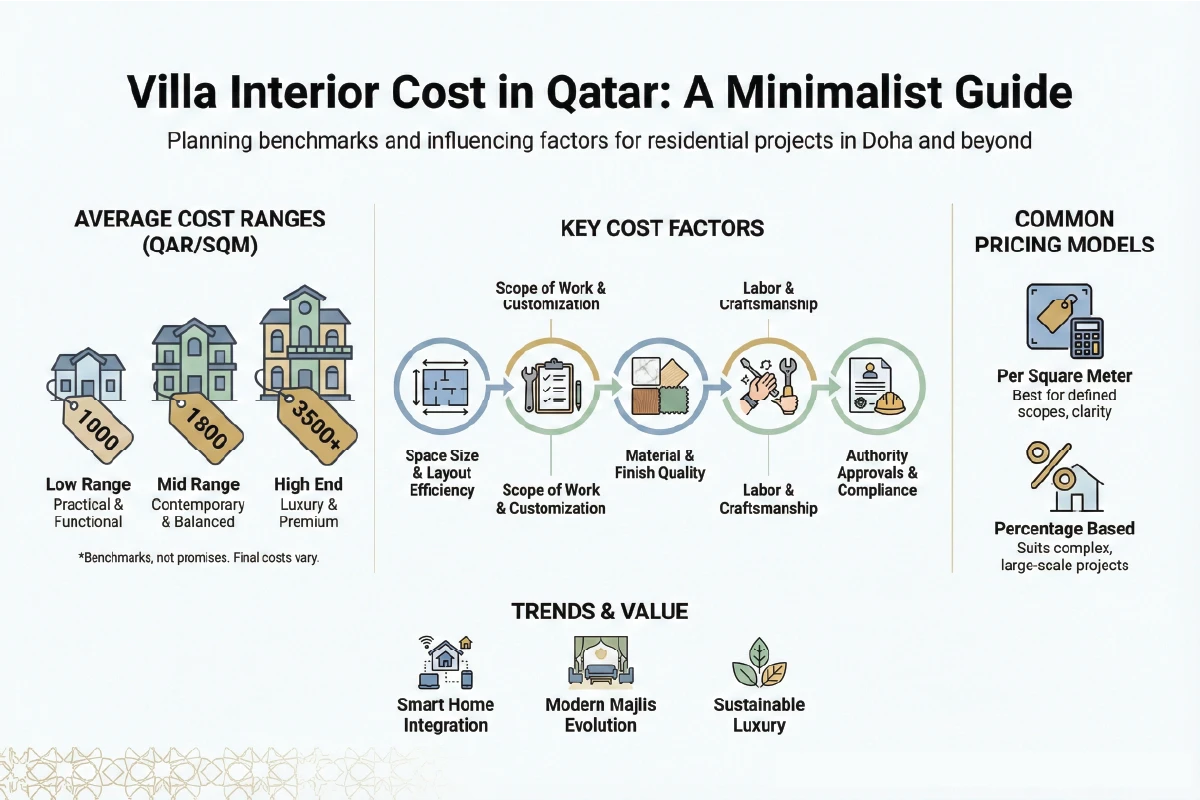
Selecting a contractor based only on the lowest price is risky. Understanding how pricing is structured helps avoid hidden exclusions, which is explained in detail in this turnkey interior project cost guide for Qatar. A lower quotation may exclude approval coordination, inspections, temporary works, or contingency allowances that later surface as variations.
| Comparison Area | What To Check |
|---|---|
| Scope Coverage | Are all drawings, approvals, and works included |
| Material Allowances | Are specifications final or provisional |
| Approval Costs | Are submission and inspection costs included |
| Timeline Assumptions | Are approvals and revisions factored in |
Step Four Review Project Experience And Relevant Project Types
Not all interior contractors in Qatar are suitable for every project type. Experience should be evaluated based on project category such as residential villas, apartments, offices, retail units, or hospitality spaces.
A contractor experienced in villas may not be familiar with mall landlord approvals, while a retail fit out contractor may not understand residential authority expectations. Relevant experience reduces learning curves and execution risks.
Step Five Assess Design And Execution Coordination Capability
Interior fit out projects in Qatar require close coordination between design documentation, authority feedback, and site execution. Contractors must demonstrate how they manage drawing revisions, site clarifications, and coordination with designers and consultants.
Weak coordination often leads to rework, inspection failures, and delays. Asking how updates are communicated and how site teams receive revised drawings provides insight into execution discipline.
Step Six Clarify Approval And Inspection Responsibilities
One of the most common causes of disputes in Qatar fit out projects is unclear responsibility for approvals and inspections. Contractors, designers, and clients often assume someone else is managing submissions and follow ups.
Before finalizing a contractor, responsibilities for municipal approvals, civil defense inspections, landlord sign offs, and final completion certificates must be clearly assigned and documented. For a detailed understanding of authority coordination, review the municipal approval process in Qatar for interior and fit out projects before contractor appointment.
| Approval Stage | Responsible Party |
|---|---|
| Municipal Submission | Defined in contract |
| Civil Defense Review | Defined in contract |
| Landlord Approval | Defined in contract |
| Final Inspection | Defined in contract |
Step Seven Understand Timelines And Risk Allocation
Contractors should provide realistic timelines that account for approvals, revisions, inspections, and coordination. Budget expectations should also align with local realities, which are outlined in this interior design cost guide for Qatar. Overly optimistic schedules often indicate inexperience or unrealistic assumptions.
Risk allocation should also be reviewed. Understanding how delays, authority comments, or material changes are handled helps avoid disputes during execution.
Step Eight Confirm Contract Structure And Variation Control
Before appointing an interior contractor in Qatar, the contract structure must be clearly understood. This includes payment milestones, variation handling, approval dependencies, and completion criteria.
Many disputes arise when variations are handled informally or when scope changes are not documented. A clear variation process protects both the client and the contractor by ensuring transparency and cost control.
Step Nine Understand SuperFitout’s Role In Contractor Selection
SuperFitout operates as a platform that connects clients with interior contractors and design professionals in Qatar. It does not act as a contractor or execute fit out works.
This distinction is important. The platform supports comparison, transparency, and structured decision making, while the execution responsibility remains with the appointed contractor.
Frequently Asked Questions About Choosing An Interior Contractor In Qatar
Is It Better To Choose A Contractor Or Separate Designer And Contractor
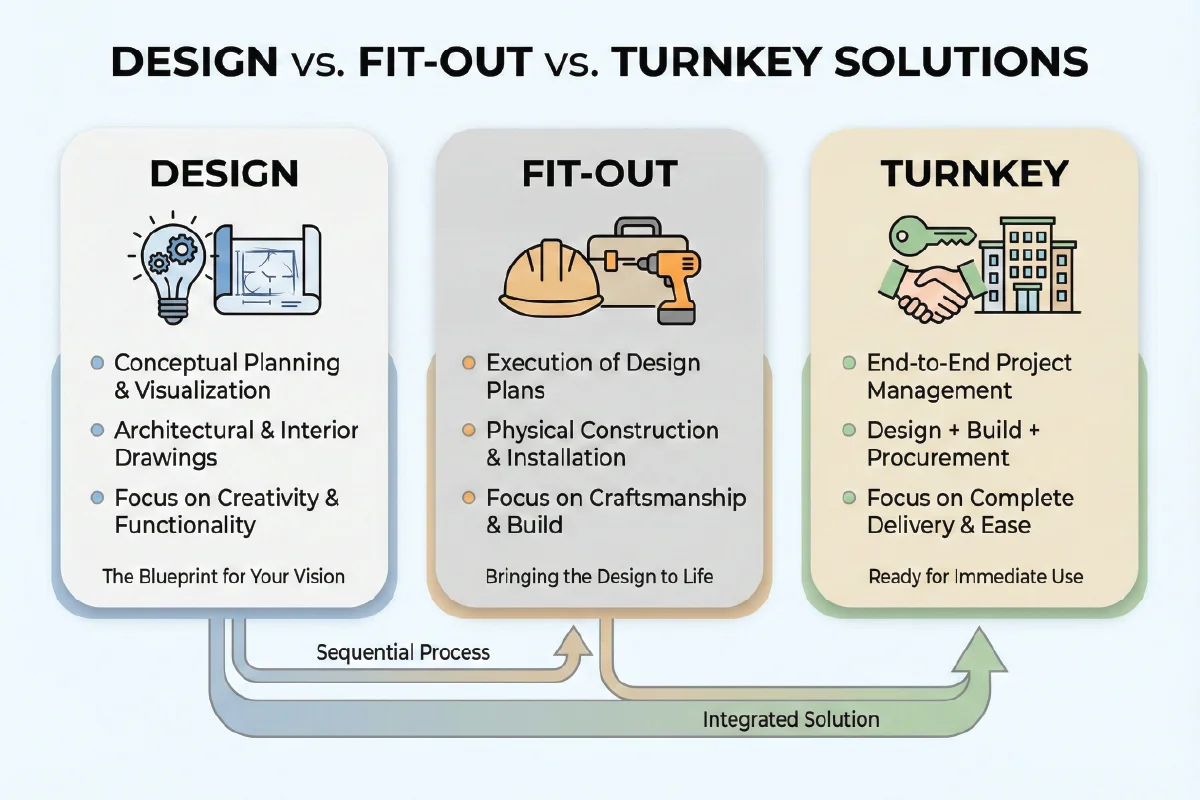
Both models are used in Qatar. A clear comparison of responsibility boundaries is available in this guide explaining the difference between design, fit out, and turnkey projects. A combined contractor model simplifies coordination, while a separate designer and contractor model offers stronger design control but requires clear coordination responsibilities.
Should Approval Experience Be A Priority When Selecting A Contractor
Yes. Approval experience directly affects timelines, compliance, and risk of rework. Contractors unfamiliar with local authority processes often cause avoidable delays.
How Many Contractor Quotations Should Be Compared
Comparing two to three detailed quotations is usually sufficient, provided the scope and assumptions are consistent.
Can The Lowest Quotation Be Trusted
Not always. The lowest quotation may exclude important scope elements or approval responsibilities that later increase total project cost.
Key Takeaways
- Define Scope First: Clear scope definition is essential before contractor evaluation.
- Evaluate Beyond Price: Quotations should be reviewed for inclusions, assumptions, and risks.
- Check Relevant Experience: Project type experience reduces execution uncertainty.
- Clarify Approvals: Approval and inspection responsibilities must be assigned clearly.
- Use Structured Selection: A disciplined comparison process leads to better outcomes.
References
- Qatar Municipality Interior Fit Out Approval Guidelines
- Qatar Civil Defense Fire And Life Safety Requirements
- Common Interior Fit Out Contract Practices In Qatar