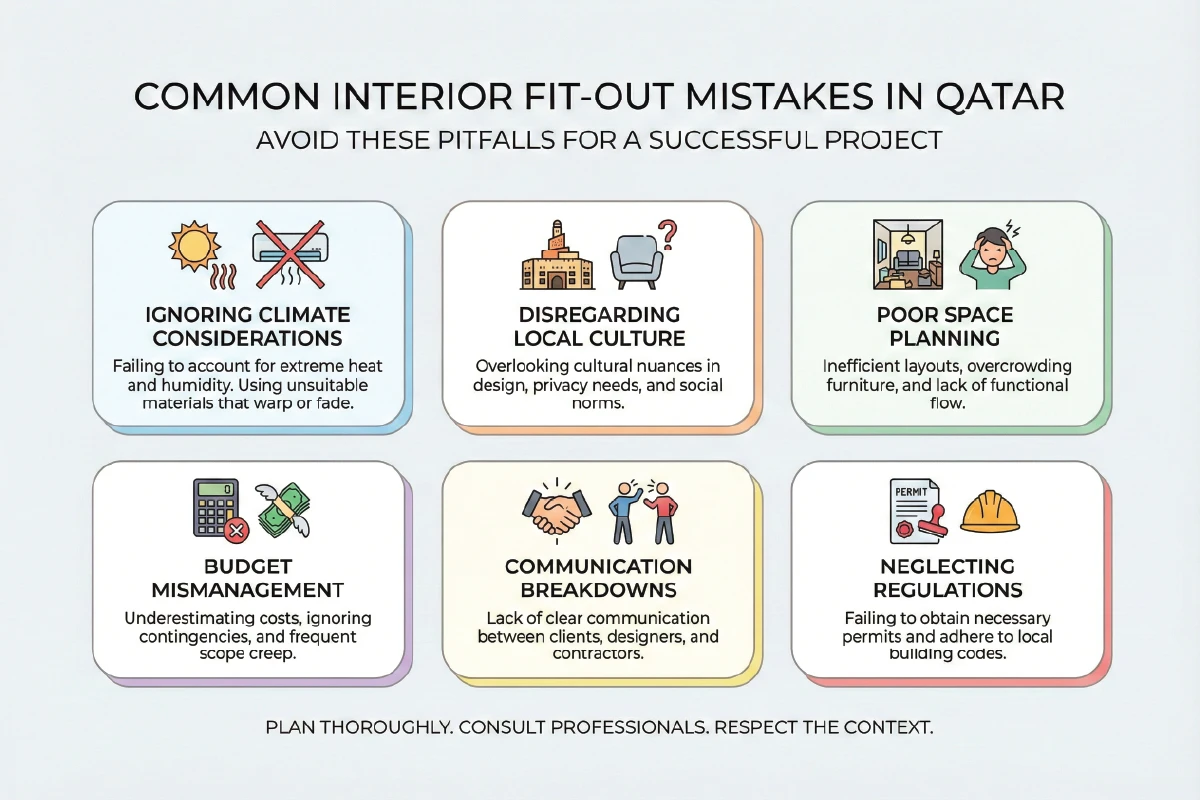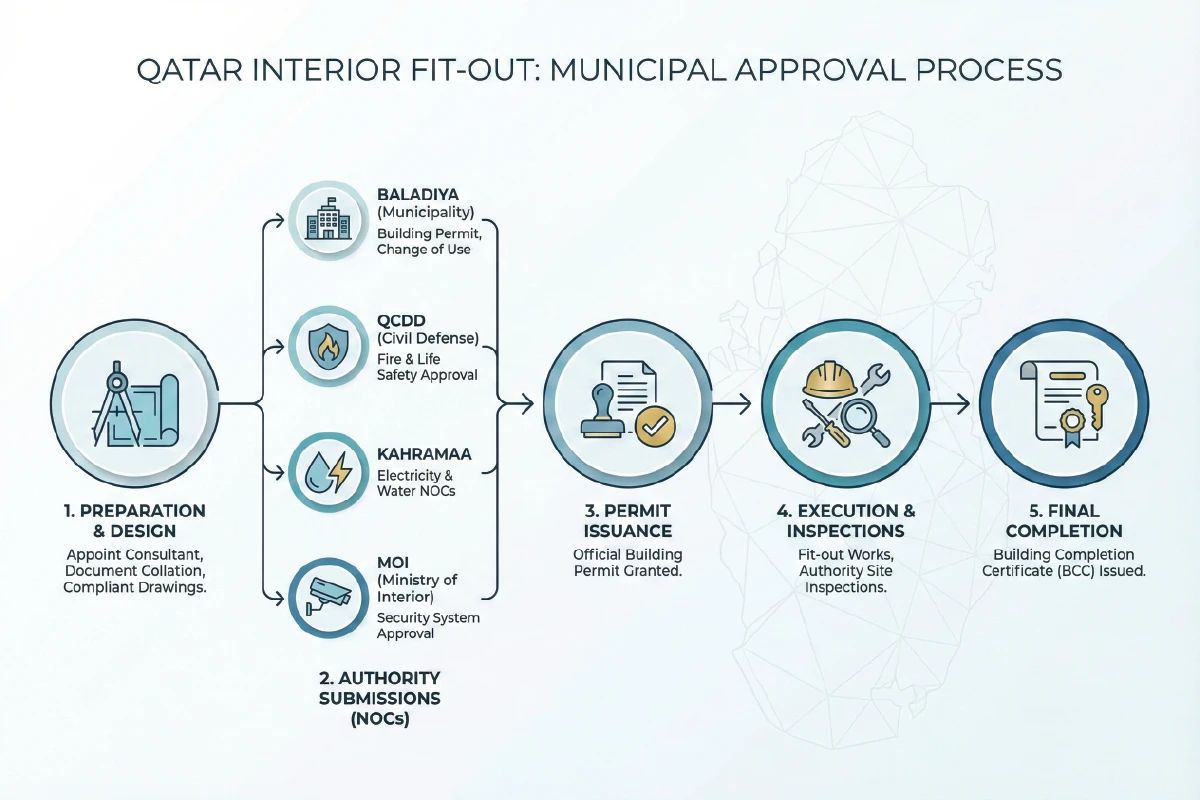
Short Answer: In Qatar, the municipal approval process for interior and fit out projects is a structured compliance procedure that ensures interior works meet safety, zoning, fire, and building regulations before execution and handover. The process typically involves design submissions, authority coordination, technical reviews, inspections, and final clearance. Approval requirements, timelines, and costs vary depending on project type, location, and scope, making early understanding essential for realistic planning.
What Is Municipal Approval In Qatar
Municipal approval in Qatar refers to the formal permission required from local authorities before starting interior or fit out works. This approval confirms that the proposed design and execution comply with building regulations, zoning rules, fire safety standards, and local authority requirements applicable to the property.
For interior projects, municipal approval is not limited to structural changes. Even non structural fit out works may require approval when they affect fire safety systems, space usage, occupancy classification, or services coordination.
Why Municipal Approval Is Required For Interiors
Municipal approval exists to ensure that interior spaces in Qatar are safe, compliant, and suitable for their intended use. Authorities review interior layouts to verify emergency egress, fire protection, accessibility, ventilation, and adherence to approved building usage.
From a practical standpoint, approval protects occupants, landlords, and tenants by reducing safety risks and ensuring consistency with national and municipal regulations. Projects executed without approval may face work stoppages, penalties, or refusal of final clearance.
Municipal approval forms part of a broader regulatory framework that governs interior safety, accessibility, and usage compliance. A wider overview of these obligations is covered in the regulatory and compliance requirements for interior design projects.
Projects That Require Municipal Approval
Not all interior works require the same level of approval in Qatar. The requirement depends on project type, building classification, and scope of work.
| Project Type | Approval Requirement |
|---|---|
| Commercial Offices | Required for layout changes, services coordination, and occupancy compliance |
| Retail And Restaurants | Mandatory due to public safety, fire, and usage classification |
| Residential Fit Out | Required when modifying layouts, services, or fire systems |
| Shell And Core Spaces | Approval required before initial fit out |
Step By Step Municipal Approval Process In Qatar
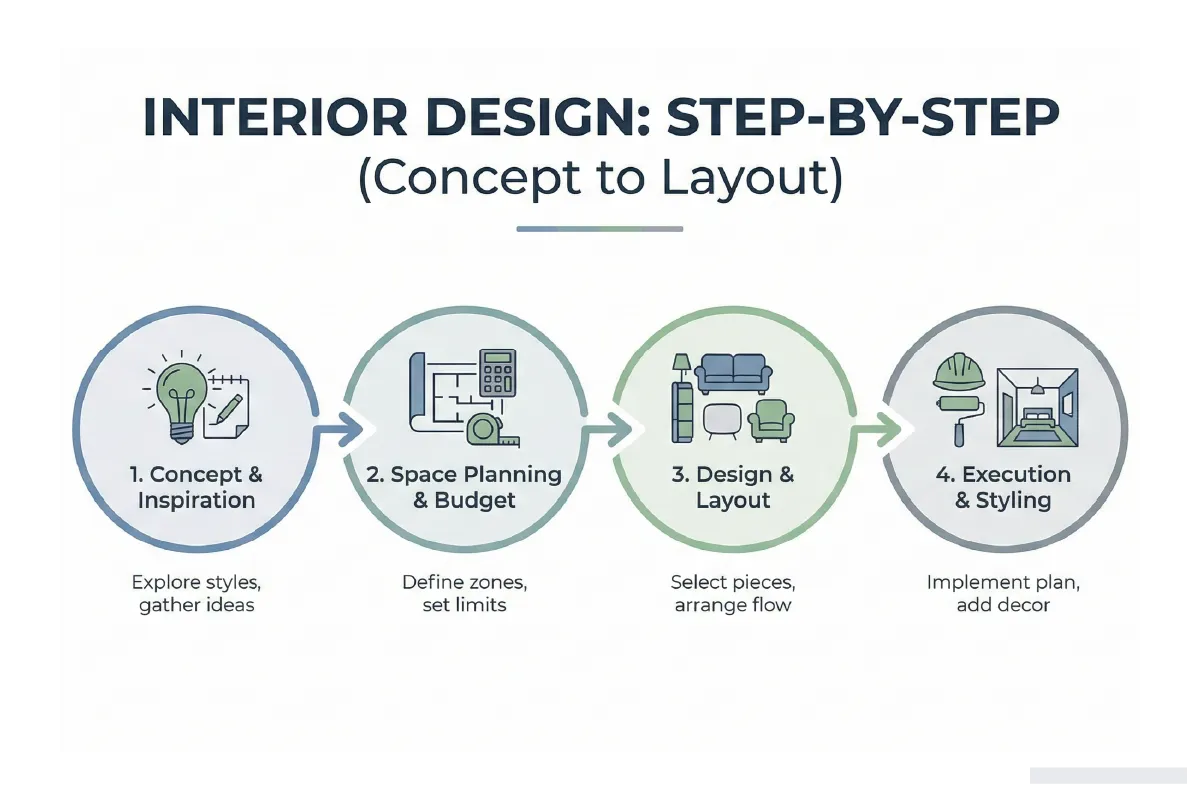
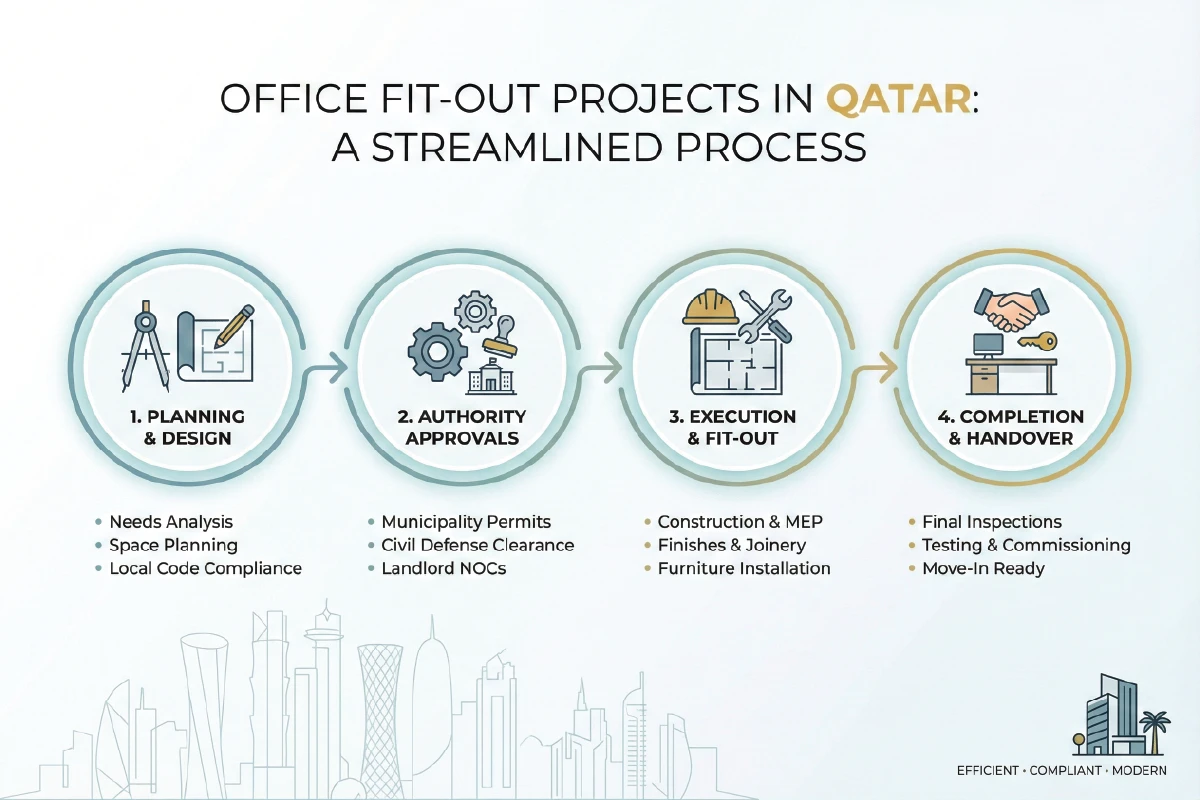
The municipal approval process for interior and fit out projects in Qatar follows a defined sequence. While documentation requirements may vary by project type and location, the core steps remain consistent across most approvals.
| Stage | Description |
|---|---|
| Initial Design Preparation | Preparation of layout drawings aligned with building usage and authority guidelines |
| Authority Submission | Submission of drawings and documents to the municipality and related authorities |
| Technical Review | Review of layouts, services, fire safety, and compliance requirements |
| Comments And Revisions | Addressing authority feedback and resubmitting revised drawings |
| Approval Issuance | Formal approval allowing fit out execution to begin |
Documents Required For Municipal Approval
Municipal approval submissions in Qatar require a coordinated set of documents that demonstrate technical compliance and project readiness. Missing or inconsistent documents are a common cause of approval delays.
| Document | Purpose |
|---|---|
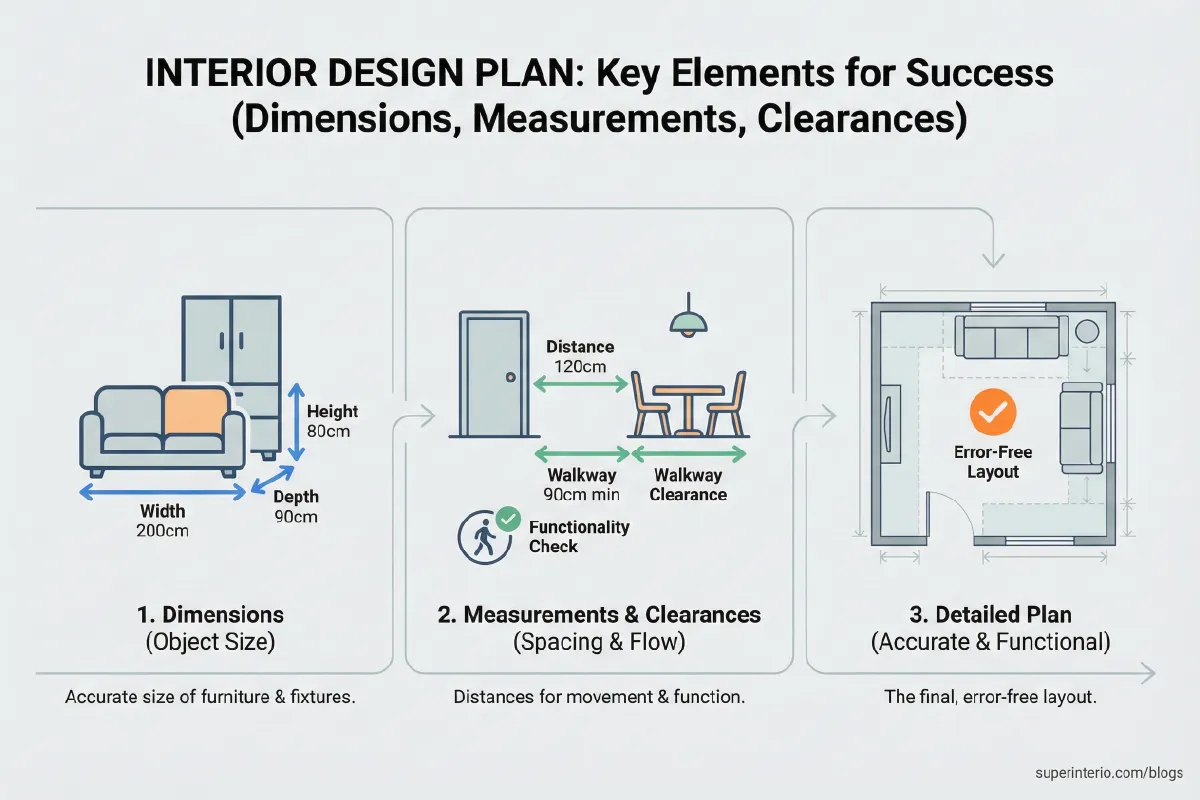
| Proposed Layout Drawings | Demonstrate space usage and circulation compliance |
| Fire And Life Safety Drawings | Show emergency exits, fire systems, and materials |
| MEP Coordination Drawings | Confirm services integration with interior layouts |
| Landlord NOC | Confirms alignment with base building requirements |
| Consultant Or Contractor Details | Identify responsible parties for execution |
Typical Approval Timelines And Cost Considerations
Approval timelines in Qatar vary based on project complexity, authority workload, and submission quality. Interior projects with clear scope and compliant drawings typically move faster through the approval process.
| Project Type | Typical Timeline Range |
|---|---|
| Residential Fit Out | Shorter timelines when scope is limited |
| Office Interior Projects | Moderate timelines due to services coordination |
| Retail And Food Outlets | Longer timelines due to fire and usage approvals |
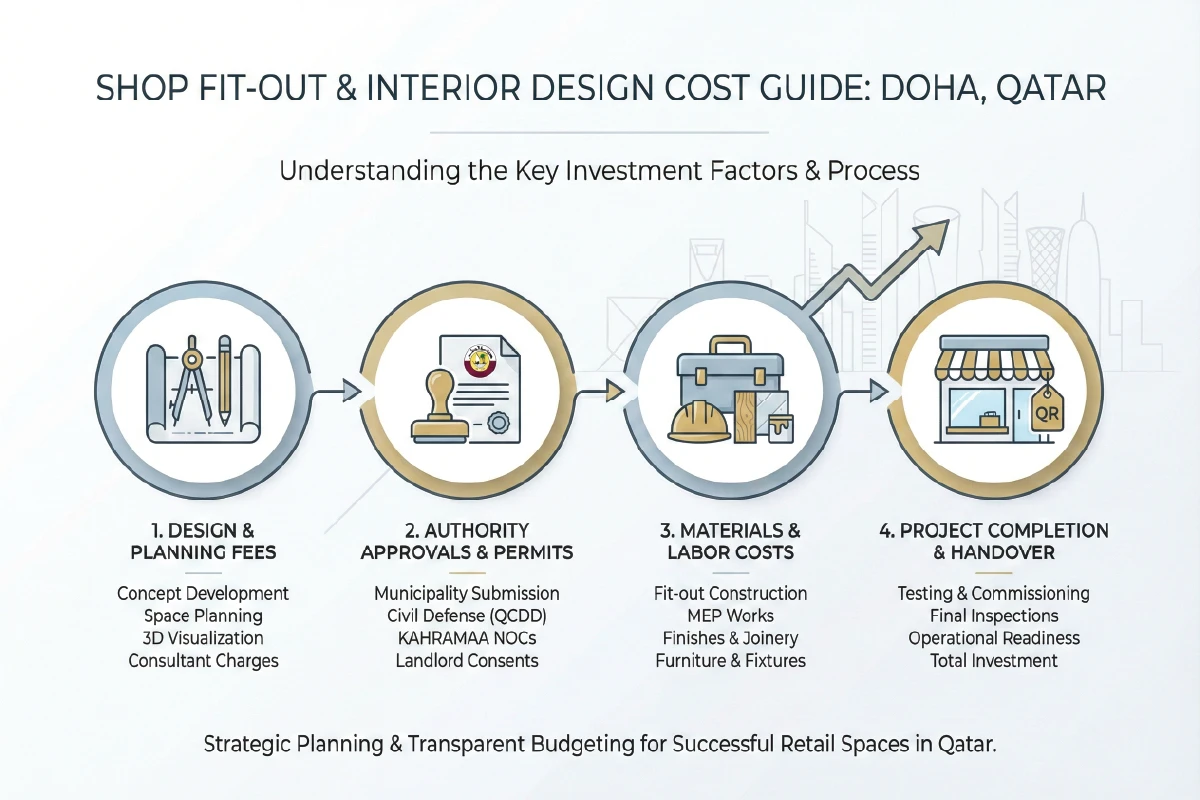
Approval related costs may include submission fees, consultant coordination charges, and revision related expenses. These costs should be accounted for early during project budgeting.
Common Issues That Delay Municipal Approvals
Approval delays are often caused by preventable issues rather than authority inefficiency. Understanding common problem areas helps reduce resubmissions.
- Incomplete or inconsistent drawings
- Non compliant fire safety provisions
- Missing landlord or building management approvals
- Unclear usage classification
- Late responses to authority comments
Step By Step Municipal Approval Process In Qatar
The municipal approval process for interior and fit out projects in Qatar follows a defined sequence. While documentation requirements may vary by project type and location, the core steps remain consistent across most approvals.
| Stage | Description |
|---|---|
| Initial Design Preparation | Preparation of layout drawings aligned with building usage and authority guidelines |
| Authority Submission | Submission of drawings and documents to the municipality and related authorities |
| Technical Review | Review of layouts, services, fire safety, and compliance requirements |
| Comments And Revisions | Addressing authority feedback and resubmitting revised drawings |
| Approval Issuance | Formal approval allowing fit out execution to begin |
Documents Required For Municipal Approval
Municipal approval submissions in Qatar require a coordinated set of documents that demonstrate technical compliance and project readiness. Missing or inconsistent documents are a common cause of approval delays.
| Document | Purpose |
|---|---|
| Proposed Layout Drawings | Demonstrate space usage and circulation compliance |
| Fire And Life Safety Drawings | Show emergency exits, fire systems, and materials |
| MEP Coordination Drawings | Confirm services integration with interior layouts |
| Landlord NOC | Confirms alignment with base building requirements |
| Consultant Or Contractor Details | Identify responsible parties for execution |
Typical Approval Timelines And Cost Considerations
Approval timelines in Qatar vary based on project complexity, authority workload, and submission quality. Interior projects with clear scope and compliant drawings typically move faster through the approval process.
| Project Type | Typical Timeline Range |
|---|---|
| Residential Fit Out | Shorter timelines when scope is limited |
| Office Interior Projects | Moderate timelines due to services coordination |
| Retail And Food Outlets | Longer timelines due to fire and usage approvals |
Approval related costs may include submission fees, consultant coordination charges, and revision related expenses. These costs should be accounted for early during project budgeting.
Common Issues That Delay Municipal Approvals
Approval delays are often caused by preventable issues rather than authority inefficiency. Understanding common problem areas helps reduce resubmissions.
- Incomplete or inconsistent drawings
- Non compliant fire safety provisions
- Missing landlord or building management approvals
- Unclear usage classification
- Late responses to authority comments
Do And Don’t During The Approval Process
Managing municipal approvals effectively in Qatar requires disciplined preparation and realistic coordination. Small oversights during submission often lead to extended review cycles.
| Do | Don’t |
|---|---|
| Prepare coordinated drawings before submission | Submit preliminary or uncoordinated layouts |
| Confirm landlord and building guidelines early | Assume base building approvals are automatic |
| Respond promptly to authority comments | Delay revisions or clarifications |
| Allocate time for inspections and site readiness | Schedule execution before approvals are granted |
How Approval Requirements Impact Project Planning
Municipal approval requirements directly influence project timelines, sequencing, and cost planning. Projects that integrate approval considerations during early design stages tend to progress with fewer interruptions.
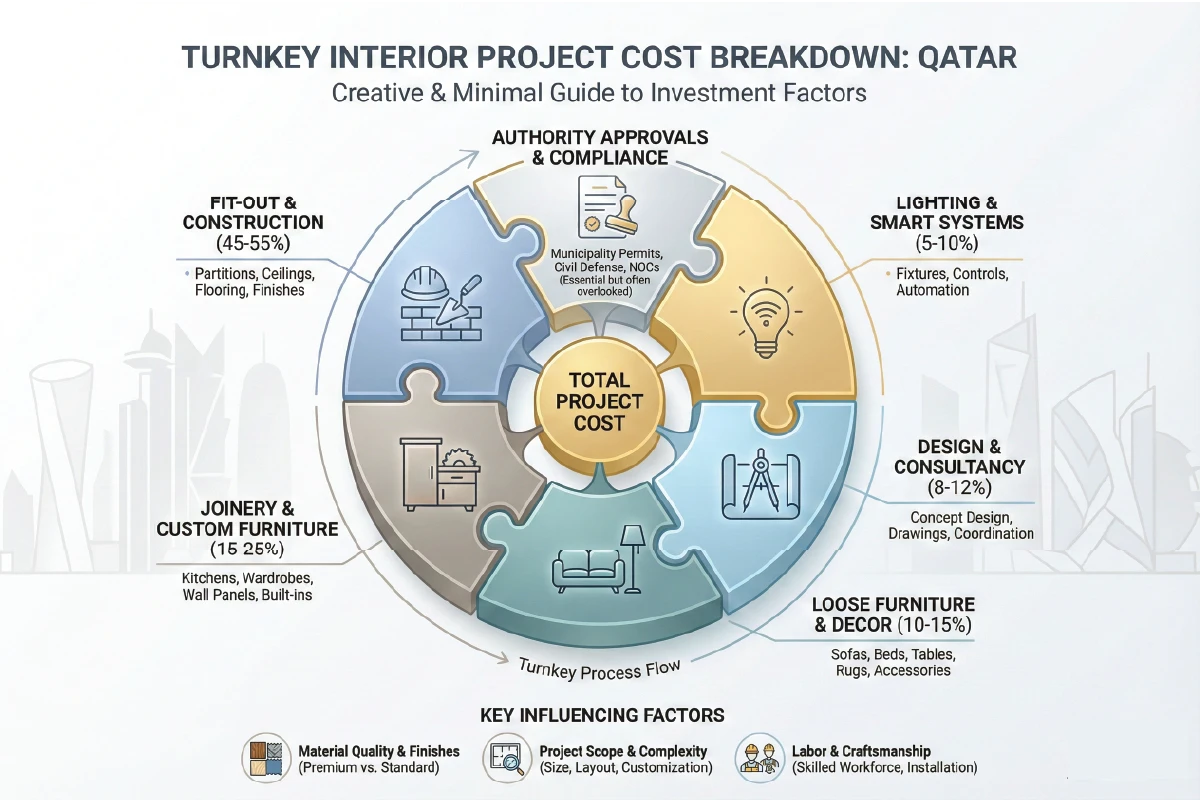
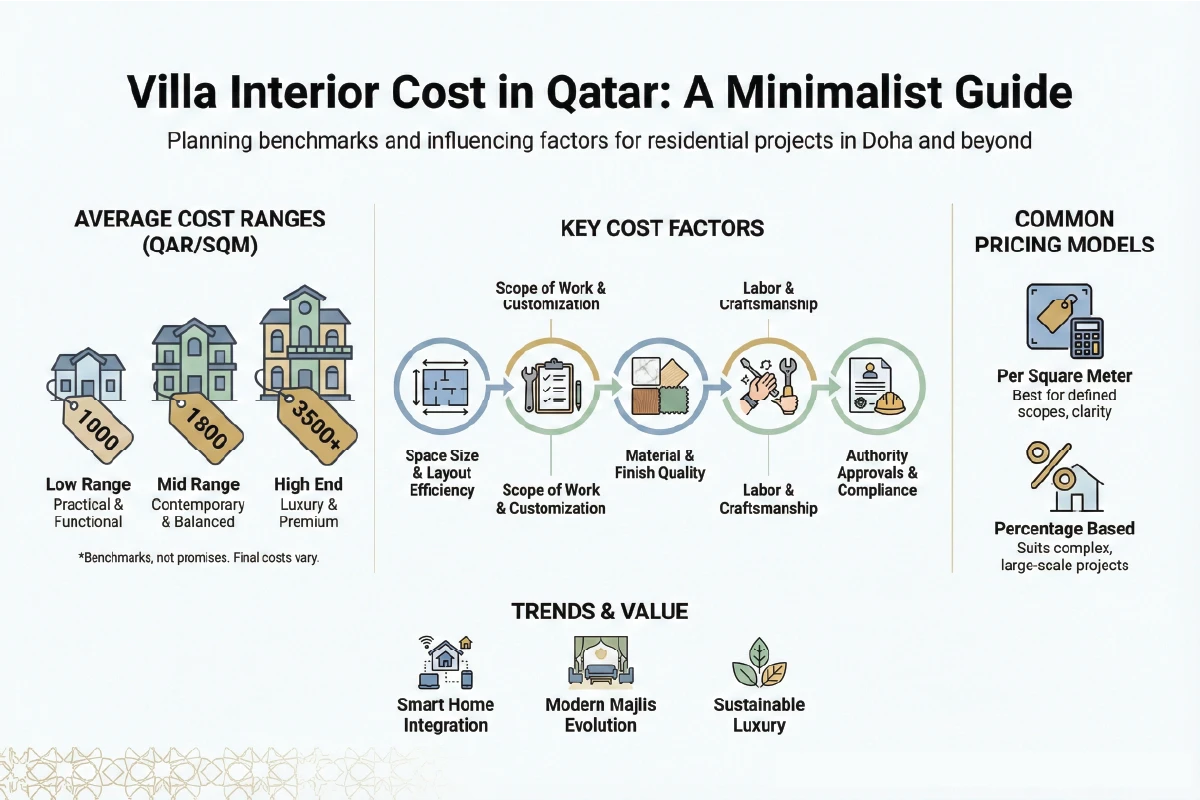
Approval timelines and authority requirements often influence overall project budgets, consultant coordination, and sequencing. These cost implications are explained in detail in the interior design cost in Qatar, where approval related delays and compliance considerations are factored into realistic budgeting.
In practice, approval timelines often define when site mobilization can begin. Aligning design finalization, procurement planning, and contractor selection with approval milestones reduces idle periods and budget inefficiencies.
Frequently Asked Questions About Municipal Approvals
Is Municipal Approval Mandatory For All Interior Fit Out Projects In Qatar
Municipal approval is required for most commercial, retail, and public facing interior fit out projects. Residential interiors may also require approval when layouts, services, or fire systems are modified.
Can Interior Work Start Before Approval Is Granted
Interior work should not begin before formal approval is issued. Starting work early can result in stop work notices, penalties, or rejection during inspections.
How Long Does The Municipal Approval Process Usually Take
Timelines vary based on project type and submission quality. Well prepared submissions generally move faster, while complex retail or food outlets require longer review periods.
Who Is Responsible For Managing Municipal Approvals
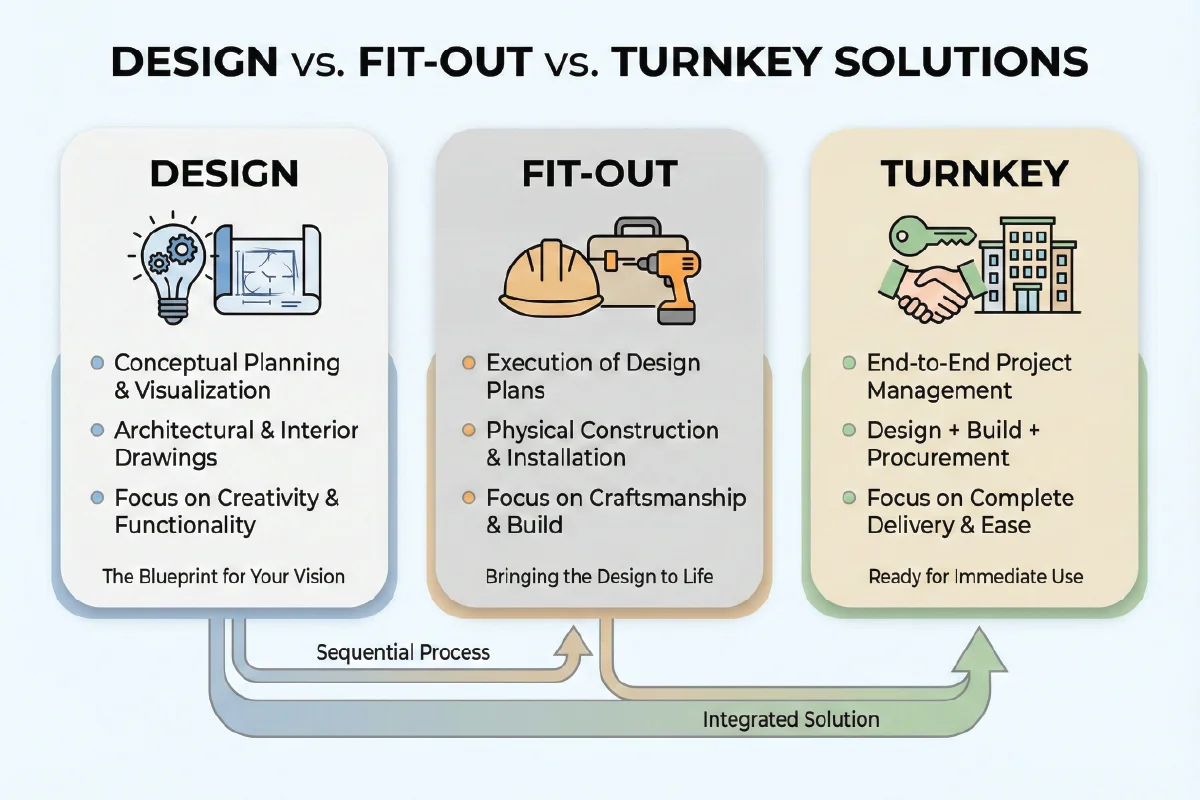
Responsibility depends on the project arrangement. In turnkey projects, approval coordination is usually handled within the delivery scope, while in separated models, clients or consultants may manage submissions.
In turnkey arrangements, approval coordination is typically bundled into the delivery scope, which directly affects pricing and responsibility allocation. This relationship between approvals and pricing is detailed in the turnkey interior project cost in Qatar.
Key Takeaways
- Structured Process: Municipal approvals in Qatar follow defined submission, review, and inspection stages.
- Early Planning: Integrating approval requirements early reduces delays and rework.
- Timeline Impact: Approval durations influence execution sequencing and overall project schedules.
- Compliance Focus: Fire safety, usage classification, and coordination are central review areas.
- Responsibility Clarity: Clear assignment of approval management improves coordination outcomes.
References
- Qatar Municipality Building Regulations And Guidelines
- Qatar Civil Defense Fire Safety Requirements
- Common Interior Fit Out Approval Practices In Qatar