Super Fitout helps businesses in Qatar plan and execute retail interior projects by connecting them with independent interior designers and fit-out companies through a structured digital marketplace. Among the fastest-growing retail formats in the country, kiosks have emerged as a practical and highly efficient solution for brands seeking visibility without the cost and complexity of full-scale stores.
In today’s competitive retail environment, especially within malls, airports, and high-footfall public spaces, kiosks allow brands to operate from compact footprints while maintaining strong customer engagement. This page explains how kiosks function within modern retail, why they are increasingly adopted in Qatar, and what businesses should consider when planning a kiosk-based retail presence.
What a Retail Kiosk Is
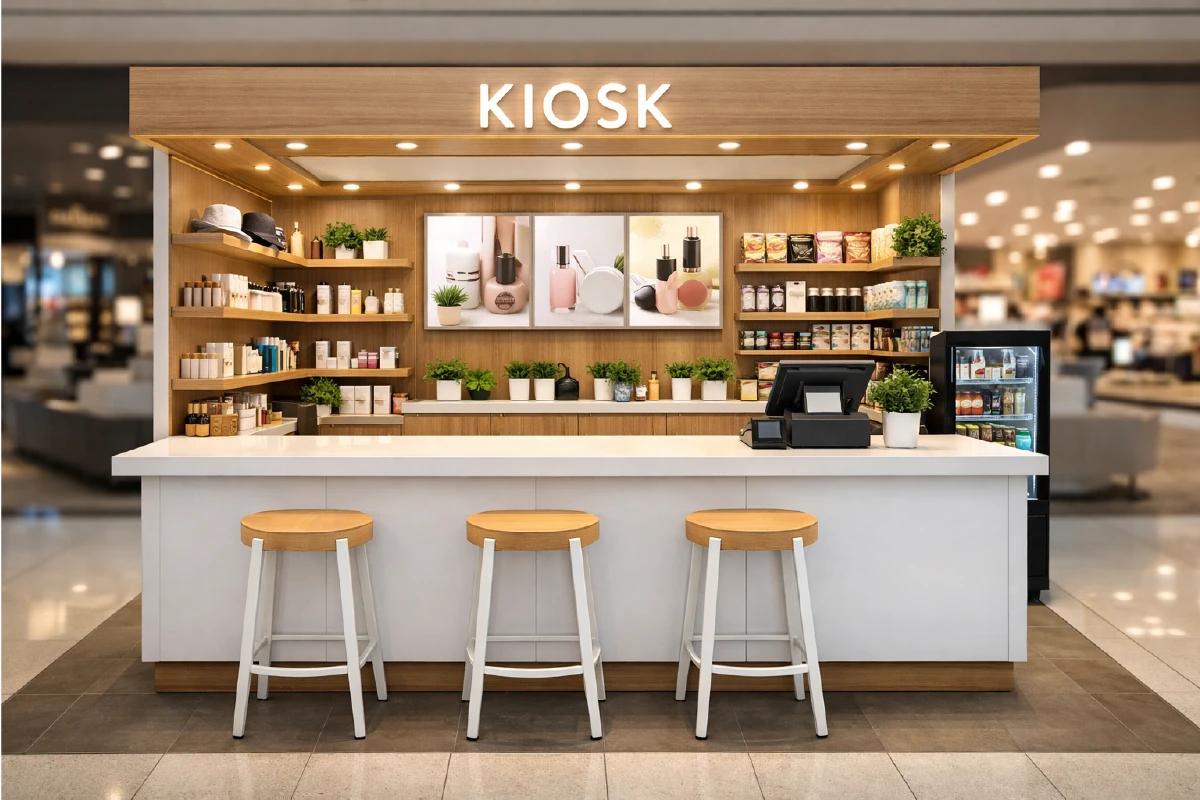
A retail kiosk is a compact, standalone unit designed for selling products, offering services, or promoting a brand within shared commercial environments. Unlike traditional retail stores, kiosks operate without enclosed walls and typically occupy small floor areas within malls, airports, exhibitions, or outdoor retail zones.
Kiosks are intentionally designed to maximise efficiency. Every element—from counter height and display layout to lighting and storage—is optimised for limited space while maintaining brand visibility and customer interaction.
This format makes kiosks particularly suitable for brands testing new markets, launching limited product lines, or operating within premium retail locations where full-store leasing costs are high.
Why Kiosks Work in Modern Retail
Retail behaviour has shifted toward convenience, speed, and experience. Kiosks align well with this shift by offering quick access to products without requiring customers to enter traditional store environments.
From a business perspective, kiosks reduce several barriers to entry:
- Lower construction and fit-out costs
- Reduced staffing requirements
- Shorter setup timelines
- Greater flexibility in location and duration
These advantages make kiosks especially attractive for startups, seasonal brands, and businesses experimenting with new retail concepts.
Kiosks in the Qatar Retail Context
Qatar’s retail ecosystem is heavily centred around large malls, transport hubs, and mixed-use developments. Locations such as shopping malls, international airports, and event venues generate consistent foot traffic, making kiosks a natural fit within the local retail environment.
In these settings, kiosks allow brands to maintain presence in premium locations without committing to long-term leases. This flexibility is particularly valuable in a market where retail trends, consumer behaviour, and event-driven demand can change rapidly.
Visibility and Footfall Advantages
One of the strongest advantages of kiosks is their placement. Positioned along main walkways, atriums, entrances, or transit corridors, kiosks benefit from constant exposure to passing audiences.
Unlike traditional stores that may be located deeper within retail layouts, kiosks operate directly within circulation paths. This positioning increases spontaneous interactions and encourages impulse engagement.
Even with limited space, well-designed kiosks can achieve strong brand recall through clear visual identity, efficient product display, and approachable layouts.
Common Types of Retail Kiosks
Kiosks are used across multiple retail and service categories in Qatar, each serving a specific commercial purpose. Understanding kiosk types helps brands determine the right format for their products, audience, and operational goals.
- Retail Product Kiosks: Used for selling fashion accessories, perfumes, electronics, cosmetics, and gift items. These kiosks focus on compact display efficiency and high visual impact.
- Food and Beverage Kiosks: Designed for quick-service offerings such as coffee, snacks, desserts, or packaged foods. These kiosks require careful planning around hygiene, ventilation, and storage.
- Promotional and Brand Activation Kiosks: Common during mall events, exhibitions, and product launches. These kiosks prioritise engagement, sampling, and lead generation over inventory volume.
- Information and Service Kiosks: Often found in airports, malls, and public venues, providing navigation assistance, ticketing, or customer support.
Each kiosk type places different demands on layout, materials, and operational design, making early clarity essential during planning.
Space Planning Within Limited Footprints
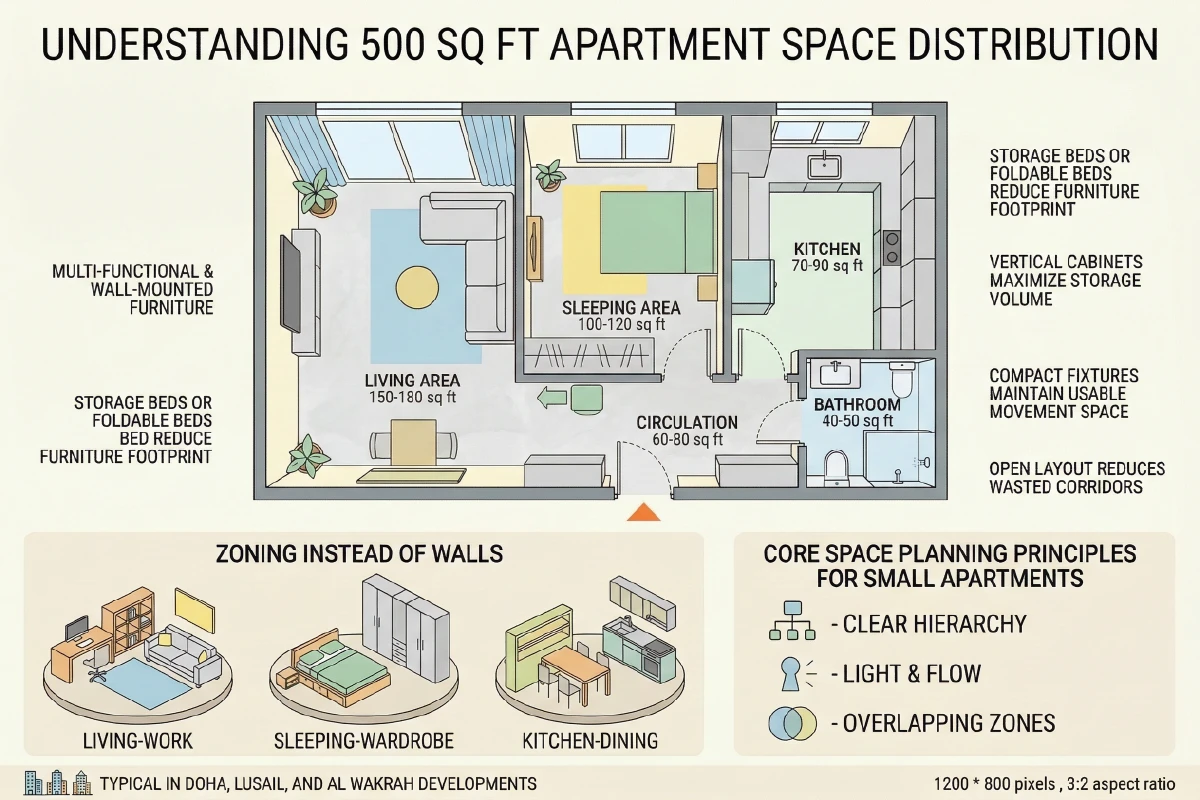
One of the defining characteristics of kiosks is limited space. Successful kiosk design depends on precise space planning that balances display, storage, staff movement, and customer interaction.
Effective kiosk layouts typically prioritise:
- Clear customer approach and visibility from multiple angles
- Efficient product display without visual clutter
- Hidden storage integrated into counters or vertical elements
- Comfortable working space for staff
Because kiosks operate in open environments, layouts must also account for surrounding circulation patterns to avoid obstructing foot traffic while still attracting attention.
Material Selection and Durability Considerations
Kiosks experience continuous exposure to foot traffic, handling, and environmental conditions. Material selection plays a major role in maintaining appearance, safety, and longevity.
In Qatar, kiosks are often designed using:
- Scratch-resistant laminates and solid surfaces
- Powder-coated metals for structural stability
- Tempered glass for display visibility and safety
- Durable finishes that resist heat and humidity
For outdoor or semi-outdoor kiosks, materials must also withstand direct sunlight, dust exposure, and temperature fluctuations without rapid degradation.
Regulatory and Security Considerations in Qatar
Kiosk installations in Qatar are subject to location-specific regulations, particularly when operating within malls, airports, or public spaces. Approval processes may vary depending on the venue and kiosk function.
Common regulatory considerations include:
- Venue-specific design guidelines
- Electrical and safety compliance
- Fire and accessibility requirements
- Licensing for commercial activity
Security is another important factor. Because kiosks are typically open structures, design solutions often incorporate lockable storage, controlled access points, and durable materials to reduce risk.
How Different Brands Use Kiosks Effectively
Kiosks are not limited to a single retail category. Their flexibility allows brands across sectors to create meaningful customer touchpoints without the commitment of full-store formats.
Common kiosk use cases in Qatar include:
- Fashion and Accessories: Compact displays for jewellery, watches, eyewear, and seasonal collections where impulse engagement is key.
- Beauty and Personal Care: Perfume sampling, skincare demonstrations, and product trials supported by controlled lighting and branding.
- Electronics and Gadgets: Hands-on product interaction in high-footfall areas where customers can experience features before purchase.
- Interior and Décor Brands: Displaying material samples, finishes, and digital portfolios to introduce services and collect enquiries.
In each case, the kiosk serves as a focused brand touchpoint designed to attract attention, communicate value quickly, and encourage immediate interaction.
Using Digital and Interactive Elements in Kiosk Design
Modern kiosks increasingly incorporate digital features to extend engagement beyond physical limitations. These elements help brands communicate more information without increasing footprint.
Common digital enhancements include:
- Touchscreen catalogues showcasing full product ranges
- Digital displays for promotions, videos, or brand storytelling
- QR codes linking to online stores or social platforms
- Virtual or augmented reality previews for products or spaces
When integrated thoughtfully, digital tools allow kiosks to function as experience-driven environments rather than static sales points.
How Super Fitout Helps Brands Plan Kiosk Fit-Out Projects
Super Fitout does not design or construct kiosks directly. Instead, the platform helps brands in Qatar connect with independent interior designers and fit-out specialists who have experience with kiosk projects.
By posting kiosk requirements on Super Fitout, businesses can receive proposals from multiple professionals and compare:
- Design approaches and layout strategies
- Material and fabrication assumptions
- Timelines and installation scope
- Experience with similar kiosk formats
This structured comparison helps brands make informed decisions while maintaining control over budget, design intent, and execution expectations.
Who Kiosks Are Best Suited For
While kiosks are versatile, they are particularly effective for certain business types and objectives.
- Startups and Emerging Brands: Testing market response with lower upfront investment.
- Seasonal or Campaign-Based Retail: Short-term activations during peak shopping periods or events.
- Brands Expanding Physical Presence: Entering new locations without long-term lease commitments.
- Service-Oriented Businesses: Generating leads and visibility rather than holding large inventory.
For these businesses, kiosks provide a balance between visibility, flexibility, and cost control.
Final Thoughts on Kiosks in Modern Retail
Kiosks represent a practical and scalable retail format within Qatar’s evolving commercial landscape. Their ability to deliver high visibility, quick deployment, and controlled investment makes them a strong option for brands seeking efficient market presence.
When supported by thoughtful design, durable materials, and strategic placement, kiosks can perform well beyond their size. Using platforms like Super Fitout to compare fit-out specialists further helps brands approach kiosk projects with clarity and confidence.
Frequently Asked Questions
-
What is the main advantage of a retail kiosk?
Kiosks provide high visibility in premium locations with significantly lower setup and operating costs compared to full retail stores. -
Are kiosks suitable for long-term retail operations?
Yes. While often used for short-term activations, many brands operate kiosks as long-term retail formats in malls and transport hubs. -
Do kiosks require special approvals in Qatar?
Kiosk approvals depend on the venue and activity type. Malls, airports, and public spaces typically have specific design and licensing requirements. -
Does Super Fitout build or manage kiosks?
No. Super Fitout connects brands with independent designers and fit-out professionals but does not execute projects directly. -
Can I compare multiple kiosk fit-out proposals on Super Fitout?
Yes. Super Fitout allows businesses to receive and compare multiple proposals for kiosk design and fit-out projects.