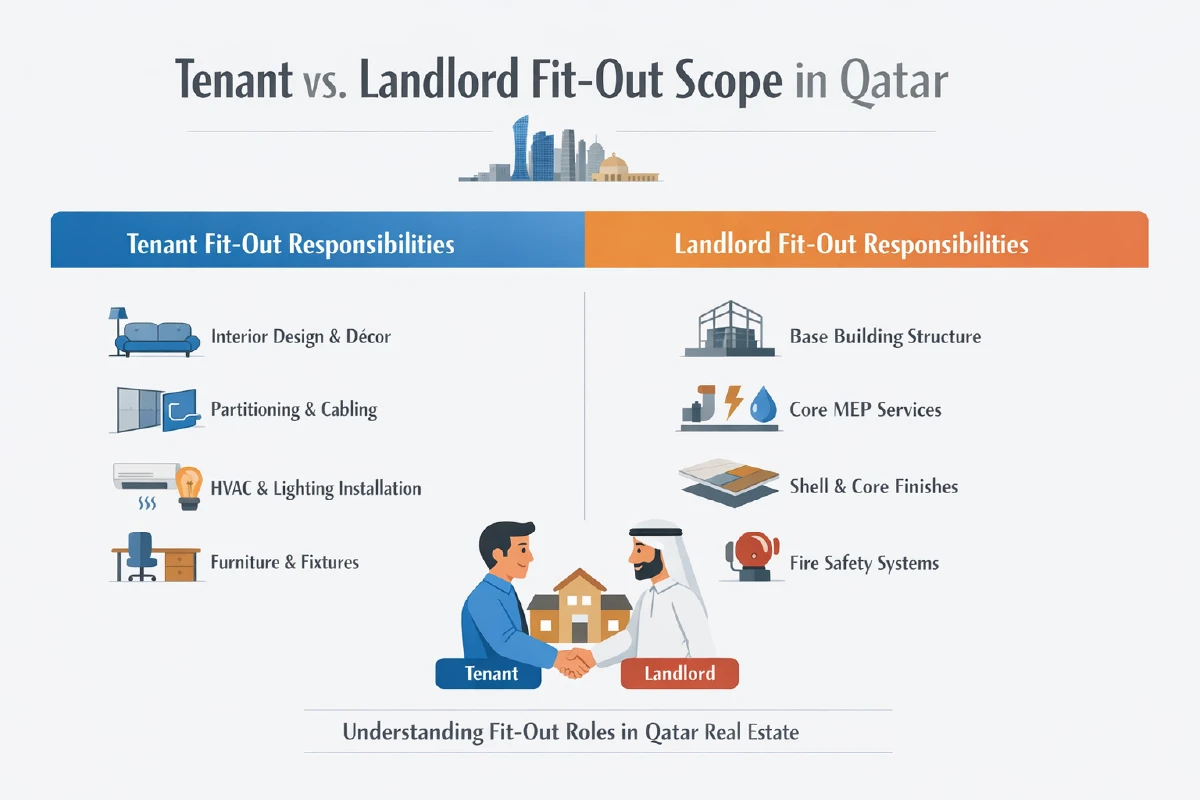
Short answer: In Qatar commercial properties, fitout scope is divided between landlord and tenant based on the lease agreement, base build definition, and approved fitout documentation. Confusion over this split is one of the most common causes of disputes, delays, and unplanned costs during fitout projects.
What Is Tenant Vs Landlord Fitout Scope
Tenant versus landlord fitout scope refers to how responsibility for interior works is divided between the property owner and the occupying tenant.
In Qatar, this division is defined primarily through lease agreements, base build specifications, and approved fitout documentation.
Why Scope Ownership Matters
Clear scope ownership determines who pays, who executes, and who maintains each part of the fitout.
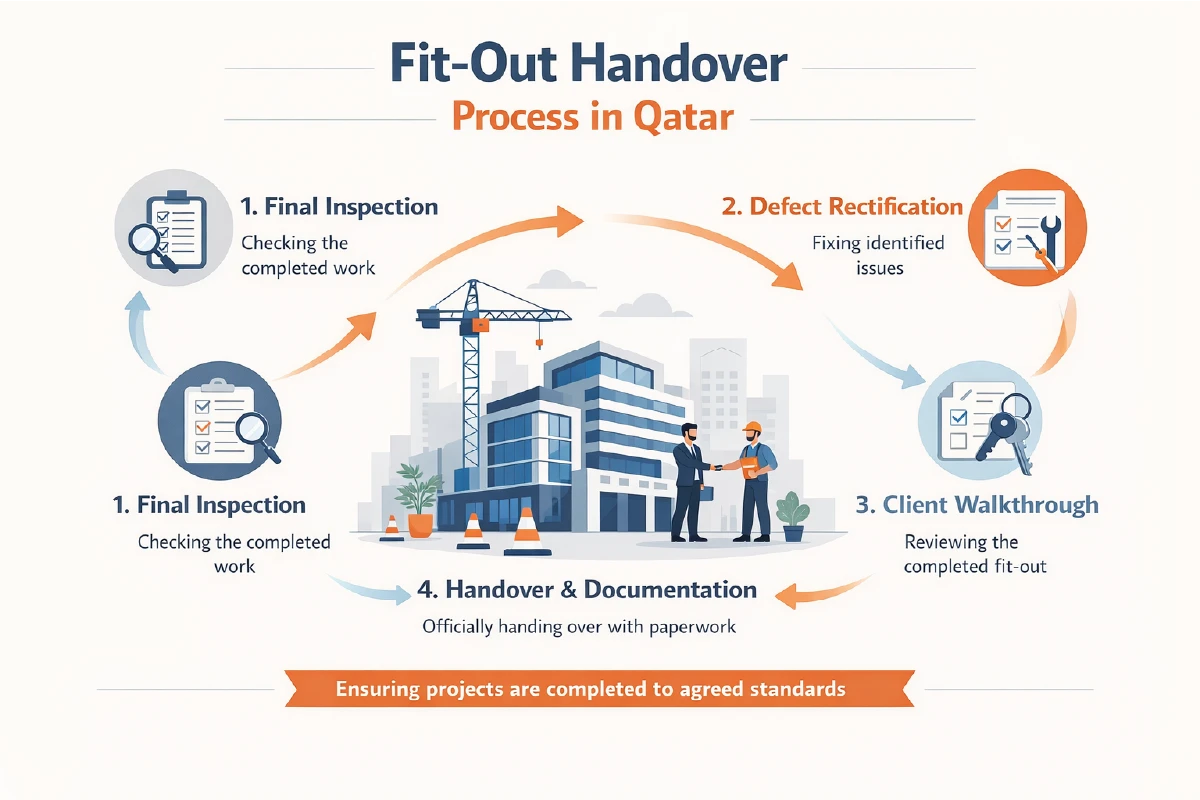
Unclear scope boundaries often result in disputes during execution, delayed approvals, and disagreements at handover and acceptance.
Typical Landlord Fitout Scope In Qatar
Landlord scope generally covers base build elements provided before tenant occupation.
| Category | Common Landlord Responsibility | Coordination Risk |
|---|---|---|
| Shell And Core | Structural shell and core services | Interface with tenant layouts |
| Base MEP Provisions | Main risers and connection points | Capacity limitations |
| Fire Life Safety | Base system infrastructure | Compliance coordination |
| Access And Common Areas | Lobbies, corridors, and shared spaces | Design consistency |
Typical Tenant Fitout Scope In Qatar
Tenant scope typically includes all interior works required to make the space operational for the tenant’s business.
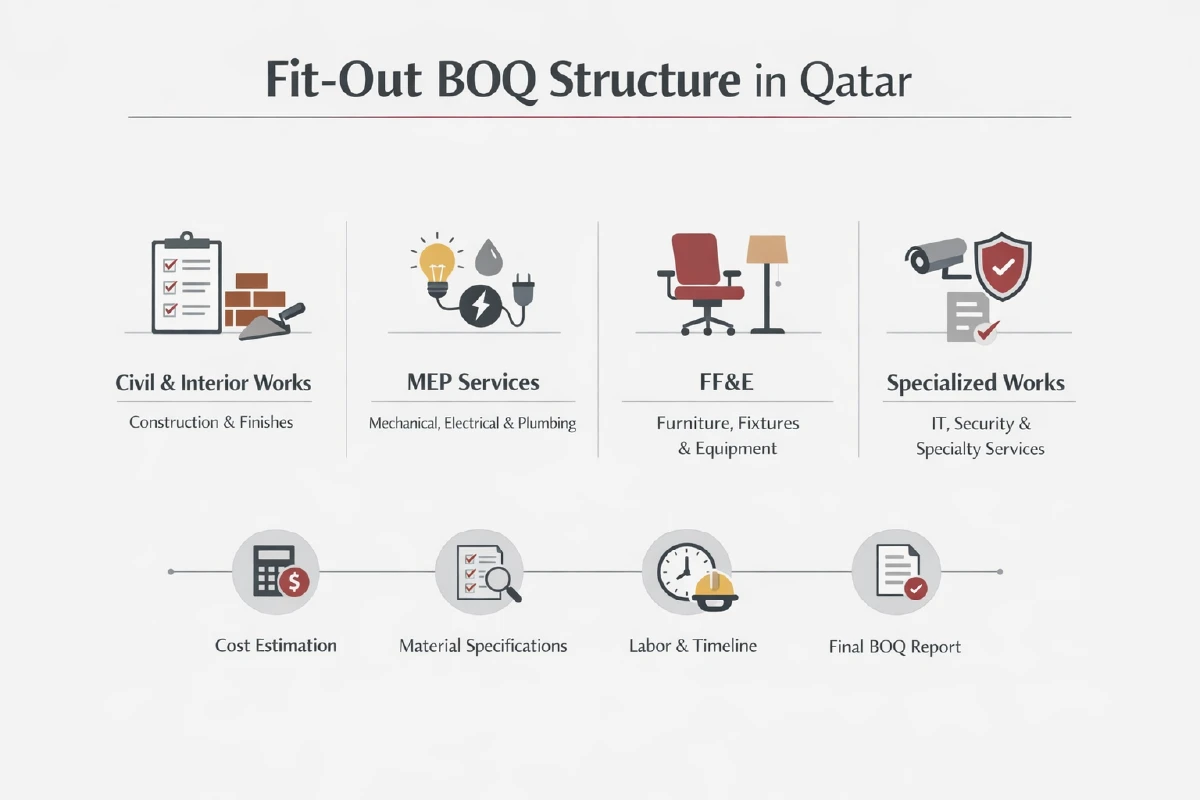
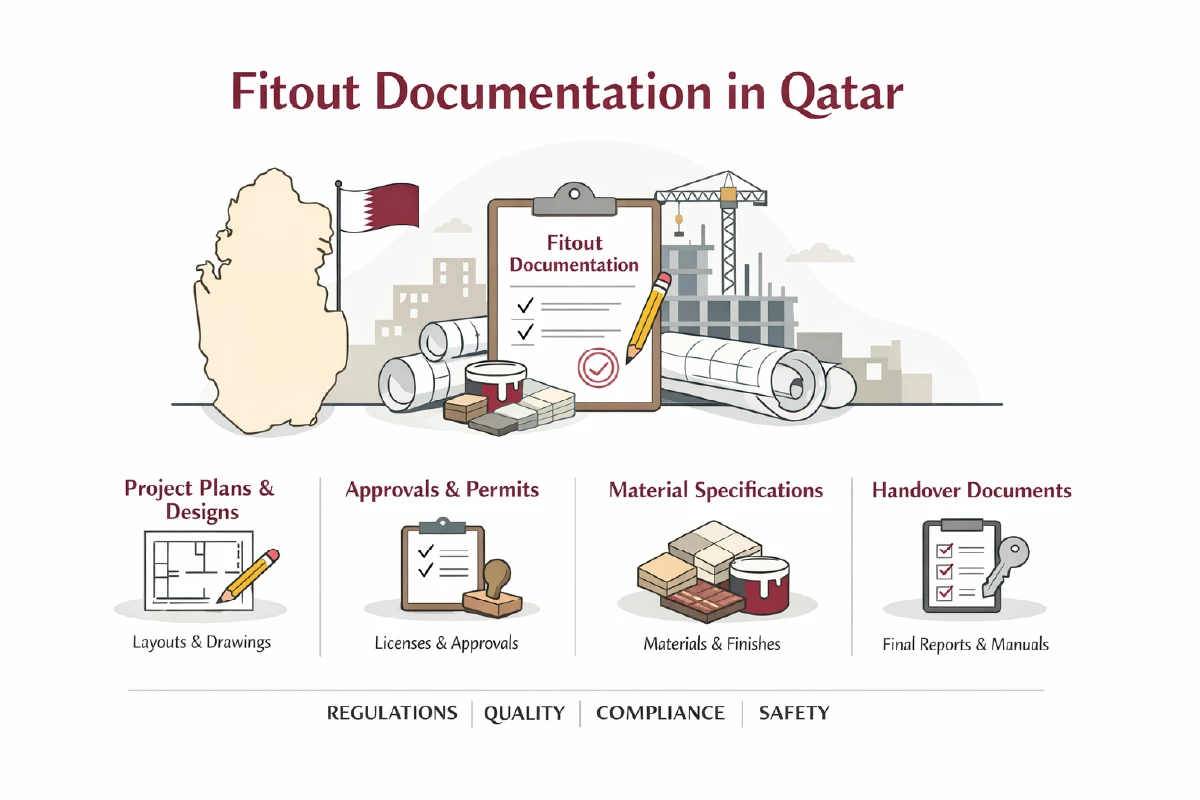
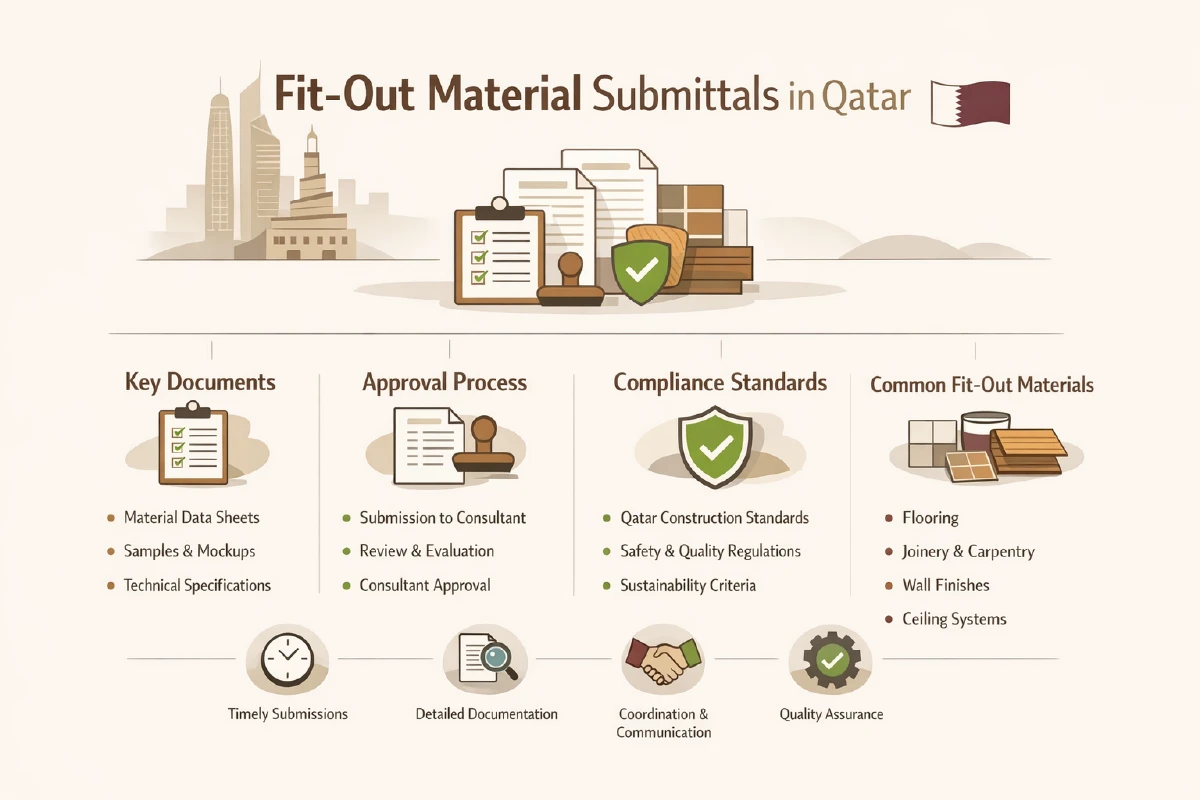
This scope is priced and controlled using fitout BOQs aligned with approved drawings.
Where Scope Conflicts Commonly Occur
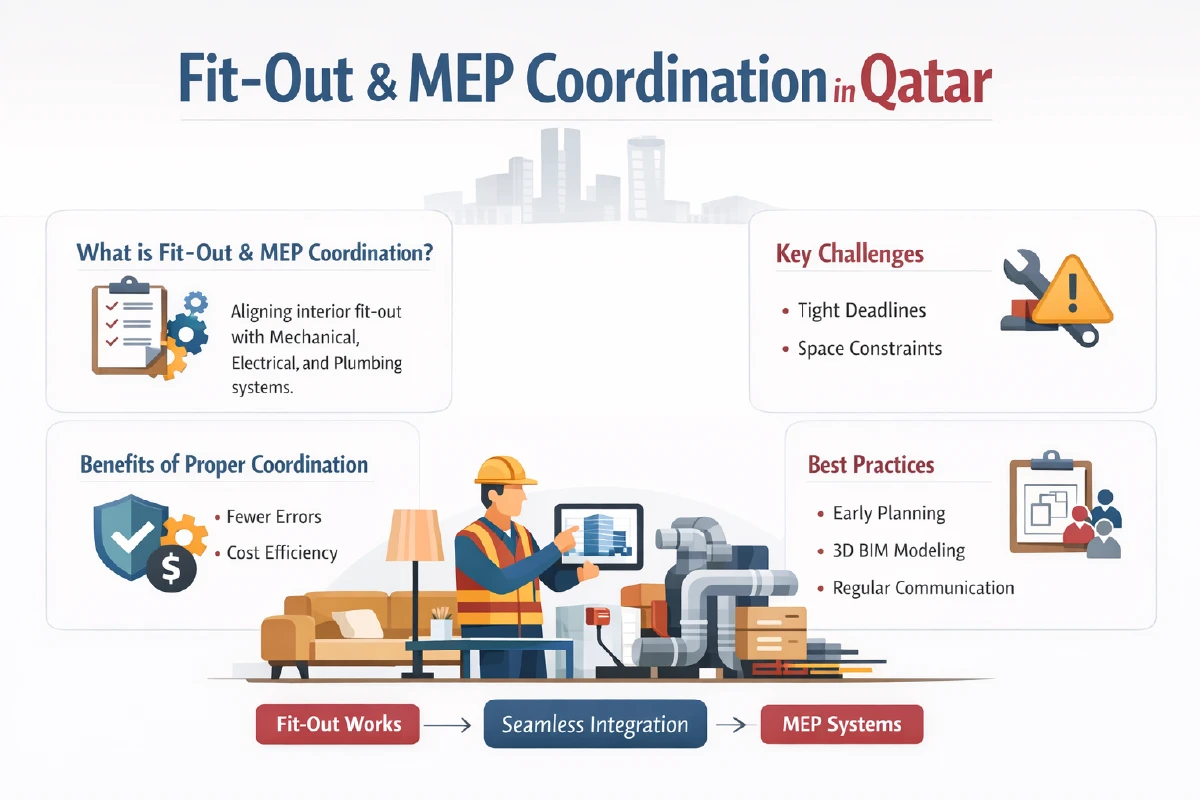
Scope conflicts often arise at interfaces between landlord base provisions and tenant-installed systems.
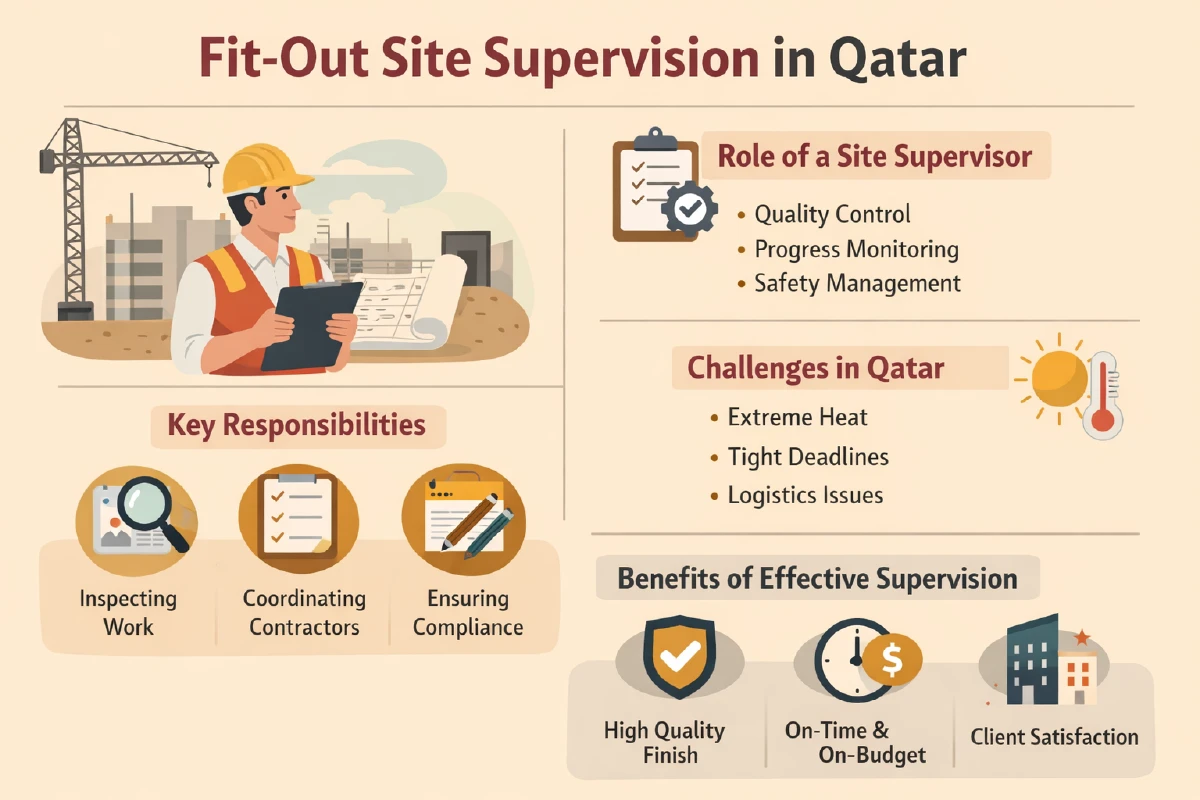
These conflicts are frequently discovered during site supervision or inspections rather than during planning.
Interface Responsibilities Between Tenant And Landlord
Interface responsibilities are the areas where landlord-provided infrastructure connects with tenant-installed fitout elements. These interfaces are the most common source of confusion in Qatar commercial projects.
| Interface Area | Typical Responsibility | Common Risk |
|---|---|---|
| Electrical Connections | Landlord provides main supply, tenant extends distribution | Load and capacity disputes |
| HVAC Systems | Landlord provides base system, tenant modifies diffusers | Performance complaints |
| Fire Alarm Interfaces | Landlord system integration by tenant | Authority rejection |
| Drainage And Water | Landlord risers, tenant internal piping | Leakage responsibility disputes |
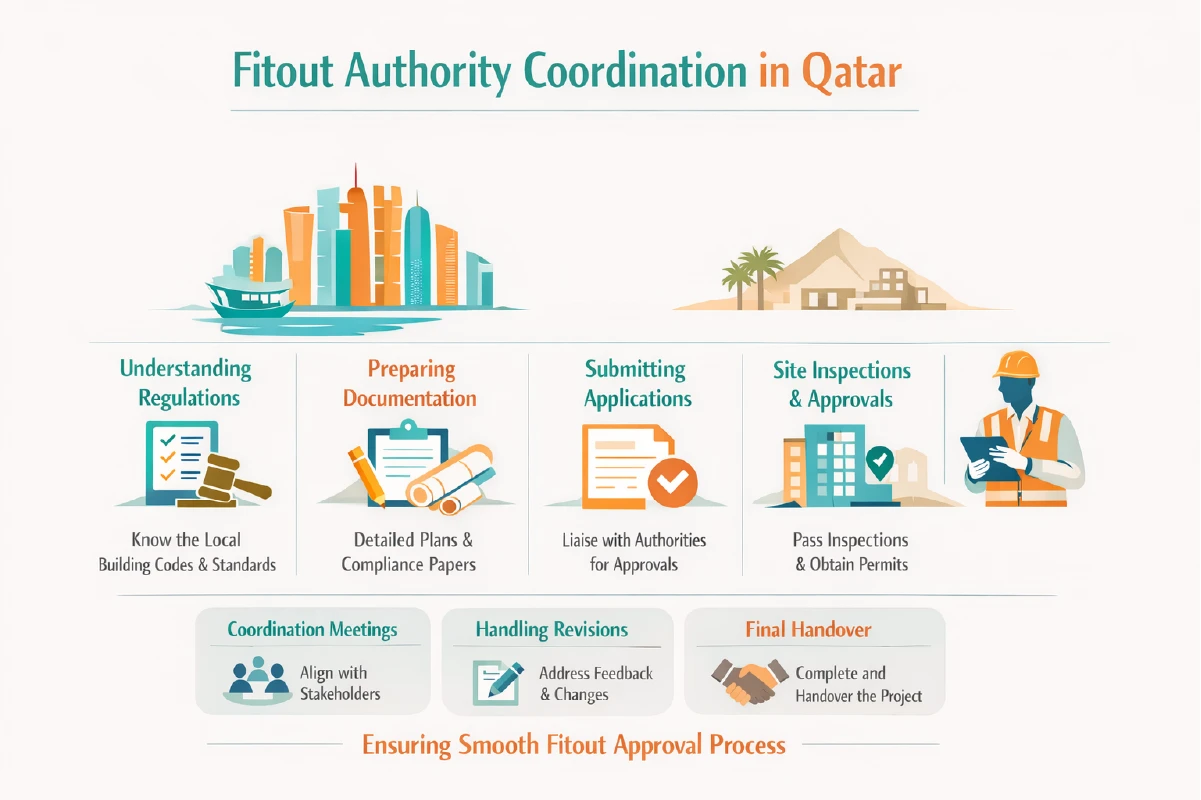
Clear documentation of these interfaces during early authority coordination reduces conflicts later.
Common Grey Areas In Scope Ownership
Certain fitout elements frequently fall into grey areas where neither tenant nor landlord assumes clear responsibility.
- Modifications to base HVAC capacity
- Fire stopping at new service penetrations
- Changes to base lighting layouts
- Structural supports for heavy joinery
- Authority re-submission costs caused by late design changes
These issues often surface during execution and escalate into disputes at handover if not clarified earlier.
How To Avoid Scope Disputes Early
Most scope disputes in Qatar fitout projects can be avoided through early clarification and documentation.
| Step | Action | Benefit |
|---|---|---|
| Review Lease Early | Confirm base build and tenant obligations | Avoid scope assumptions |
| Align Drawings And BOQs | Document inclusions and exclusions clearly | Consistent pricing and execution |
| Confirm Interfaces | Define connection points and responsibilities | Reduced site conflicts |
| Record Approvals | Document landlord and authority sign-offs | Clear accountability |
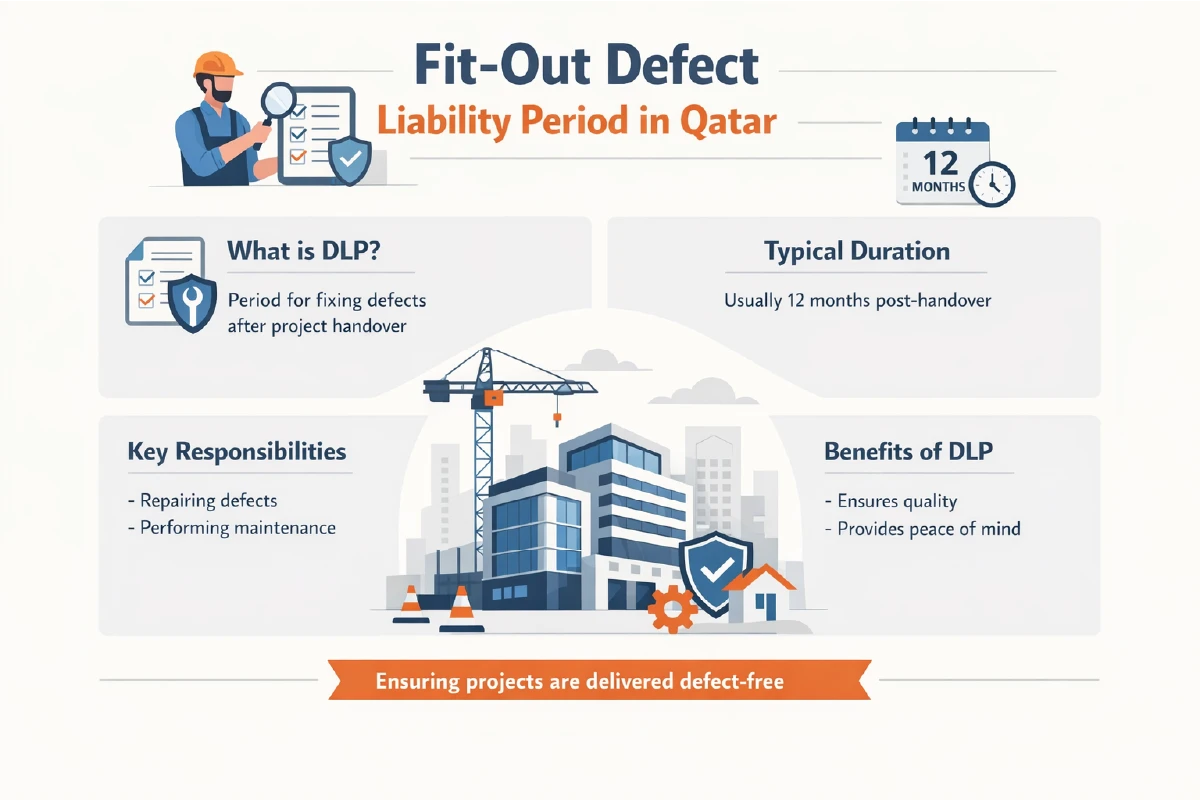
Early scope clarity also simplifies management during the defect liability period.
Key Takeaways
- Scope Ownership Must Be Defined Early: Tenant and landlord responsibilities in Qatar are primarily defined by the lease and base build specifications.
- Interfaces Create Most Disputes: Conflicts commonly arise where landlord systems connect with tenant-installed fitout works.
- Documentation Reduces Risk: Clear drawings, BOQs, and written approvals help prevent scope confusion.
- Grey Areas Need Explicit Agreement: Items not clearly assigned often cause delays and cost disputes.
- Clarity Simplifies Handover And DLP: Defined scope ownership reduces issues during handover and the defect liability period.
FAQs
Who Is Responsible For HVAC Modifications In Qatar Fitouts
Responsibility depends on the lease and base build definition. Landlords typically provide base capacity, while tenants handle internal modifications.
Does Landlord Scope Include Authority Approvals
Authority approval responsibility varies by lease and project and should be confirmed in writing before fitout works begin.
Can Scope Change During Fitout Execution
Scope can change, but changes should be documented and approved to avoid disputes.
How Can Tenants Protect Themselves From Scope Disputes
Tenants should review leases carefully, clarify interfaces early, and ensure fitout documentation clearly defines inclusions and exclusions.
References
- Common commercial lease structures and fitout scope practices used in Qatar
- Standard consultant-led documentation approaches for tenant fitout projects