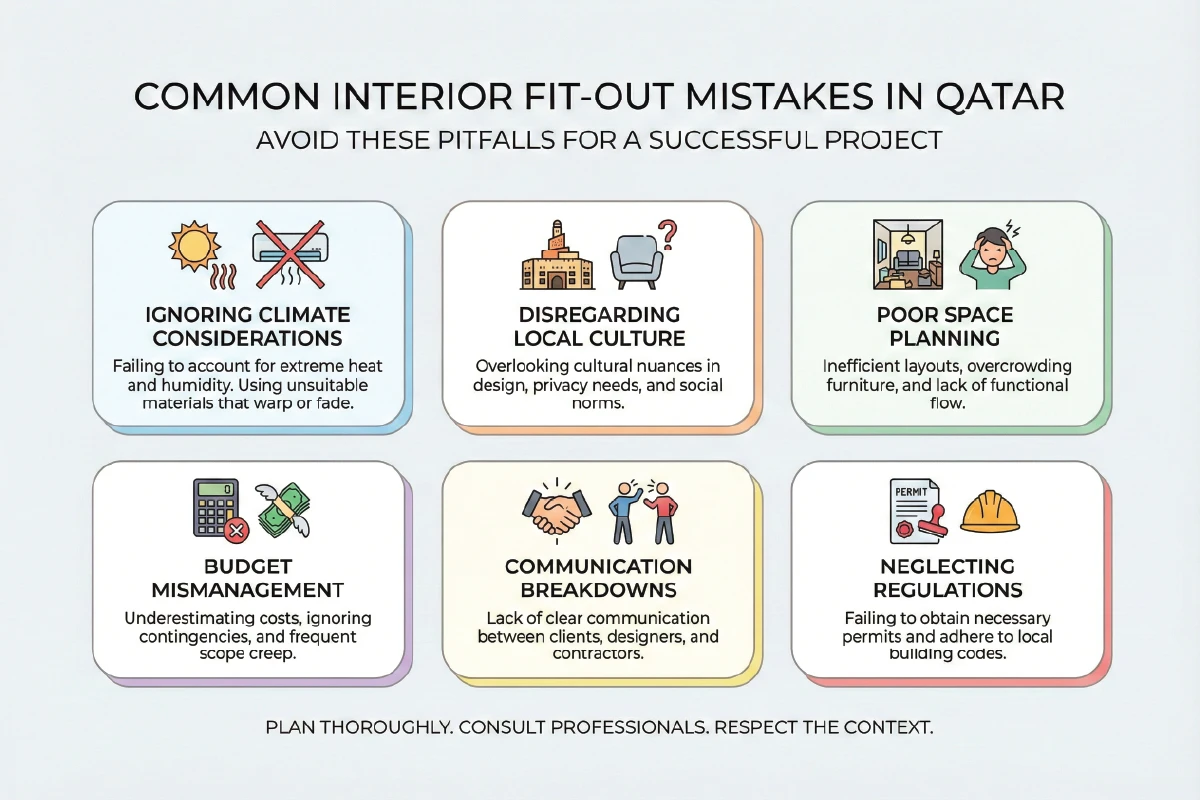
Short Answer: In Qatar, interior fit out projects most commonly fail due to unclear scope definition, skipped approvals, poor coordination between design and execution, unrealistic timelines, and weak cost planning. These mistakes often lead to delays, rework, budget overruns, or approval rejections. Most of them are avoidable when the fit out process is planned with realistic expectations, proper authority coordination, and clear responsibility allocation from the beginning.
Why Interior Fit Out Mistakes Are Common In Qatar
Interior fit out mistakes in Qatar usually occur not because of poor intent, but due to misunderstanding how the local process works. Many clients assume that fit out execution is similar across regions, while in reality Qatar has specific approval requirements, landlord rules, and coordination expectations that directly affect project flow.
Additionally, projects often involve multiple parties including designers, fit out contractors, landlords, and authorities. When responsibilities are not clearly defined, gaps appear between design intent, approval requirements, and site execution.
Mistake Unclear Project Scope Definition
One of the most common interior fit out mistakes in Qatar is proceeding with execution before the project scope is clearly defined. This includes unclear boundaries between design work, fit out execution, approvals, and material supply.
When scope is vague, quotations become difficult to compare, variations increase during execution, and accountability becomes blurred. This often leads to disputes, cost escalation, and delays.
| Scope Area | Common Issue |
|---|---|
| Design Responsibility | Unclear whether drawings include approval level details |
| Fit Out Works | Assumptions about inclusions and exclusions |
| Approvals | No clarity on who manages authority submissions |
| Materials | Specifications not finalized before pricing |
Mistake Starting Fit Out Without Required Approvals
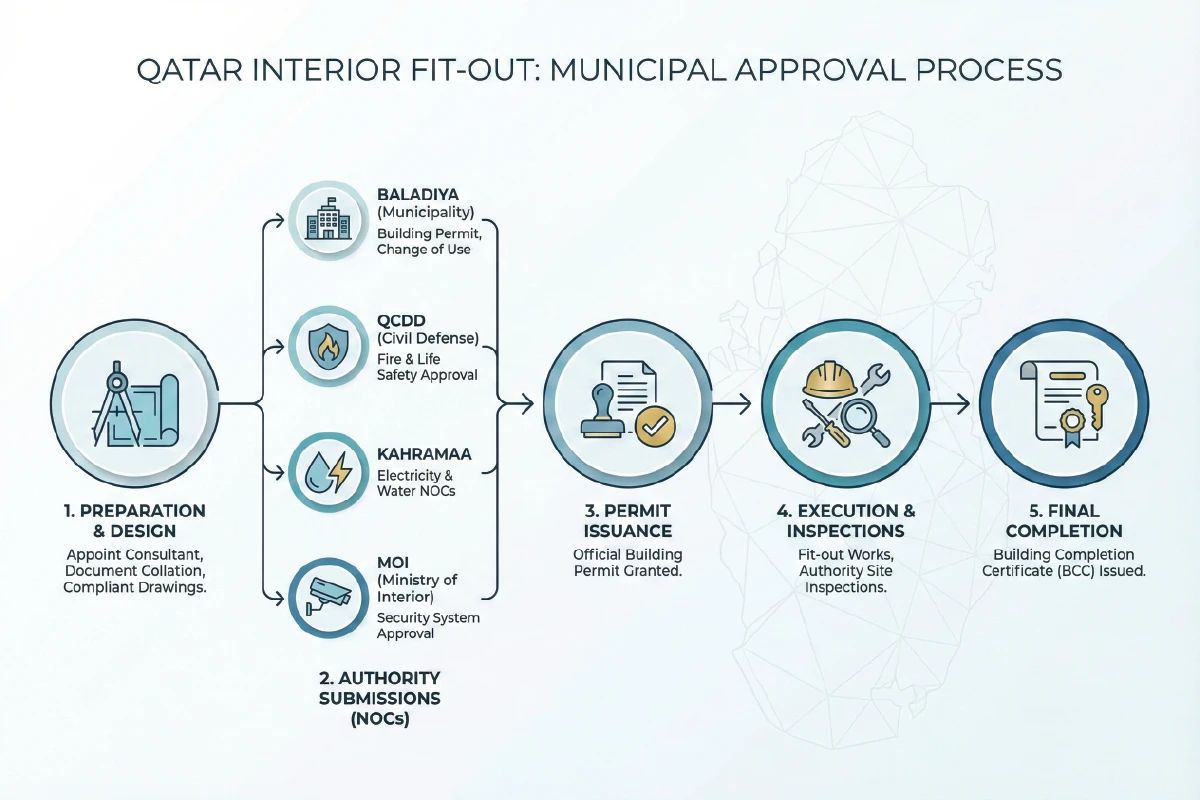
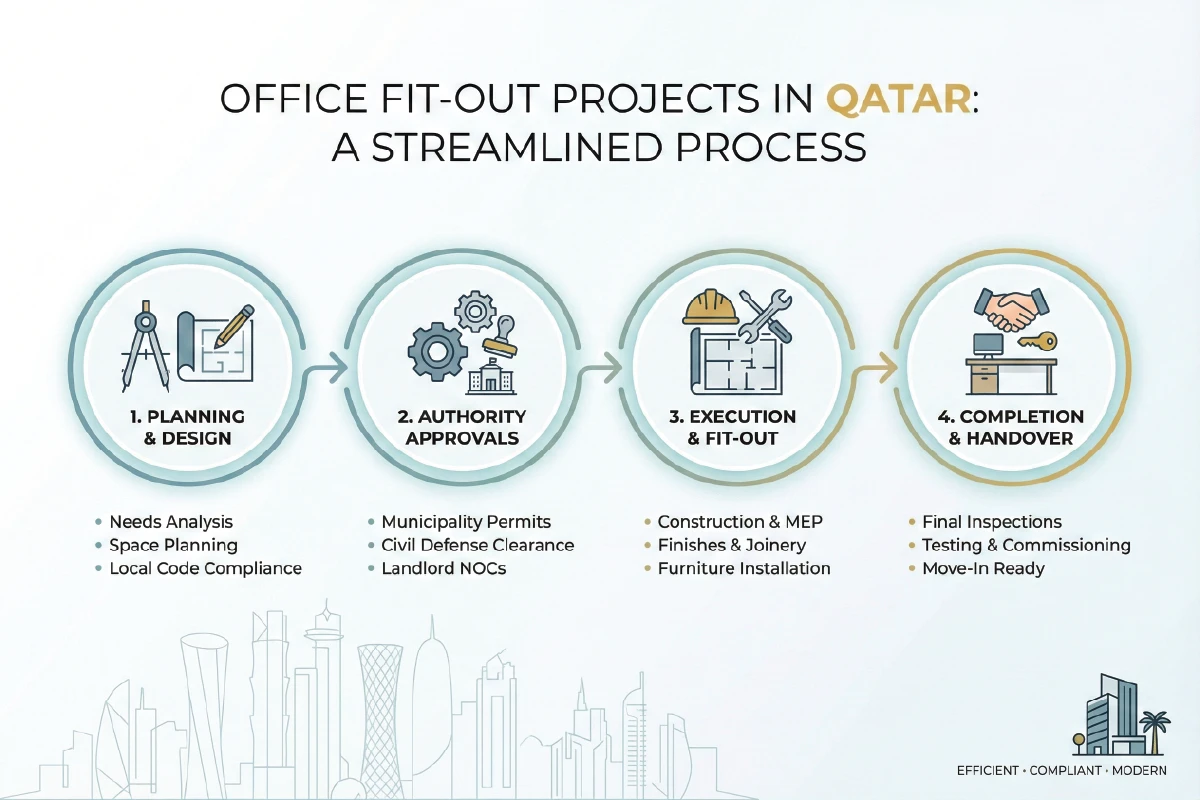
Another critical mistake is starting interior fit out works before obtaining the required municipal or authority approvals. This is particularly common in commercial, retail, and office projects where timelines are tight and teams are unfamiliar with the municipal approval process for interior and fit out projects in Qatar.
In Qatar, commencing work without approval can result in stop work notices, rework orders, or rejection during inspections. These consequences often cost more time and money than waiting for approvals to be finalized.
Mistake Underestimating Timelines And Coordination
Many interior fit out projects in Qatar fail to meet schedules because timelines are estimated without factoring in approvals, revisions, inspections, and coordination between stakeholders.
Fit out execution rarely progresses in a straight line. Delays often occur between design finalization, authority feedback, landlord approvals, and site readiness. Ignoring these coordination steps creates unrealistic expectations and pressure during execution.
Mistake Poor Cost Planning And Budget Assumptions
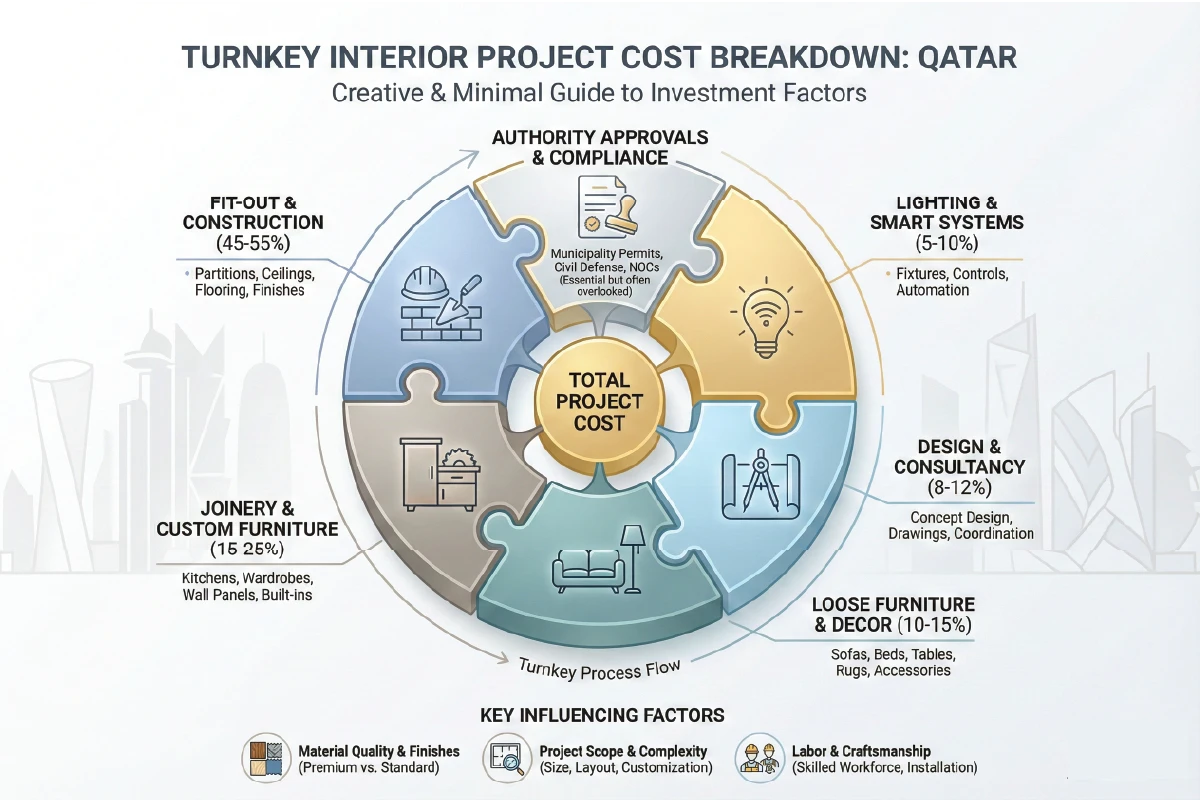
Poor cost planning is a frequent interior fit out mistake in Qatar, especially when budgets are prepared without a detailed understanding of scope, approvals, and coordination requirements, a problem commonly seen when interior design and fit out costs in Qatar are estimated without project specific inputs.
In practice, fit out costs are influenced by approval requirements, material lead times, authority revisions, and site conditions. When these factors are ignored, budgets become unrealistic and require frequent adjustments during execution.
| Cost Area | Typical Oversight |
|---|---|
| Approval Related Costs | Exclusion of submission fees and revision expenses |
| Material Selection | Pricing before final specifications are confirmed |
| Coordination Effort | Underestimating design and site coordination time |
| Contingency | No allowance for revisions or authority comments |
Mistake Weak Design And Execution Coordination
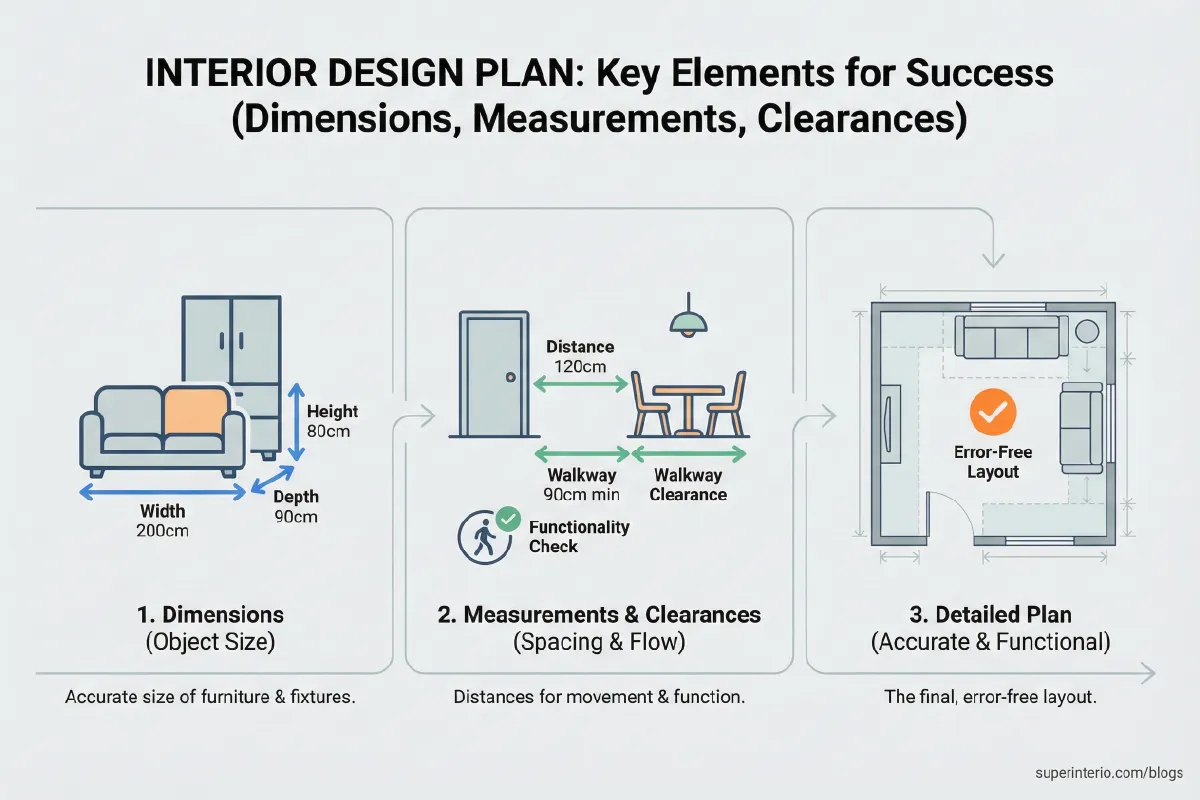
Interior fit out projects in Qatar often suffer when design development and site execution are treated as separate activities rather than a coordinated process. Misalignment between drawings and site conditions leads to rework, delays, and quality issues.
Coordination gaps commonly appear when design intent is not translated into executable details, or when site teams proceed without updated drawings reflecting authority comments and revisions.
Mistake Ignoring Landlord And Building Guidelines
Many interior fit out delays in Qatar originate from overlooking landlord or building management guidelines. Even when municipal approvals are secured, base building rules may impose additional constraints on layouts, materials, and services.
Ignoring these guidelines can result in rejection at later stages, forcing design revisions and execution changes that disrupt project timelines.
Mistake Selecting Contractors Based On Price Alone
Selecting a fit out contractor solely based on the lowest price is a common mistake that often leads to compromised quality, incomplete scope coverage, or execution challenges. Lower pricing may reflect exclusions rather than efficiency.
In Qatar, successful fit out delivery depends on experience with approvals, coordination capability, and understanding of local execution standards, not only initial cost.
Mistake Unclear Responsibility For Approvals And Inspections
A frequent interior fit out mistake in Qatar is proceeding without clearly assigning responsibility for approvals, inspections, and authority coordination. When it is unclear who manages submissions, follow ups, and site inspections, approvals often stall or inspections fail.
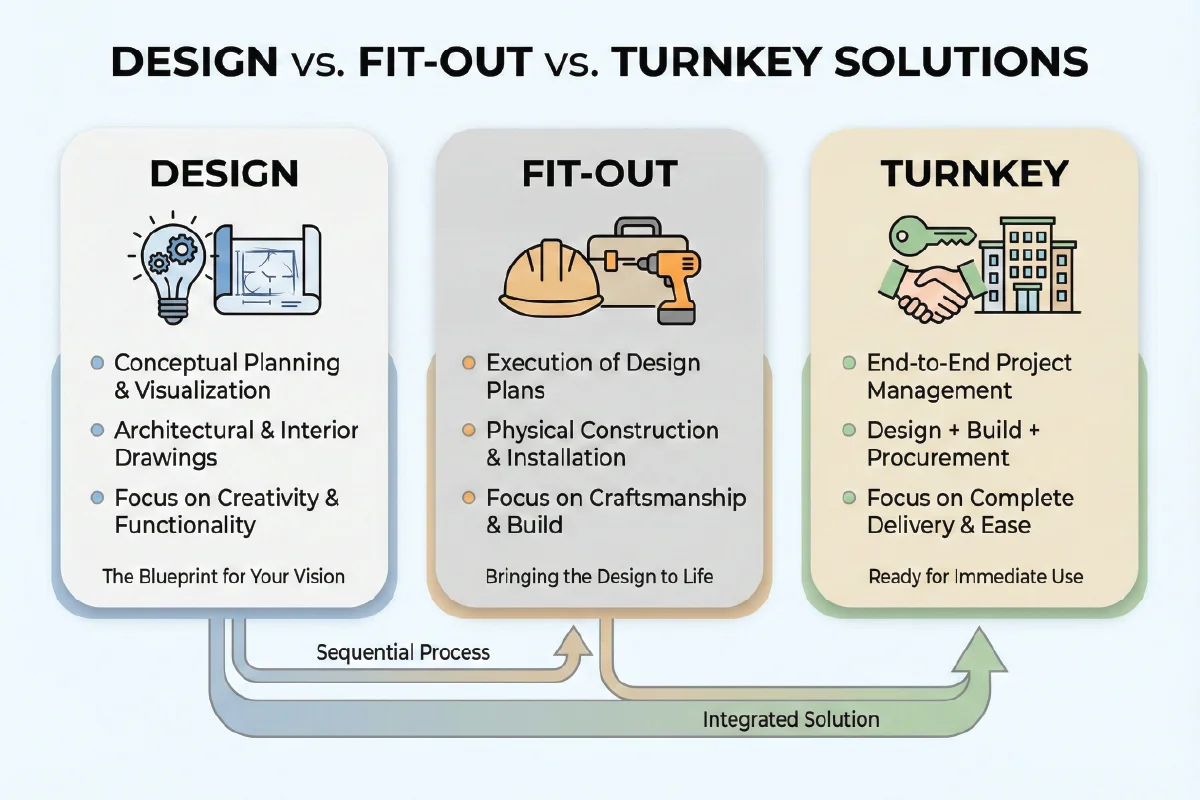
This issue commonly appears in projects where design and execution are handled by separate parties without a defined coordination structure, especially when clients are unclear about the difference between design, fit out, and turnkey project models. Clear responsibility allocation at the start reduces approval delays and rework.
Mistake Lack Of Contingency And Risk Planning
Many interior fit out projects in Qatar proceed without adequate contingency planning. This includes insufficient time buffers, budget contingencies, and alternative material options when approvals or procurement face delays.
In practice, projects that plan for reasonable contingencies respond better to authority comments, supply delays, and site coordination challenges.
How To Avoid Common Interior Fit Out Mistakes
Avoiding interior fit out mistakes in Qatar requires structured planning, realistic scheduling, and disciplined coordination across all project stages. Most issues can be mitigated when responsibilities, scope, and approval pathways are clarified early.
| Action | Purpose |
|---|---|
| Define Scope Clearly | Reduce variations and disputes |
| Plan Approval Timelines | Avoid execution delays |
| Coordinate Design And Execution | Minimize rework and errors |
| Allocate Contingencies | Manage unforeseen changes |
Frequently Asked Questions About Interior Fit Out Mistakes
What Is The Most Common Interior Fit Out Mistake In Qatar
The most common mistake is starting execution without a clearly defined scope and approval strategy, which often leads to delays and cost overruns.
Can Interior Fit Out Mistakes Cause Approval Rejection
Yes, mistakes such as non compliant layouts, missing documentation, or unapproved materials can result in approval rejection or inspection failure.
Do Residential Fit Out Projects Face The Same Mistakes
Residential projects may face fewer authority requirements, but mistakes related to scope definition, budgeting, and coordination still apply.
Who Should Manage Fit Out Coordination To Avoid Mistakes
Fit out coordination should be managed by a clearly assigned party with experience in approvals, design coordination, and site execution.
Key Takeaways
- Scope Clarity: Clear scope definition reduces variations and disputes.
- Approval Planning: Early approval coordination prevents delays and rework.
- Realistic Timelines: Accounting for coordination steps improves delivery accuracy.
- Cost Discipline: Detailed budgeting avoids mid project surprises.
- Defined Responsibility: Clear ownership improves approval and execution outcomes.
References
- Qatar Municipality Interior Fit Out Guidelines
- Qatar Civil Defense Fire And Life Safety Requirements
- Common Fit Out Execution Practices In Qatar